Imagine transforming your backyard hobby — a modest aquaponics system bubbling with tilapia and crisp lettuce — into a reliable source of income that supplies local restaurants, farmers’ markets, or even a small CSA (Community Supported Agriculture) program. Many enthusiasts in the US and around the world start with dreams of scaling up, only to face stalled growth from nutrient imbalances, inconsistent harvests, pest pressures, or simply not enough marketable variety. The good news? Adapted crop rotation strategies can change that trajectory.
In aquaponics, where fish waste fuels plant growth in a closed-loop, soilless system, traditional soil-based crop rotation evolves into succession planting, family-group diversity, and nutrient-demand cycling. By implementing these techniques, hobbyists can achieve steady, higher yields, maintain system health, and build commercial viability. This approach directly addresses the focus keyword: turning a hobby aquaponics setup into small business. With realistic planning, it’s achievable in most US states — and globally — as seen in successful operations from Florida to California and beyond.
As an expert in sustainable agriculture and recirculating systems (drawing from USDA guidelines, university extension resources like Oklahoma State and University of the Virgin Islands research, and real commercial case studies), I’ll guide you through why and how these strategies work. You’ll get step-by-step plans, regulatory insights, and proven tips to make the leap from hobby to profitable small business.
Understanding Aquaponics Basics: From Hobby Setup to Commercial Potential
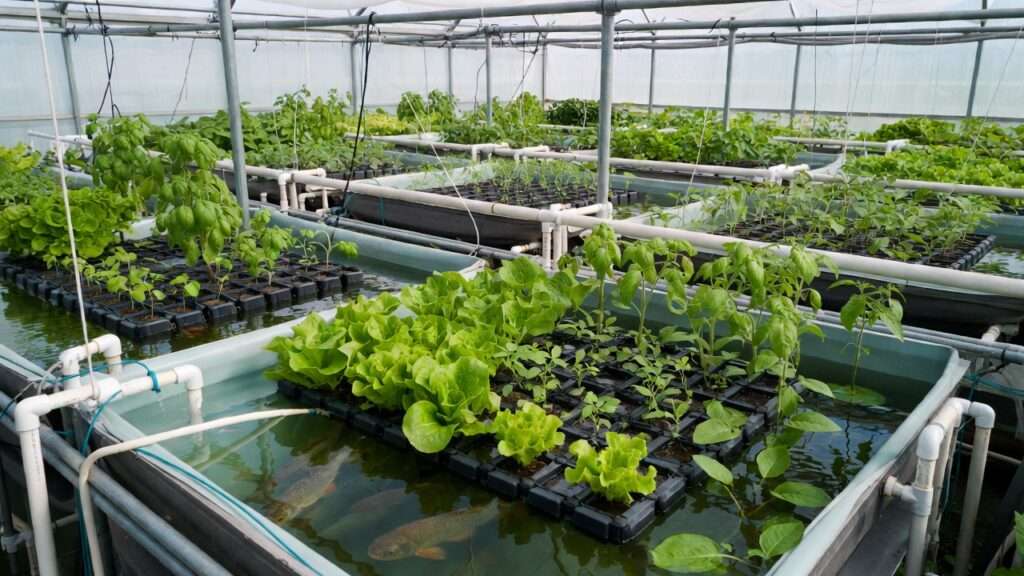
Aquaponics combines aquaculture (raising fish) with hydroponics (soilless plant cultivation), creating a symbiotic ecosystem. Fish produce ammonia-rich waste, beneficial bacteria convert it to nitrates, and plants absorb those nutrients while filtering water for the fish. This results in water savings of up to 90% compared to traditional farming, minimal chemical inputs, and dual revenue from fish and produce.
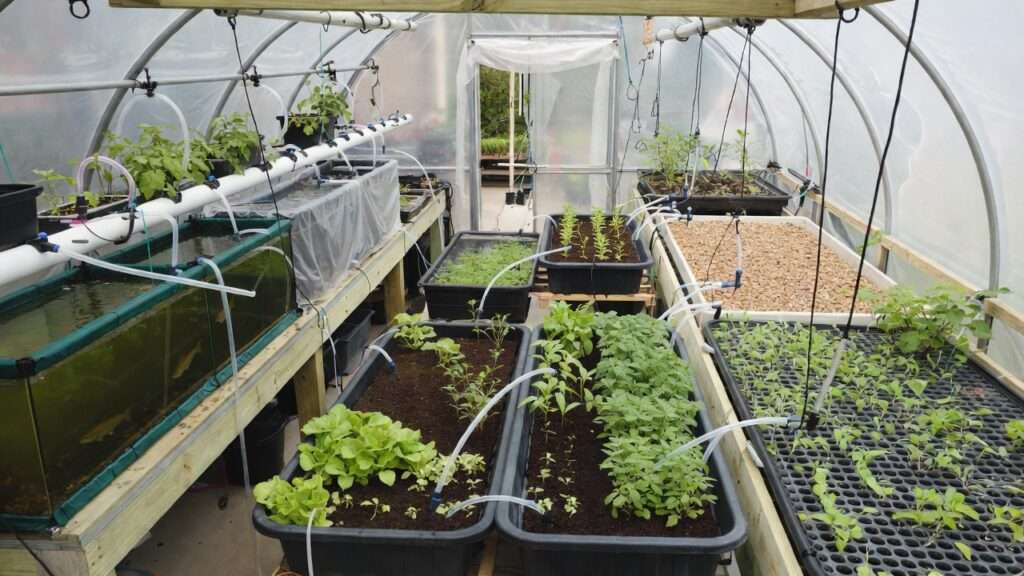
A typical hobby setup might use IBC totes or small tanks with deep water culture (DWC) rafts or media beds, stocking tilapia or perch at low densities and growing fast-turnover crops like lettuce or herbs. Scaling to commercial means increasing water volume (often 1,000+ gallons), fish density (0.5–1 lb/gallon final harvest), plant variety, and automation (pH dosing, aeration, monitoring).
Realistic Revenue Streams for Small Aquaponics Businesses in the US Small operations often generate income from:
- Leafy greens and herbs sold to restaurants, CSAs, or farmers’ markets (high demand for local, pesticide-free produce).
- Fish like tilapia for food markets or fingerlings for other growers.
- Value-added options: educational tours, seedlings, or processed products.
For example, Traders Hill Farm in Florida scaled a repurposed barn system to produce around 1,000 lbs of tilapia and thousands of pounds of lettuce monthly, with early estimates showing $169,000+ annual revenue in mature years from produce and fish. Similar successes appear in operations like JD Family Farm in Georgia (3,300 sq ft family-run) and others using Nelson & Pade systems.
Is It Feasible in Most US States? Yes, in states like Florida, California, Ohio, Kentucky, and many others with supportive climates or indoor setups. Challenges include:
- Aquaculture permits for fish species (tilapia restricted in some areas due to invasiveness; check state departments like California Department of Fish and Wildlife).
- Food safety compliance (USDA Good Agricultural Practices — GAP — for aquaponics, including water microbiological thresholds).
- Local zoning, business licenses, and PACA (Perishable Agricultural Commodities Act) for interstate produce sales if exceeding thresholds. Globally, similar principles apply in places like Australia or the EU, though regulations vary (e.g., stricter water discharge rules in some regions). Start by consulting your state’s aquaculture extension office or USDA resources.
Why Crop Rotation Strategies Matter in Aquaponics (Even Without Soil)
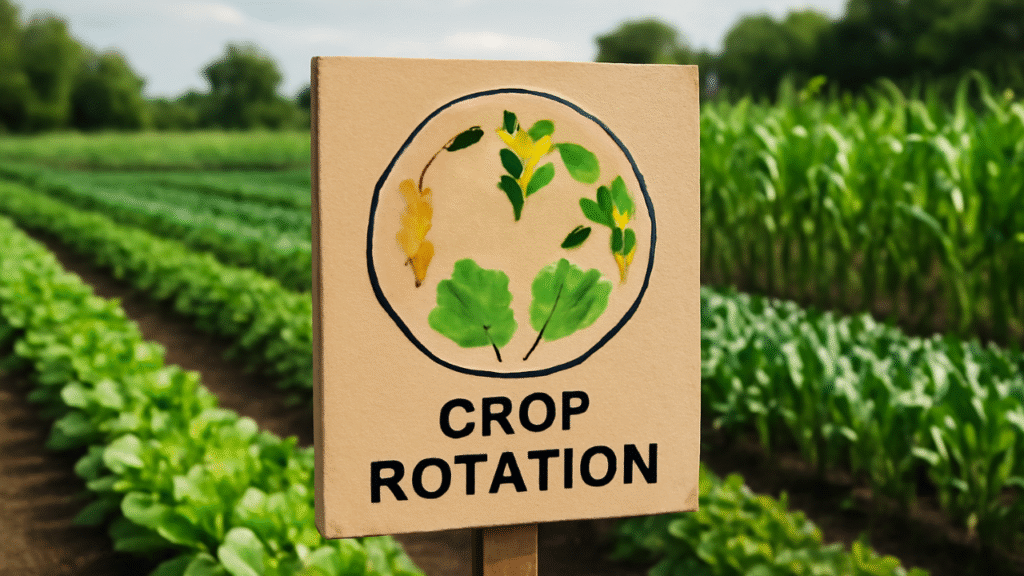
Traditional crop rotation in soil prevents nutrient depletion, disrupts pests/diseases, and balances fertility. In aquaponics, the “soil” is nutrient-rich water recirculated through the system, so adaptations focus on plant uptake variety, biofilter load management, and production consistency.
Traditional Crop Rotation vs. Aquaponics Adaptations
- Soil rotations cycle families (e.g., legumes → fruiting → leafy → roots) to fix nitrogen or avoid buildup.
- Aquaponics equivalents: Group plants by nutrient demand (light feeders like lettuce vs. heavy like tomatoes), use succession for continuous cycling, and diversify to prevent pathogen accumulation in media beds or roots.
Core Benefits for Scaling to Business
- Nutrient balance — Heavy feeders (tomatoes, cucumbers) deplete specific elements (e.g., potassium, calcium); rotating with light feeders (lettuce, herbs) or supplementing prevents deficiencies.
- Disease and pest reduction — Breaks cycles in shared water/media; diverse crops limit outbreaks.
- Consistent production — Succession planting ensures weekly harvests for reliable market supply.
- Higher yields and diversity — Mix leafy greens with herbs or fruiting crops for broader sales appeal.
- Cost efficiency — Less system downtime, better water/nutrient use.
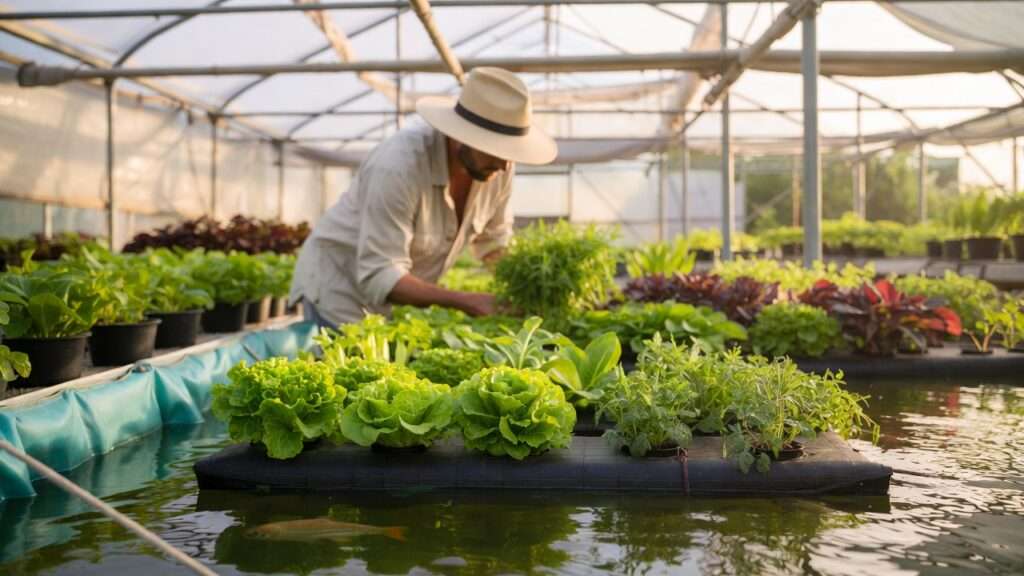
Evidence from experts (e.g., Oklahoma State Extension, University research) shows leafy greens thrive with stable nutrients, while fruiting crops benefit from mature systems. Commercial operators use these to achieve predictable output.
Step-by-Step Guide to Implementing Crop Rotation in Your Aquaponics System
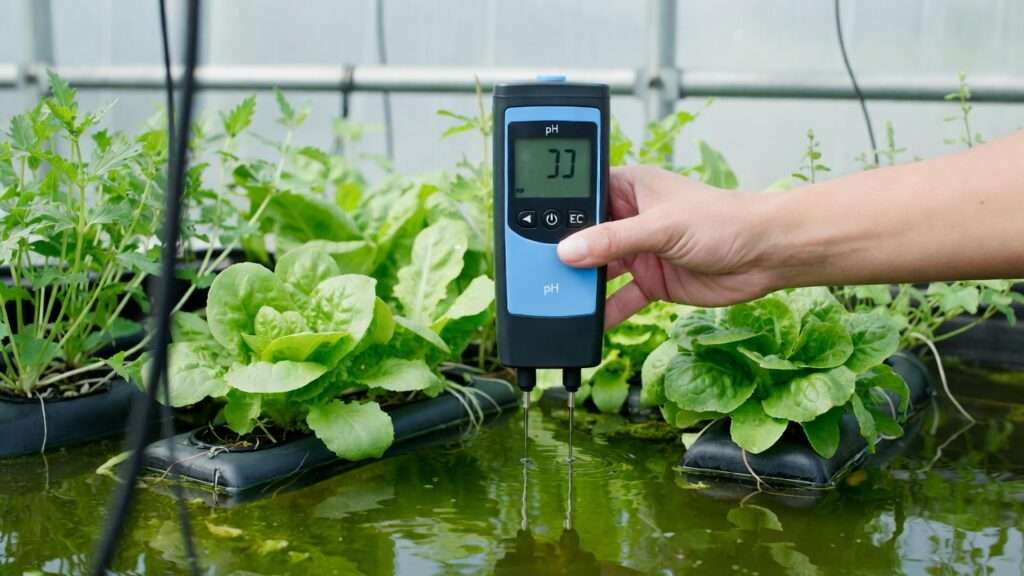
Assess Your Current Setup and Goals Test water parameters (pH 6.8–7.2, ammonia <0.5 ppm, nitrates 20–150 ppm). Calculate system capacity and set targets (e.g., 50–100 heads lettuce/week for local sales). Define business scale: side income or full-time.
Group Crops by Nutrient Needs and Growth Cycles
- Light feeders (low demand, fast): Lettuce, spinach, basil, kale — ideal starters.
- Heavy feeders (high demand): Tomatoes, peppers, cucumbers — need mature systems + supplements (iron, potassium).
- Nitrogen adapters (legumes like beans in media beds) — help cycle nutrients. Fast-turnover (4–8 weeks) vs. long-cycle (tomatoes 6+ months).
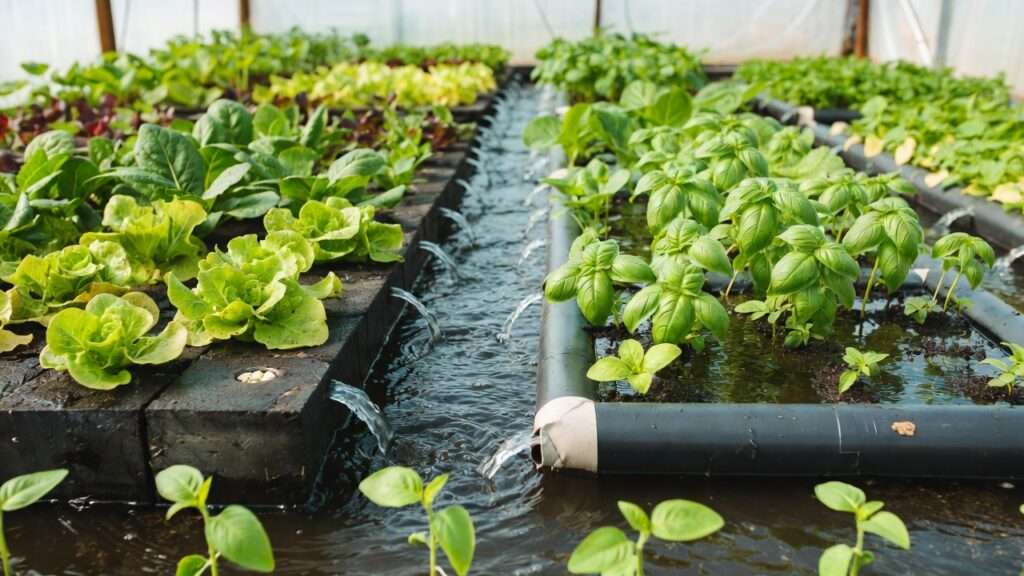
Succession Planting: The Foundation of Rotation Stagger plantings (e.g., new lettuce batch every 1–2 weeks). For continuous harvest, replace harvested plants immediately. Seasonal shifts: cool-season greens in winter, warm-season fruiting in summer (greenhouse-controlled).
Practical Rotation Plans for Small Businesses
- 4-Phase Adapted Cycle: Phase 1: Leafy greens (build biofilter). Phase 2: Legumes/beans (nitrogen boost). Phase 3: Fruiting crops (high uptake). Phase 4: Herbs/roots (cleanup). Restart.
- Media beds suit diverse rotations; DWC favors fast leafy. Use spreadsheets or apps for tracking; tools like planting calendars help.
Monitoring and Adjusting for Nutrient Balance Watch for deficiencies (yellowing = iron lack; tip burn = calcium). Supplement as needed (chelated iron, potassium bicarbonate). Intercrop companions for diversity.
Scaling Your System: From Hobby to Profitable Small Business
Once crop rotation strategies stabilize your yields and system health, the next phase is deliberate scaling. Many hobbyists underestimate the infrastructure, marketing, and regulatory steps required to turn consistent production into consistent revenue.
Infrastructure Upgrades for Commercial Viability Start small but plan modular growth:
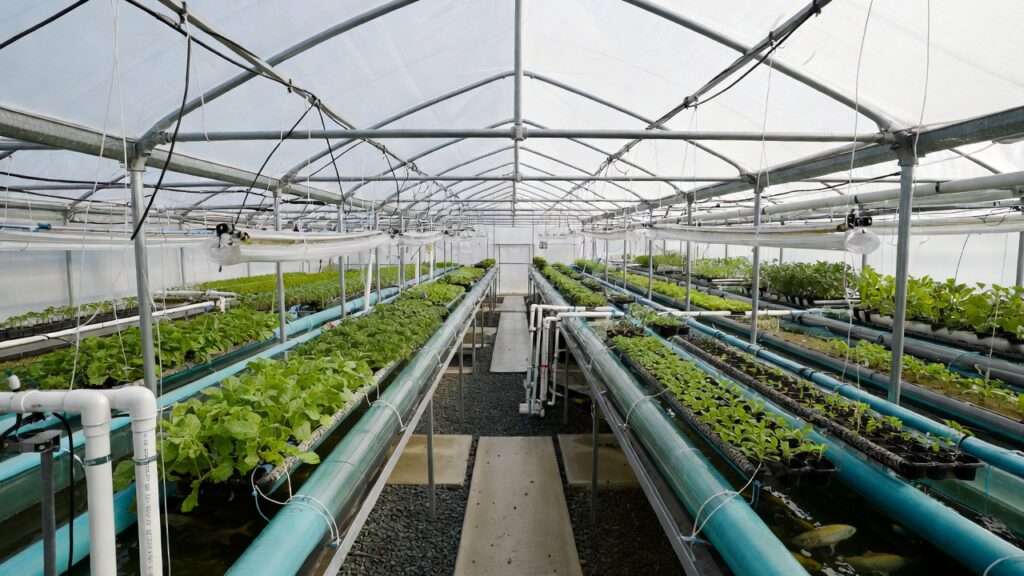
- Increase fish tank volume (e.g., from 500 gallons to 2,000–5,000 gallons) and add parallel grow beds.
- Upgrade to automated controls: pH and nutrient dosing pumps, backup aeration, water level sensors, and timers.
- Consider greenhouse or indoor LED lighting for year-round production (critical in northern US states or Bangladesh-like climates with seasonal variation).
Typical startup costs for a small commercial transition (1,000–3,000 sq ft): $15,000–$50,000 depending on existing setup. Return on investment (ROI) improves dramatically with rotation-driven consistency — many operators report breakeven within 12–24 months when selling at premium local prices ($4–$8/lb greens, $5–$8/lb tilapia).
Marketing and Sales Strategies Focus on high-margin, short-supply-chain channels:
- Direct-to-restaurant and chef partnerships (consistent weekly deliveries of mixed greens, herbs, microgreens).
- Farmers’ markets and CSA shares (build loyal customer base with variety enabled by rotation).
- Online/local co-ops or delivery apps for urban areas.
Certifications boost credibility and pricing:
- USDA Good Agricultural Practices (GAP) audit — increasingly required by larger buyers.
- Naturally Grown or Certified Naturally Grown labels for organic-leaning markets.
- Food safety plans under FSMA (Food Safety Modernization Act) Produce Safety Rule.
Successful operators often start with 20–30% of output sold to one reliable buyer (e.g., a restaurant group) before expanding.
Overcoming Common Scaling Challenges
- Energy and water costs — mitigated by efficient rotation (less nutrient waste) and solar/renewable integration.
- Labor — family-run or part-time help initially; automate repetitive tasks.
- Market competition — differentiate with local, sustainable, aquaponics story (traceability from fish to fork).
Real-World Case Studies and Lessons from Successful US Aquaponics Farms
Several US operations demonstrate that adapted crop rotation (or equivalent diversity/succession planning) is key to profitability.
- Traders Hill Farm (Florida) Started as a hobby in a repurposed barn; scaled to commercial with deep water culture and media beds. They rotate leafy greens continuously while interspersing herbs and occasional fruiting crops. Result: ~1,000 lbs tilapia and several thousand lbs produce monthly, supplying restaurants and markets. Lesson: Succession planting created reliable weekly harvests that secured long-term contracts.
- Ouroboros Farms (California) One of the larger commercial aquaponics facilities in the US. They use extensive succession and crop diversity (lettuce → basil → kale → microgreens cycles) to maintain nutrient balance and supply year-round. They achieved certification and sell premium greens to high-end grocers and restaurants. Lesson: Diversity reduces risk from single-crop failure or market gluts.
- FoodChain (Lexington, Kentucky) Non-profit-turned-commercial model focused on urban food security. They rotate fast crops in stacked rafts and use educational tours as revenue. Lesson: Community engagement + rotation for consistent output supports both mission and business.
- Smaller backyard-to-business examples Numerous operators documented by Ohio State University Extension and Nelson & Pade (system supplier) report doubling or tripling output after implementing staggered planting and family-group rotation, often reaching $2,000–$8,000 monthly net income at 1,000–2,000 sq ft scale.
Globally, similar models thrive in Australia (e.g., Murray Hallam’s commercial systems), Singapore (indoor vertical farms), and parts of Europe, where rotation principles adapt well to controlled environments.
Potential Risks, Costs, and How to Mitigate Them
Financial Risks
- High upfront costs for expansion.
- Mitigation: Start with phased growth, use existing hobby components, apply for USDA grants (Value-Added Producer Grants, Beginning Farmer programs), or crowdfunding.
Biological Risks
- Disease outbreaks (e.g., Pythium in roots), fish mortality, nutrient swings.
- Mitigation: Crop diversity and rotation disrupt pathogen cycles; maintain strict biosecurity; test water weekly.
Regulatory Risks
- Unexpected permits or restrictions (e.g., tilapia bans, discharge rules).
- Mitigation: Research early via state aquaculture offices, attend workshops, join associations like the Aquaponics Association.
Market Risks
- Price fluctuations or buyer loss.
- Mitigation: Diversify crops and customers; rotation enables quick pivots (e.g., switch to high-demand herbs if greens oversupply).
Conclusion
Turning a hobby aquaponics setup into small business success is not only realistic in most US states — and adaptable globally — but increasingly achievable with the right strategies. Adapted crop rotation through succession planting, nutrient-group cycling, and crop diversity transforms inconsistent hobby production into reliable, marketable output. This stability underpins everything else: infrastructure investment, customer contracts, certifications, and profitability.
Start small: Test a simple succession plan in your current system, track results for one season, and consult local extension services or aquaponics communities. The path from backyard hobbyist to small business owner is paved with data-driven decisions, sustainable practices, and persistence.
Your aquaponics journey can become a thriving, environmentally positive enterprise. The question isn’t whether it’s possible — it’s how strategically you apply proven techniques like crop rotation to make it happen.
Frequently Asked Questions (FAQs)
1. Does crop rotation actually work in aquaponics without soil? Yes — it’s adapted into succession planting, crop family diversity, and nutrient-demand cycling. The goal is the same: balance system load, prevent issues, and ensure steady production.
2. What is the minimum system size to start selling commercially? Many begin profitably at 500–1,000 sq ft of grow space with 1,000–2,000 gallons of fish water, producing 50–200 heads of greens weekly plus fish.
3. Which US states are most friendly to small aquaponics businesses? Florida, Texas, Arizona, Ohio, Kentucky, and parts of California have supportive climates, established aquaculture industries, and relatively straightforward permitting. Always verify locally.
4. How much money can a small aquaponics business realistically make? Side-income range: $1,000–$4,000/month net. Full-time small business (2,000–5,000 sq ft): $3,000–$10,000+/month net after expenses, depending on location, sales channels, and efficiency.
5. Do I need special certifications to sell produce and fish? Usually yes for scale: USDA GAP or state-equivalent food safety certification for produce; aquaculture permits for fish; business license and sales tax registration. Check FSMA Produce Safety Rule applicability.
6. Can I use crop rotation in a small backyard system before going commercial? Absolutely — starting succession planting now builds the habits and data needed for scaling.
7. What are the most profitable crops for aquaponics small businesses? Leafy greens (lettuce, kale, spinach), herbs (basil, cilantro, mint), microgreens, and niche items (arugula, watercress). Fruiting crops (tomatoes, peppers) add value but require more management.
8. How do global aquaponics businesses compare to US ones? Similar principles apply, but US operations often emphasize food safety certification and direct-to-consumer models, while places like Singapore focus on high-tech vertical systems due to land constraints.