If you’ve ever dreamed of collecting fresh eggs every morning or building a small poultry business, one question probably keeps coming up: How many chickens should I start with?
It sounds simple—but in reality, this single decision determines your costs, workload, learning curve, and long-term success.
Start with too few chickens, and you may struggle to learn properly or meet your goals. Start with too many, and you risk losses, burnout, or even total failure as a beginner. This is one of the most common—and costly—mistakes new poultry farmers make.
In this in-depth guide, written from real-world poultry farming experience, you’ll learn exactly how many chickens you should start with based on your goals, space, budget, and experience level. Whether you want eggs for your family or aim to build a profitable poultry venture, this article will help you start smart, confident, and prepared.
Why the Number of Chickens You Start With Matters So Much
Many beginners believe success in poultry farming depends mainly on breed choice or feed quality. While those are important, starting flock size quietly influences everything else:
-
Feed costs and cash flow
-
Disease risk and biosecurity
-
Labor and daily management stress
-
Learning speed and mistake tolerance
-
Profitability and scalability
As an experienced poultry advisor will tell you: most beginner failures happen not because chickens are difficult, but because people start with the wrong number.
Understanding the Real Search Intent Behind “How Many Chickens Should I Start With”
When beginners ask this question, they are usually looking for:
-
A clear, practical number, not vague advice
-
Guidance that fits their specific situation
-
A way to avoid costly beginner mistakes
-
Confidence before spending money
There is no single magic number for everyone—but there is a smart range for each type of beginner. This article breaks that down step by step.
Key Factors That Determine How Many Chickens You Should Start With
Before talking numbers, you must understand the factors that influence the right starting flock size.
1. Your Purpose for Raising Chickens
Your goal is the foundation of your decision.
Common beginner goals include:
-
Producing eggs for household use
-
Raising meat for family consumption
-
Earning side income
-
Building a long-term poultry business
Each goal requires a different starting scale.
2. Available Space and Housing Capacity
Space is non-negotiable in poultry farming.
General space guidelines:
-
Layers: 3–4 sq ft per bird (inside coop), 8–10 sq ft outdoor run
-
Broilers: 1.5–2 sq ft per bird (deep litter system)
Overcrowding leads to:
-
Stress and poor growth
-
Disease outbreaks
-
Feather pecking and cannibalism
-
Lower egg production
👉 If your space can comfortably house 10 chickens, starting with 20 will almost guarantee problems.
3. Your Budget and Startup Capital
Every additional chicken increases:
-
Feed costs
-
Housing requirements
-
Equipment needs
-
Veterinary and medication expenses
Many beginners underestimate feed costs—the largest recurring expense in poultry farming.
Starting smaller allows you to:
-
Learn cost control
-
Test feed efficiency
-
Avoid heavy losses
4. Time Commitment and Experience Level
Chickens require daily attention:
-
Feeding and watering
-
Cleaning
-
Health observation
-
Record keeping
As flock size increases, time demand grows quickly. Beginners with full-time jobs should be especially cautious.
5. Local Climate and Environment
Climate affects:
-
Mortality rates
-
Housing design
-
Feed consumption
-
Breed suitability
Hot or humid regions often require smaller starting flocks for beginners due to higher stress and disease pressure.
How Many Chickens Should I Start With as a Complete Beginner?
Now to the core question.
The Ideal Starting Range for Beginners
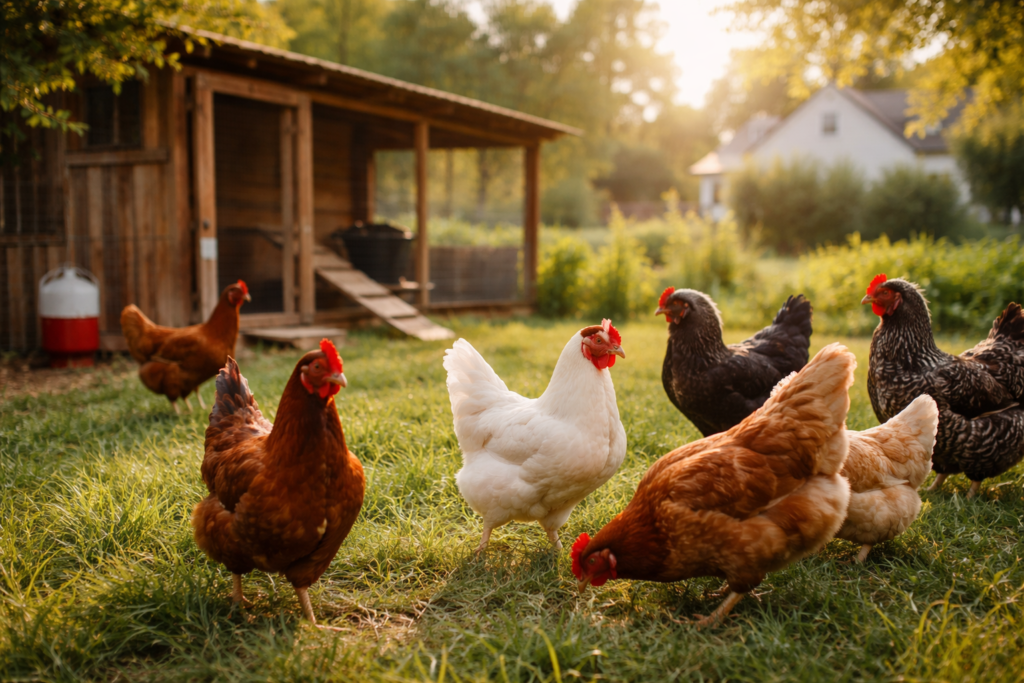
For most beginners, the ideal starting flock size is between 6 and 15 chickens.
This range:
-
Is manageable
-
Allows learning without overwhelming risk
-
Provides enough birds to understand flock behavior
-
Limits financial loss if mistakes occur
Let’s break it down further.
Starting With Too Few Chickens: The Hidden Problems
Many people start with 2–3 chickens, thinking it’s safer. In practice, this can cause issues:
-
Chickens are social animals—very small flocks stress easily
-
Learning is slower due to limited observation
-
Egg production is inconsistent
-
Loss of one bird has a major impact
👉 Best practice: Start with at least 6 chickens if space allows.
Starting With Too Many Chickens: A Beginner Trap
Starting with 50, 100, or more chickens as a beginner often leads to:
-
Disease outbreaks due to poor biosecurity
-
Feed mismanagement
-
High mortality
-
Financial loss and discouragement
Large flocks amplify beginner mistakes.
Recommended Starting Numbers Based on Your Goals
For Backyard Egg Production (Family Use)
If your goal is fresh eggs for household consumption:
Recommended starting number:
👉 6–10 laying hens
Why this works:
-
A healthy hen lays ~4–6 eggs per week
-
8 hens can supply most families
-
Allows for non-laying periods or molting
LSI keywords used naturally: backyard chickens, egg production, laying hens, fresh eggs
For Meat Production (Small-Scale)
If you want to raise chickens for meat:
Recommended starting number:
👉 10–25 broilers
This allows you to:
-
Learn brooding and feeding
-
Understand growth rates
-
Practice processing or selling
Broilers grow fast, so mistakes show quickly—making this range ideal for learning.
For Side Income or Semi-Commercial Poultry Farming
If your goal is supplemental income:
Recommended starting number:
👉 20–50 chickens
At this level:
-
Costs are more visible
-
Record keeping becomes important
-
You begin understanding profitability
This range is ideal once you have basic poultry knowledge.
For Full Commercial Poultry Farming
For beginners: not recommended.
Commercial-scale farming requires:
-
Capital
-
Trained labor
-
Biosecurity systems
-
Market access
Most successful commercial farmers started small and scaled gradually.
Breed Selection and Its Impact on Starting Flock Size
Your breed choice affects survival, productivity, and learning ease.
Layer Breeds vs Broilers vs Dual-Purpose Breeds
-
Layer breeds: Consistent egg production, longer lifespan
-
Broilers: Fast growth, higher feed consumption
-
Dual-purpose: Slower growth but versatile
Beginners should prioritize hardy, forgiving breeds.
Beginner-Friendly Chicken Breeds
Some breeds tolerate beginner mistakes better:
-
Rhode Island Red
-
Plymouth Rock
-
ISA Brown
-
Cobb or Ross (broilers)
These breeds are:
-
Disease-resistant
-
Feed-efficient
-
Climate adaptable
Housing, Equipment, and Infrastructure Planning by Flock Size
Starting flock size should match your infrastructure—not hopes.
Coop Size and Ventilation
Proper ventilation reduces:
-
Heat stress
-
Ammonia buildup
Many beginners lose chickens due to poor housing, not poor feed.
Feeders, Drinkers, and Nesting Boxes
Rule of thumb:
-
One feeder per 10–15 birds
-
One drinker per 10 birds
-
One nesting box per 4–5 hens
Scaling equipment incorrectly causes competition and stress.
Biosecurity and Health Management
Disease risk increases with flock size.
Beginners should:
-
Limit visitors
-
Isolate new birds
-
Clean equipment regularly
Smaller starting flocks are far easier to protect.
Cost Breakdown: How Flock Size Affects Your Investment and Profit
Initial Startup Costs (Approximate)
Costs increase non-linearly with flock size:
-
Housing materials
-
Equipment
-
Feed storage
Starting small allows mistakes without financial devastation.
Monthly Operating Costs
Feed consumption rises sharply with flock size. Many beginners are shocked by this.
👉 Tip: Always calculate monthly feed needs before buying chicks.
Profit Expectations: Be Realistic
Profitability depends on:
-
Mortality rate
-
Feed efficiency
-
Market prices
Beginners should focus on learning first, profit second.
Common Mistakes Beginners Make When Choosing Flock Size
-
Starting too big too soon
-
Ignoring space limitations
-
Underestimating feed costs
-
Choosing difficult breeds
-
Not planning for losses
Avoiding these mistakes alone puts you ahead of most beginners.
Expert Tips for Scaling Up After Your First Flock
Once you’ve successfully managed your first flock, the next logical step is growth—but scaling up too fast is one of the biggest mistakes new poultry farmers make.
When Is the Right Time to Increase Your Flock Size?
You are ready to scale up only when:
-
Mortality is consistently low (under 5–8%)
-
Feed conversion and egg production are stable
-
You can quickly identify sick or stressed birds
-
You are comfortable with daily routines
For most beginners, this takes 3–6 months of hands-on experience.
How to Scale Safely and Profitably
Best practices for scaling up:
-
Increase flock size in small batches (10–20 birds at a time)
-
Expand housing before adding birds
-
Improve record keeping (feed, mortality, egg count)
-
Strengthen biosecurity measures
Gradual growth protects both your birds and your investment.
Practical Real-World Scenarios for Beginners
Example 1: Backyard Farmer with Limited Space
Situation:
-
Space for a small coop
-
Goal: Eggs for family
Best starting number:
👉 6–8 laying hens
Why:
This provides consistent eggs without overcrowding or excessive cost.
Example 2: Rural Farmer Starting a Side Business
Situation:
-
Moderate space
-
Goal: Supplemental income
Best starting number:
👉 20–30 chickens
Why:
Enough birds to learn cash flow, market demand, and flock management—without excessive risk.
Example 3: Aspiring Commercial Poultry Entrepreneur
Situation:
-
Long-term commercial vision
-
Limited experience
Best starting number:
👉 15–25 chickens
Why:
Commercial success starts with strong fundamentals, not large numbers.
Animal Welfare, Ethics, and Sustainable Poultry Practices
Ethical poultry farming isn’t just about compassion—it’s about productivity and sustainability.
Why Proper Stocking Density Matters
Overcrowded chickens:
-
Grow slower
-
Lay fewer eggs
-
Get sick more often
Starting with the right number improves:
-
Bird welfare
-
Product quality
-
Long-term profits
Sustainable Practices for Beginners
-
Avoid overstocking
-
Use quality feed
-
Provide clean water at all times
-
Reduce stress through proper housing
Healthy chickens are productive chickens.
Frequently Asked Questions (FAQ)
Can I Start with Just Two or Three Chickens?
It’s possible, but not ideal. Chickens are social animals, and very small flocks can become stressed and unproductive. Six or more is strongly recommended.
Is It Better to Start with Chicks or Grown Pullets?
-
Chicks: Cheaper, more learning opportunity, higher care needs
-
Pullets: More expensive, faster egg production, less brooding stress
For beginners, pullets reduce risk—but chicks offer better long-term learning.
How Many Chickens Are Too Many for a Beginner?
For most beginners:
-
Anything above 50 chickens is risky without experience
-
Management mistakes scale rapidly
Should I Buy Extra Chickens to Account for Deaths?
It’s normal to expect some losses, but deliberate overstocking causes overcrowding. Instead:
-
Improve housing
-
Use quality feed
-
Practice good biosecurity
How Long Before Chickens Become Profitable?
-
Layers: 5–6 months to first eggs
-
Broilers: 6–8 weeks to market size
Profit depends heavily on flock size, feed costs, and management quality.
Final Verdict: How Many Chickens Should I Start With?
So, how many chickens should I start with?
For most beginners, the expert-backed answer is:
👉 Start with 6–15 chickens.
This range:
-
Minimizes risk
-
Maximizes learning
-
Keeps costs manageable
-
Builds confidence
Once you master the basics, scaling up becomes safe and profitable.
Bonus: Beginner’s Poultry Farming Checklist
Before You Buy Chickens
-
Define your goal (eggs, meat, income)
-
Confirm available space
-
Prepare housing and ventilation
-
Budget for feed and healthcare
First 30-Day Management Plan
-
Monitor birds daily
-
Track feed and water intake
-
Watch for illness
-
Maintain cleanliness
Long-Term Success Tips
-
Keep records
-
Scale gradually
-
Learn from mistakes
-
Focus on bird welfare
Closing Thoughts from an Expert Poultry Perspective
Successful poultry farming doesn’t start with big numbers—it starts with smart decisions. The right starting flock size gives you room to learn, grow, and succeed without unnecessary losses.
If you apply the principles in this guide, you’ll avoid the most common beginner pitfalls and build a strong foundation for profitable poultry farming—one chicken at a time.