the hook
Buying land is one of the smartest moves a farmer or smallholder can make, but it’s also one of the most expensive and risk-filled. How much money to save before buying land is the question that decides whether your purchase becomes a stepping stone to stability or a drain on your farming income. This article lays out a clear, practical plan—numbers, financing options, real U.S.-based examples, and step-by-step worksheets—so you can calculate exactly how much to save and how to protect your investment.
Why trust this guide
I draw on practical experience advising small-scale farmers, published guidance from U.S. agricultural extension services, and recent lending practices for farmland. I use government and industry sources (USDA, state extension offices, community banks) and real farmer case studies to provide reliable, actionable advice. Where regional differences matter, I flag them and explain how to adapt numbers for your state or county.
Quick summary (useful snapshot)
-
Minimum immediate savings to target: down payment (typically 10–25% of purchase price) + closing costs (2–6%) + 3–6 months operating reserve.
-
Typical total savings range (U.S. examples): for a $50,000 parcel, plan $10,000–$20,000 saved; for a $200,000 parcel, plan $40,000–$80,000 saved — depending on financing, land condition, and setup needs.
-
Key extra costs: soil testing, well/drainage work, fencing, access road improvements, permits, and initial equipment or infrastructure setup.
Scroll down for detailed calculations, U.S.-specific examples, financing options, and downloadable calculator templates.
Why this question matters for farmers and smallholders
Buying land isn’t just a one-time payment — it alters your cash flow, risk profile, and operational needs. For farmers, land determines what you can produce, how reliably you can access water, and whether you can expand. Underestimating costs leads to shortfalls that can force sale, debt, or missed seasons. This guide addresses both the financial calculation and the agricultural suitability needed to make a sustainable purchase.
Understand the full cost components
Knowing the purchase price is only step one. Below are the cost components you must include when estimating how much to save.
Purchase price vs. total land-ownership cost
Purchase price: the seller’s asking price or agreed sale price.
Total ownership cost: purchase price + closing costs + immediate improvements + operating reserves + contingency.
Common upfront costs to save for
-
Down payment: typically 10–25% for agricultural loans in the U.S., varies by lender and collateral.
-
Earnest money: often 1–3% of price to hold the contract.
-
Closing costs: around 2–6% of sale price (lender fees, recording fees, title insurance).
-
Title search and insurance: protects against ownership disputes.
-
Survey and boundary marking: required in many rural transactions.
-
Soil tests and environmental assessments: essential to confirm suitability for crops or livestock.
-
Well, water testing, and irrigation permits: can be costly if drilling is needed.
-
Access improvements: driveways, culverts, gate installation.
-
Fencing and security: depends on livestock needs and existing boundaries.
-
Legal fees: particularly important where title issues, easements, or leases exist.
Post-purchase setup and operational costs
-
Clearing, grading, and removal of debris or structures.
-
Irrigation setup: wells, solar pumps, drip systems.
-
Barns, storage, and equipment shelters.
-
Equipment purchases or leasing (tractors, implements).
-
Initial seed/stock, feed, and fertilizer.
-
Permits and connection fees for utilities if needed.
Contingency and opportunity costs
-
Unexpected remediation (drainage fixes, erosion control).
-
Delays that cause missed planting seasons.
-
Opportunity cost: savings used for land could have generated income if invested elsewhere—keep a liquid reserve.
How much to save: practical savings targets
Rule-of-thumb targets
-
Conservative target (recommended if you have variable income): 20% down + closing costs (3–5%) + 6 months operating reserve + 10% contingency for improvements.
-
Moderate target: 15% down + closing costs (3%) + 4 months operating reserve + 8% contingency.
-
Aggressive/minimal cash target (using favorable financing): 10% down + closing costs (2%) + 3 months operating reserve, but expect higher interest or stricter terms.
Build a customized savings calculation (step-by-step)
Inputs you need:
-
Desired parcel price (P)
-
Expected down payment % (D)
-
Closing costs % (C)
-
Annual operating cost for your farm (O)
-
Months of operating reserve to keep (M)
-
Contingency % for improvements (I)
Formula:
-
Down payment = P × D
-
Closing costs = P × C
-
Operating reserve = (O/12) × M
-
Contingency = P × I
-
Total savings target = Down payment + Closing costs + Operating reserve + Contingency
Worked example (U.S., small-scale example)
-
Parcel price P = $100,000
-
Down payment D = 15% → $15,000
-
Closing costs C = 3% → $3,000
-
Annual operating cost O = $24,000 ($2,000/month)
-
Months of reserve M = 4 → $8,000
-
Contingency I = 8% → $8,000
Total savings target = $15,000 + $3,000 + $8,000 + $8,000 = $34,000
Region-adjusted examples (U.S. focus)
-
Low-cost rural region example (Midwest): small 5-acre plot suitable for vegetables might sell for $30,000–$60,000. With moderate targets, you’d need $6,000–$18,000 saved.
-
High-cost peri-urban region example (coastal California or Northeast): acreages often start at $200,000–$400,000. Expect to save $40,000–$120,000 depending on financing.
-
Note: local taxes, water rights, and zoning heavily affect costs—always check county records.How Much Money to Save Before Buying Land — Savings Guide
Financing options and how they change your savings goal
Traditional bank loans and agricultural credit
-
Farm real estate loans via commercial banks: often require 15–25% down, strong credit, and collateral.
-
USDA Farm Service Agency (FSA) loans: favorable terms for family farmers, lower down payments possible (as low as 5–10% in some cases) and technical assistance, but eligibility requirements apply.
-
Pros: lower interest rates, longer terms. Cons: stricter underwriting, documentation burden.How Much Money to Save Before Buying Land — Savings Guide
Government programs, subsidies, and low-interest agricultural loans
-
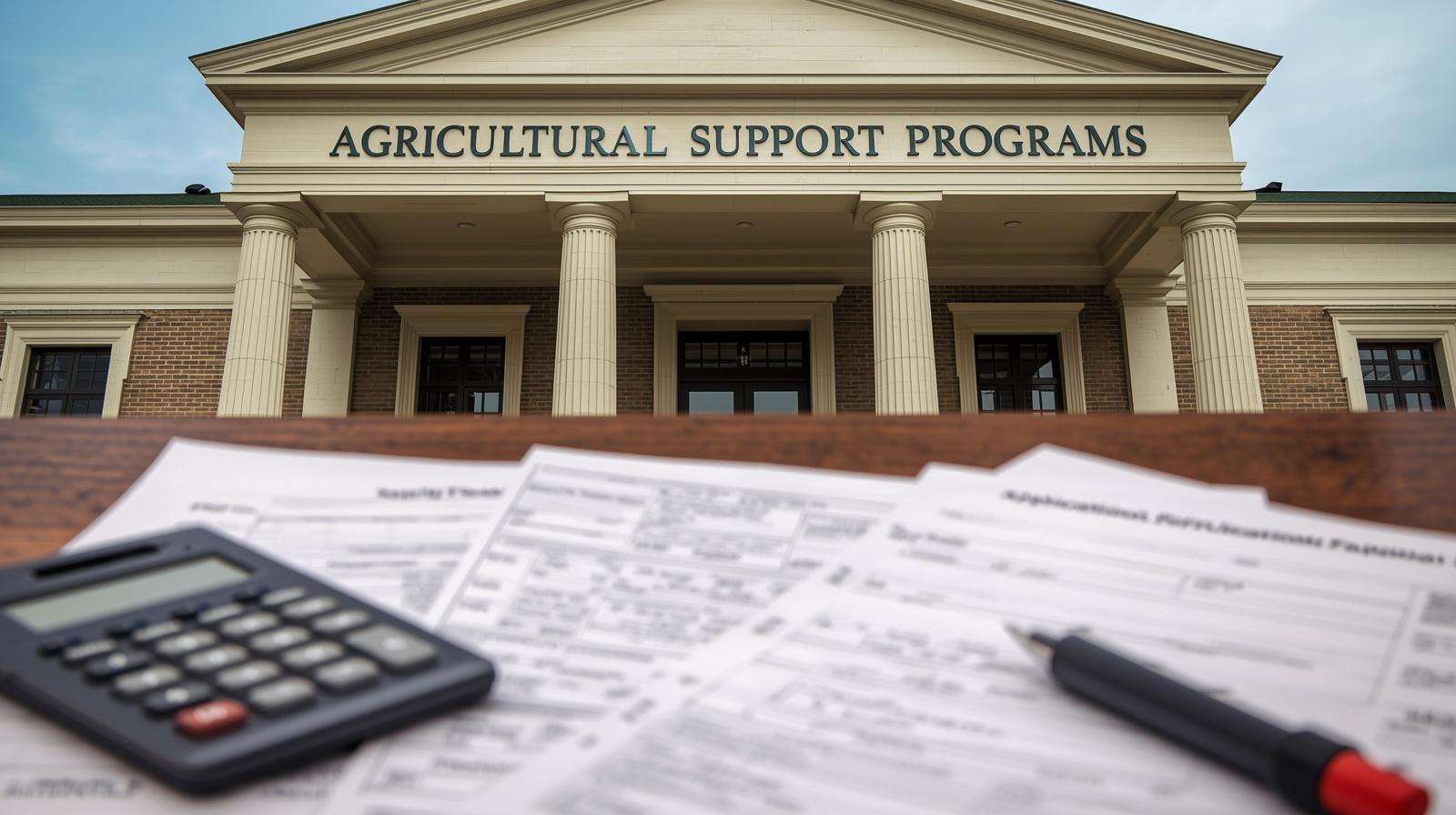
USDA FSA: direct and guaranteed loans for farmland and operating costs; good for first-time and limited-resource farmers.
-
State-level agricultural finance programs: many states offer revolving loan funds or grants—check your state Department of Agriculture.
-
How they reduce upfront needs: guaranteed loans lower down payment requirements; grants may cover soil conservation or irrigation costs.
Seller financing, rent-to-own, and cooperatives
-
Seller financing: seller acts as lender—can lower or eliminate traditional down payment, but check interest, term, and default risks.
-
Rent-to-own: lease with purchase option can spread payments and buy time to save.
-
Cooperatives and pooled purchases: multiple farmers share purchase cost and responsibilities—reduces individual cash needed but requires clear governance.How Much Money to Save Before Buying Land — Savings Guide
Microloans and NGO support
-
Micro lenders and community development financial institutions (CDFIs) often provide small loans for equipment or initial improvements but rarely finance land purchase fully.
-
Combine microloans with other financing for setup costs.
Using livestock or equipment as collateral — risks and alternatives
-
Some lenders accept equipment as collateral but this increases risk of asset seizure.
-
Alternatives: personal guarantee, cooperative guarantees, government-backed loans.
How to save faster: practical, agriculture-specific strategies
Income-boosting tactics pre-purchase
-
Grow high-value, quick-turn crops (microgreens, herbs, cut flowers) to increase cash flow.
-
Contract growing or CSA pre-sales to secure upfront cash.How Much Money to Save Before Buying Land — Savings Guide
-
Value-added processing (jams, pickles) to improve margins.How Much Money to Save Before Buying Land — Savings Guide
Cost-cutting and efficiency gains
-
Share equipment through local networks or co-ops.
-
Use seasonal labor effectively and barter services.
-
Minimize input costs with integrated pest management and soil health practices.
Budgeting techniques for seasonal income
-
Create a sinking fund: deposit a fixed percentage of every sale into a dedicated land-purchase account.
-
Separate savings accounts with automatic transfers to avoid spending temptation.
-
Time purchases to off-seasons when prices may be lower.
Grants, crowdfunding, and community solutions
-
Agricultural grants for conservation, value-added production, or beginning farmers.
-
Crowdfunding to raise purchase capital—use clear plans and community benefits to attract donors.
-
Community land trusts (CLTs) or shared equity models that lower upfront costs.
Assessing land value and avoiding costly mistakes
How to evaluate agricultural suitability (soil, water, access)
-
Soil tests: basic nutrient and pH tests (low-cost) and comprehensive tests (heavy metals, salinity) if needed.
-
Water availability: confirm well yields, irrigation rights, and quality tests.
-
Topography and drainage: steep or poorly drained land may need major investment.
Legal due diligence (title, easements, zoning)
-
Title search and insurance are non-negotiable to avoid ownership disputes.
-
Check easements, rights of way, and conservation restrictions.
-
Zoning and land-use regulations: verify allowed agricultural activities and accessory structures.
Hidden costs that eat savings
-
Environmental remediation (old dumps, pesticides, buried tanks).
-
Road maintenance for remote land.
-
Seasonal access issues (flooding, mud).
When to walk away
-
Major title defects without clear resolution path.
-
Inadequate or uncertain water access.
-
Unaffordable remediation costs revealed by inspections.
Negotiation and deal-structure tips to lower upfront cash needs
-
Ask seller to pay part of closing costs or offer credits based on inspection results.
-
Propose an escrow-based phased payment contingent on permit approvals or soil test results.
-
Negotiate for seller financing or longer amortization to reduce monthly payments.
Real farmer case studies and worked examples (U.S.-based)
Case study 1 — Smallholder in Iowa (1.5 acres for vegetable production)
-
Parcel price: $45,000
-
Financing: 10% down with FSA guaranteed loan
-
Upfront costs: $4,500 down, $1,350 closing, $6,000 operating reserve, $3,600 contingency = $15,450 total saved
-
Outcome: used CSA pre-sales and a community grant to cover initial irrigation costs; break-even by year two.
Case study 2 — Peri-urban cooperative near Portland, OR (5 acres)
-
Parcel price: $400,000 (high due to location)
-
Structure: cooperative with 5 members; each contributed 10% down ($8,000 each) plus monthly shared payments.
-
Added costs: $60,000 for infrastructure split across members; cooperative governance and lease agreements were critical to avoid disputes.
Case study 3 — Using state program in North Carolina
-
Parcel price: $120,000
-
Financing: state low-interest loan with 10% down; conservation cost-share grant covered fencing and drainage.
-
Saved: borrower needed $12,000 down, $3,600 closing, $9,000 reserves, $6,000 contingency = $30,600 total saved; grants lowered total out-of-pocket setup cost.
Tools, worksheets, and calculators
Available resources to use:
-
Savings calculator (downloadable spreadsheet): enter your parcel price, down payment %, closing %, monthly operating cost, months of reserve, and contingency % to get a personalized target.
-
Land purchase checklist: title, survey, water rights, soil tests, permits.
-
Budget template for post-purchase investments (irrigation, fencing, storage).
I can provide these downloadable templates if you’d like.
Expert tips and checklist before you buy
Concise pre-purchase checklist (10 essential checks)
-
Confirm clear title and purchase title insurance.
-
Complete soil tests and water availability checks.
-
Verify zoning and permitted land uses.
-
Get a professional land survey if boundaries unclear.
-
Inspect access roads and utility availability.
-
Estimate realistic costs for fencing, drainage, and structures.
-
Obtain multiple loan quotes and check government program eligibility.
-
Prepare a 3–6 month operating reserve.
-
Include a 5–10% contingency for unexpected costs.
-
Consult the county extension agent for local agronomic advice.
Frequently asked questions (FAQ)
Q: How much should a smallholder save for a 1-acre plot in the U.S.?
A: It depends on region. For lower-cost rural areas, plan on 15–25% of parcel price plus 3–6 months operating reserve. For example, a $50,000 plot might require $10,000–$15,000 saved under moderate targets.
Q: Is 20% down always required for farmland?
A: No. Many lenders ask for 15–25%, but USDA and some state programs offer lower down payments (sometimes 5–10%) for qualifying farmers.
Q: Can I use my crops as collateral?
A: Crop production can secure operating loans but is rarely acceptable as sole collateral for land loans. Lenders prefer real estate or equipment as collateral.
Q: How much should I keep as an emergency fund after buying land?
A: Keep at least 3–6 months of operating expenses as liquid reserve; more if you have a single season income stream or high variability.
Q: What government programs can help small farmers buy land in the U.S.?
A: USDA FSA direct and guaranteed loans, state agricultural loan programs, and certain conservation cost-share grants can help. Check your state Department of Agriculture and local USDA Service Center for details.
Conclusion and next steps
Buying land requires more than a lump-sum target: it requires a plan that covers purchase, immediate improvements, and operational resilience. Action steps:
-
Calculate your customized savings target using the worksheet formula above.
-
Contact your local USDA Service Center and state agriculture office to explore loan programs.