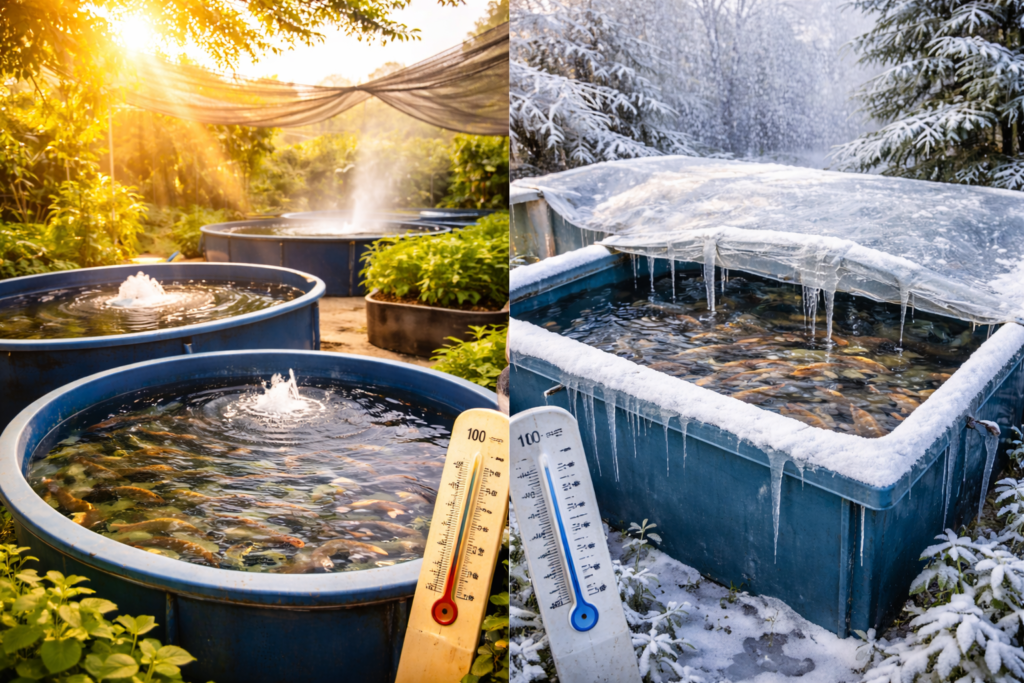
One sudden heat wave. One unexpected cold snap. That’s all it takes to wipe out months of hard work in fish farming.
Across the world, farmers and home fish keepers are losing fish not to disease or poor feed—but to extreme temperature changes they didn’t fully understand or prepare for. Whether you manage ponds, tanks, or aquaponics systems, keeping fish alive in heat waves and cold snaps has become one of the most critical survival skills in modern aquaculture.
Fish are cold-blooded animals. They cannot regulate their body temperature. When water heats up or cools down too quickly, fish experience extreme stress, oxygen shortages, immune failure, and sudden death—often without visible warning signs.
This expert guide is written from practical aquaculture experience, not theory. It explains why temperature extremes kill fish, how to recognize danger early, and what to do immediately and long-term to protect your fish stock during both scorching heat waves and unexpected cold snaps.
By the end of this article, you’ll know:
-
How heat and cold affect fish internally
-
What warning signs most farmers miss
-
Emergency actions that actually save fish
-
Long-term strategies to make your system temperature-resilient
How Temperature Affects Fish Physiology
Understanding fish biology is the foundation of protecting them.
Why Fish Are Extremely Sensitive to Temperature Changes
Fish are ectothermic (cold-blooded), meaning:
-
Their body temperature matches the surrounding water
-
Metabolism speeds up in warm water
-
Metabolism slows dramatically in cold water
Even a 2–4°C (3–7°F) sudden change can cause severe stress.
Temperature affects:
-
Oxygen demand
-
Digestion
-
Immune response
-
Toxicity of waste products (like ammonia)
Unlike land animals, fish cannot escape uncomfortable conditions. If the water temperature becomes dangerous, they are trapped.
Optimal Temperature Ranges for Common Fish Species
Knowing the safe range is more important than knowing the survival limit.
| Fish Species | Optimal Range | Danger Zone |
|---|---|---|
| Tilapia | 26–30°C (79–86°F) | Below 18°C / Above 35°C |
| Catfish | 24–30°C (75–86°F) | Below 20°C / Above 34°C |
| Carp | 20–28°C (68–82°F) | Below 10°C / Above 33°C |
| Trout | 10–16°C (50–61°F) | Above 20°C |
Expert insight:
Fish may survive outside optimal ranges, but growth, immunity, and survival rates drop sharply.
Understanding Heat Waves: The Hidden Dangers to Fish
Heat waves are now more frequent—and more deadly—than ever before.
What Happens to Fish During Extreme Heat
When water temperature rises:
1. Oxygen Levels Drop
Warm water holds less dissolved oxygen, yet fish need more oxygen as metabolism increases.
2. Ammonia Becomes More Toxic
At higher temperatures and pH, ammonia toxicity increases exponentially—burning fish gills internally.
3. Fish Experience Metabolic Overload
Fish eat more, breathe faster, and become stressed—leading to exhaustion and collapse.
Early Warning Signs of Heat Stress in Fish
Many farmers notice these signs too late:
-
Fish gasping at the surface
-
Crowding near water inflows
-
Reduced or frantic feeding
-
Sudden unexplained deaths
If you see surface gasping, you are already in an emergency window.
Keeping Fish Alive in Heat Waves (Emergency & Long-Term Guide)
Immediate Emergency Actions During Heat Waves
When temperatures spike, act first—analyze later.
1. Increase Aeration Immediately
-
Add extra air pumps
-
Use backup aerators if available
-
Break water surface tension
More oxygen = immediate survival boost.
2. Stop or Reduce Feeding
-
Feeding increases oxygen demand
-
Undigested feed pollutes water
-
Fish can survive days without food during heat stress
3. Partial Water Replacement (Carefully)
-
Replace 10–20% with cooler water
-
Avoid sudden temperature drops
-
Never add ice directly to tanks or ponds
Long-Term Heat Wave Prevention Strategies
Shade Is Not Optional
-
Use shade nets, tarps, or plant cover
-
Prevent direct sunlight on tanks
-
Reduce radiant heat buildup
Increase Water Volume
-
Deeper water heats more slowly
-
Larger volumes stabilize temperature
Floating Plants (With Caution)
-
Reduce sunlight penetration
-
Avoid excessive coverage that blocks oxygen exchange
Heat Wave Do’s and Don’ts
Do:
-
Monitor early morning oxygen levels
-
Keep aeration running continuously
-
Observe fish behavior closely
Don’t:
-
Add chemicals blindly
-
Perform large water changes
-
Overfeed “to keep fish strong”
Understanding Cold Snaps: Why Sudden Cold Is Deadly
Cold snaps are especially dangerous because they often arrive suddenly.
What Happens to Fish During Sudden Cold Weather
As water temperature drops:
-
Metabolism slows sharply
-
Digestion stops
-
Immune systems weaken
-
Fish become lethargic and unresponsive
Fish don’t die from cold alone—they die from shock and secondary stress.
Signs of Cold Stress in Fish
-
Fish resting motionless at the bottom
-
Loss of appetite
-
Slow, erratic swimming
-
Delayed mortality days after the cold event
Cold-related deaths are often mistaken for disease.
Keeping Fish Alive in Cold Snaps (Practical Protection Methods)
Emergency Actions During Sudden Cold Snaps
1. Stop Feeding Immediately
Cold fish cannot digest food. Feeding causes internal decay.
2. Avoid Water Changes
Cold replacement water worsens shock.
3. Reduce Disturbance
Handling and netting during cold stress increases mortality.
Long-Term Cold Protection Strategies
Insulate Tanks and Ponds
-
Use straw bales, foam boards, or soil banking
-
Cover tank sides, not water surface completely
Greenhouse or Plastic Covers
-
Trap daytime heat
-
Reduce night heat loss
-
Especially effective for small systems
Increase Thermal Mass
-
More water = slower temperature changes
-
Avoid shallow systems in cold-prone areas
Safe Use of Heaters
-
Only for tanks, not large ponds
-
Gradual warming is critical
-
Avoid sudden increases
Heat Waves vs Cold Snaps: Key Differences in Fish Management
| Factor | Heat Waves | Cold Snaps |
|---|---|---|
| Feeding | Reduce or stop | Stop completely |
| Aeration | Increase heavily | Maintain normal |
| Water Changes | Small, cautious | Avoid |
| Fish Activity | Hyperactive | Lethargic |
Understanding this contrast saves lives.
Special Considerations for Different Fish Farming Systems
Not all fish systems respond to temperature extremes the same way. Understanding your system type is critical when keeping fish alive in heat waves and cold snaps.
Pond Fish Farming Systems
Ponds offer some natural protection—but also unique risks.
Advantages of Ponds During Temperature Extremes
-
Larger water volume buffers sudden temperature changes
-
Natural thermal layering in deeper ponds
-
Soil acts as natural insulation
Pond-Specific Risks
-
Shallow ponds heat up and cool down faster
-
Wind can rapidly change surface temperature
-
Oxygen crashes during hot, still nights
Expert recommendation:
Ponds deeper than 1.2–1.5 meters (4–5 feet) survive heat waves and cold snaps far better than shallow ponds.
Tank-Based and Indoor Systems
Tank systems are more vulnerable—but easier to control.
Heat Risks in Tanks
-
Rapid temperature rise
-
Oxygen depletion within hours
-
High ammonia toxicity
Cold Risks in Tanks
-
Sudden overnight temperature drops
-
Limited thermal mass
Critical tank management tips:
-
Never place tanks in direct sun
-
Always have backup aeration
-
Insulate tank sides in cold seasons
Aquaponics and Recirculating Aquaculture Systems (RAS)
These systems are highly productive but extremely sensitive.
Why Aquaponics Is High Risk During Extremes
-
Fish stress affects plant health
-
System-wide failure from pump shutdown
-
Temperature swings affect nutrient balance
Protective Measures
-
Insulate fish tanks first
-
Prioritize fish survival over plant growth
-
Maintain uninterrupted water flow and aeration
Water Quality Management During Temperature Extremes
Temperature stress and water quality problems are inseparable.
Why Temperature and Water Quality Are Closely Linked
During heat waves:
-
Oxygen solubility drops
-
Ammonia toxicity increases
-
Fish respiration increases
During cold snaps:
-
Waste breakdown slows
-
Biofilters become less effective
-
pH fluctuations occur
Key Water Parameters to Monitor Closely
During extreme weather, monitor daily if possible:
-
Temperature: Watch rate of change, not just the number
-
Dissolved oxygen: Especially at dawn
-
Ammonia: More toxic in heat
-
pH: Sudden shifts increase stress
Expert insight:
Most fish deaths during extreme weather happen at night or early morning—when oxygen is lowest and temperatures shift fastest.
Feeding Adjustments During Heat Waves and Cold Snaps
Feeding errors are a leading cause of temperature-related fish deaths.
When to Reduce or Stop Feeding
During Heat Waves:
-
Reduce feeding by 30–70%
-
Feed early morning or late evening only
-
Skip feeding on extremely hot days
During Cold Snaps:
-
Stop feeding immediately
-
Resume only after temperature stabilizes
-
Start slowly with small portions
Why Overfeeding Is Deadly During Temperature Stress
Overfeeding causes:
-
Oxygen depletion
-
Ammonia spikes
-
Bacterial blooms
-
Internal fish damage
Fish can survive without food far longer than they can survive poor water quality.
Common Mistakes That Kill Fish During Extreme Weather
Avoid these costly errors:
1. Large, Sudden Water Changes
Thermal shock kills faster than poor water quality.
2. Adding Chemicals in Panic
Unnecessary treatments increase stress and toxicity.
3. Feeding to “Keep Fish Strong”
This backfires during both heat and cold stress.
4. Ignoring Early Warning Signs
Surface gasping and bottom resting are emergency signals.
5. Relying on One Power Source
Power failure during heat waves is often catastrophic.
Expert Tips to Build a Temperature-Resilient Fish Farm
Long-term survival depends on preparation, not reaction.
Design for Climate Variability
-
Choose deeper systems
-
Avoid exposed locations
-
Build wind and sun protection
Seasonal Preparation Checklist
-
Inspect aeration systems before summer
-
Prepare insulation before winter
-
Test backup power sources
Build Redundancy
-
Extra air pumps
-
Backup generators or solar aerators
-
Emergency water sources
Expert insight:
Resilient systems lose fewer fish—even in extreme conditions—than reactive systems.
Frequently Asked Questions (SEO-Optimized)
Can fish survive heat waves without aeration?
Survival chances drop drastically. Aeration is critical during heat waves.
What is the safest temperature range for most farmed fish?
Most warm-water fish thrive between 24–30°C (75–86°F).
Should I change water during extreme heat?
Only small, controlled changes using temperature-matched water.
Can fish recover after temperature shock?
Yes—if stress is reduced quickly and water quality stabilized.
How fast can temperature changes kill fish?
Sudden changes within hours can be fatal, especially for juveniles.
Final Thoughts: Building a Fish Farm That Survives Climate Extremes
Climate extremes are no longer rare events—they are the new normal.
Successfully keeping fish alive in heat waves and cold snaps requires:
-
Understanding fish biology
-
Recognizing early warning signs
-
Acting quickly but carefully
-
Designing systems with resilience in mind
Fish farming today is not just about feed and growth—it’s about temperature management, oxygen control, and preparedness.
When you plan ahead instead of reacting in panic, your fish survive—and your farm becomes stronger with every season.