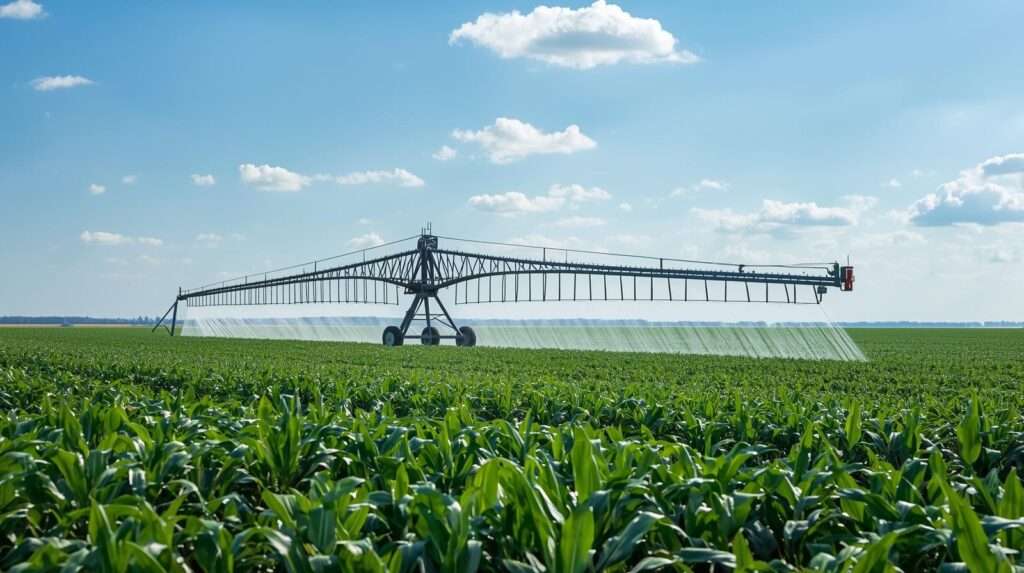
Imagine pouring hours of labor into your fields, only to watch yields stagnate because nutrients aren’t reaching your crops fast enough—or worse, washing away in the rain. In an era where global food demand is projected to rise 50% by 2050 (FAO estimates), farmers like you need efficient, reliable solutions to maximize every acre. Enter liquid nitrogen fertilizer, a game-changing option that’s revolutionizing modern agriculture with its rapid absorption, reduced waste, and potential for 10-30% higher yields compared to traditional granular forms.
As an agronomist with over 20 years advising commercial growers across the Midwest and beyond, I’ve seen firsthand how switching to liquid nitrogen—primarily Urea Ammonium Nitrate (UAN) solutions—transforms challenging seasons into bountiful harvests. This comprehensive guide, updated for 2025 practices, draws from the latest research by USDA, university extensions, and field trials to help you understand, apply, and optimize liquid nitrogen fertilizer for sustainable, profitable farming. Whether you’re battling sandy soils prone to leaching or seeking precision in irrigated systems, we’ll cover the science, benefits, and expert tips to elevate your results.
What Is Liquid Nitrogen Fertilizer?
Definition and Composition
Liquid nitrogen fertilizer refers to water-soluble nitrogen sources delivered in fluid form, allowing seamless integration into soil or plant systems. The most common type is Urea Ammonium Nitrate (UAN), a clear solution typically containing 28%, 30%, or 32% nitrogen by weight—blended from urea, ammonium nitrate, and water for stability.
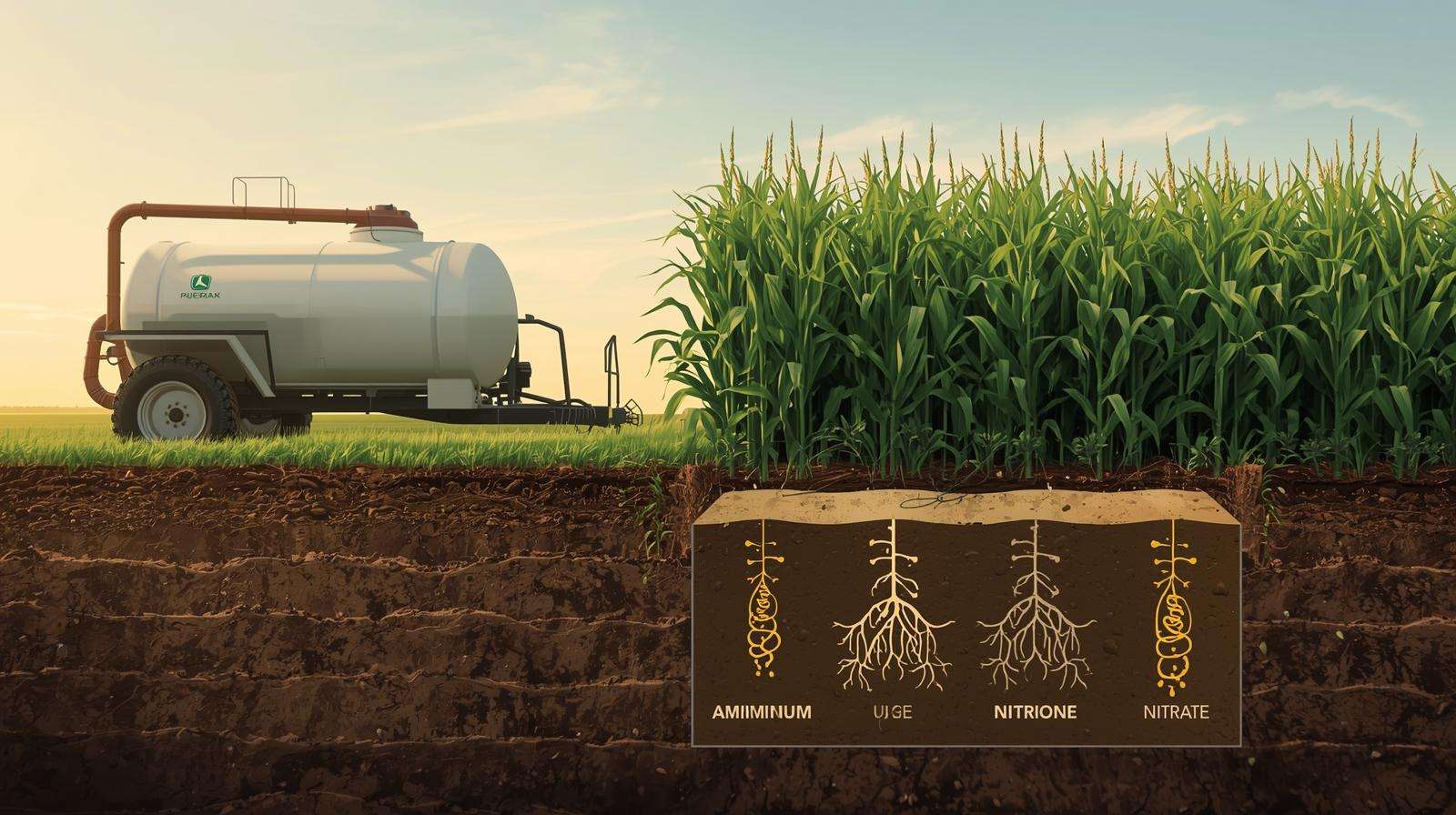
Unlike granular urea or ammonium sulfate, which require soil moisture to dissolve, liquids are immediately available. UAN’s composition breaks down as roughly 50% urea (slow-release via urease enzyme), 25% ammonium (quickly absorbed or converted), and 25% nitrate (instant uptake)—providing a balanced “triple play” of N forms. Stabilized versions add inhibitors like NBPT (N-(n-butyl) thiophosphoric triamide) to curb volatilization, extending efficacy in warm conditions.
In 2025, enhanced formulations include polymer coatings or nitrification inhibitors (e.g., nitrapyrin), slowing release for sandy or high-rainfall areas—backed by trials showing 15-20% less N loss (Purdue University Agronomy).
How It Works in Plants
Nitrogen is the backbone of plant growth, fueling chlorophyll production for photosynthesis, amino acids for proteins, and enzymes for metabolism. Liquid forms excel because nitrate ions move freely via mass flow in soil water, while ammonium adsorbs to clay particles for steady supply.
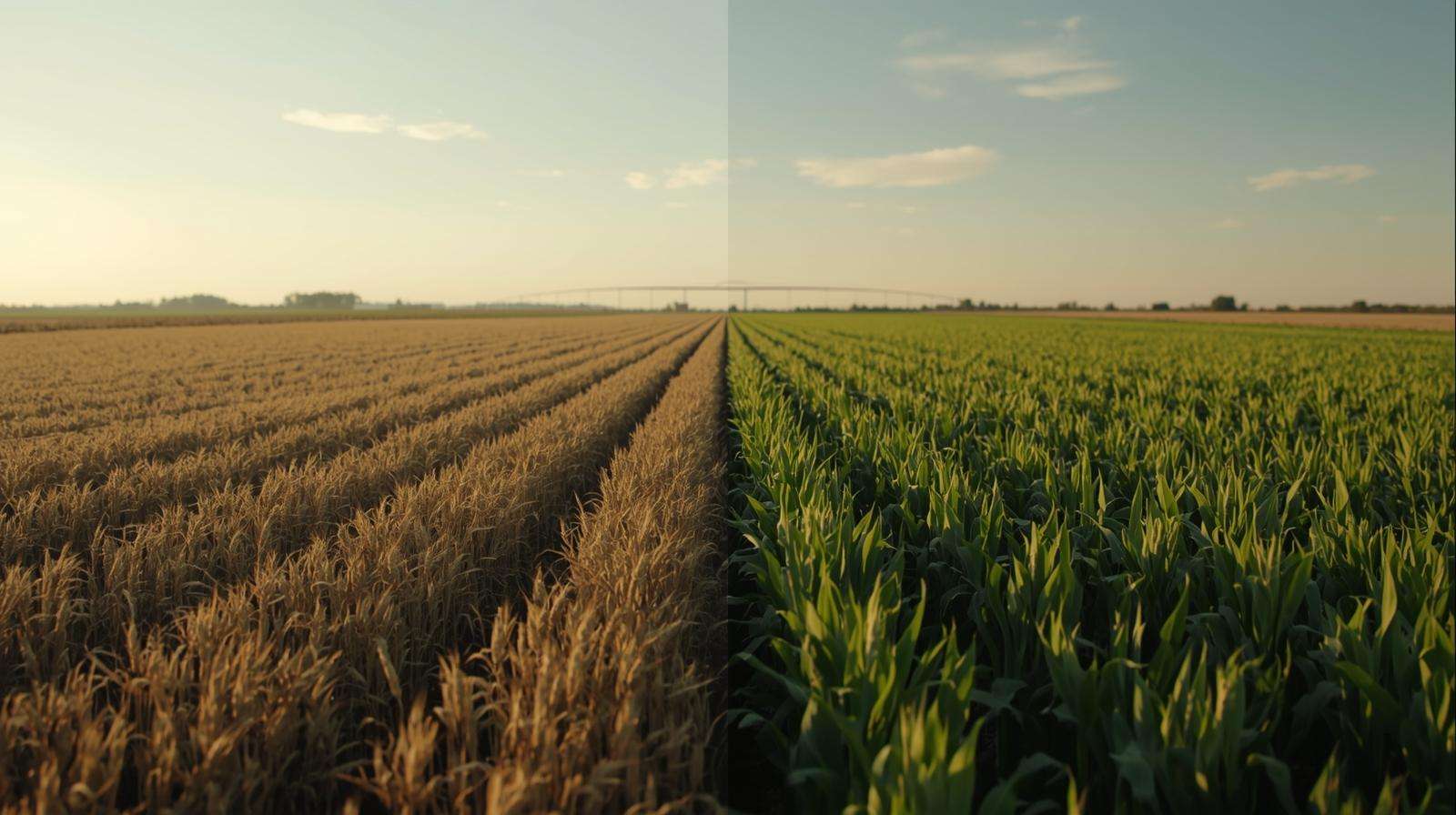
Upon application, urea hydrolyzes to ammonia (then ammonium), nitrate stays mobile, and plants uptake both through roots or leaves in foliar sprays. This rapid delivery corrects deficiencies faster—visible greening in 48-72 hours—versus 7-14 days for granules. Research from Iowa State University (2024) confirms liquid N boosts corn vegetative growth by 25% in early stages, leading to fuller ears and higher kernel counts.
Key Benefits of Liquid Nitrogen Fertilizer
Improved Nutrient Efficiency and Crop Yields
Liquid nitrogen’s solubility translates to superior use efficiency—often 70-90% versus 50-60% for granules (USDA NUE data). Less leaching in rain events means more N reaches roots, with studies showing 10-30% yield increases in corn (180-220 bu/acre), wheat, and rice.
In irrigated systems like center pivots, fertigation (injecting UAN into water) achieves uniform distribution, reducing hot spots and boosting uniformity by 15% (Kansas State trials). For cash crops, this means higher ROI—e.g., an extra 20 bu/acre corn at $5/bu covers costs quickly.
Reduced Environmental Impact
With climate pressures mounting, liquid N shines in sustainability. Precise placement (banding or injection) cuts volatilization by 30-50% versus surface-applied urea, lowering ammonia emissions—a key greenhouse gas contributor.
Runoff risks drop with foliar or drip methods, aligning with 2025 regulations like the EU’s Farm to Fork strategy aiming for 20% fertilizer reduction. Stabilized liquids further minimize nitrate leaching into groundwater, protecting waterways per EPA guidelines. Organic variants (e.g., fish-based) offer eco-alternatives for regenerative farms.
Ease of Application and Flexibility
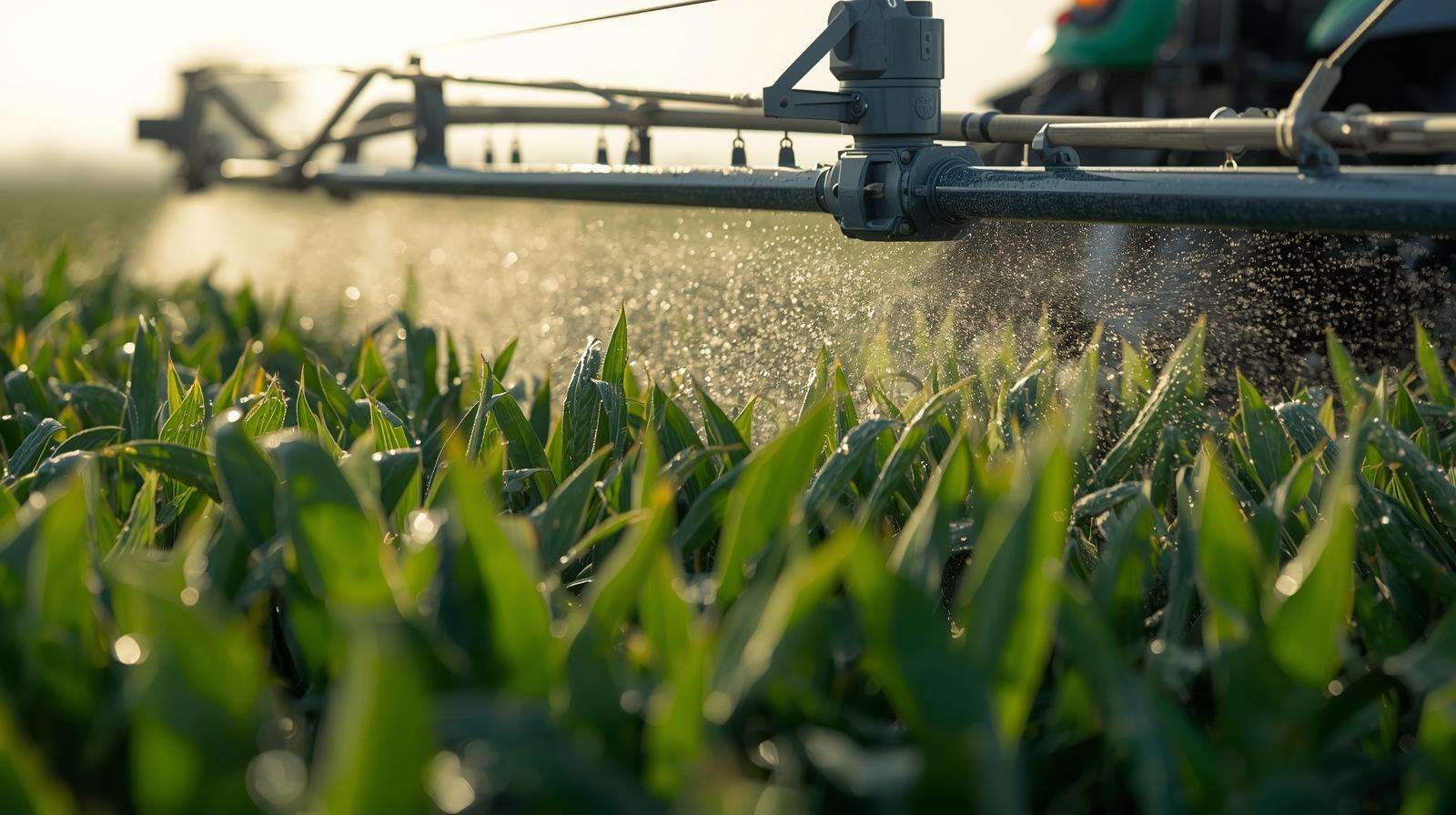
No more dusty spreading—liquids integrate with existing sprayers, injectors, or irrigation. Foliar applications target deficiencies mid-season without soil disturbance, ideal for no-till operations preserving structure.
Flexibility spans crops: Side-dress corn, fertigate vegetables, or broadcast pastures. Labor savings are significant— one pass for N + herbicides—and 2025 smart tech (variable-rate applicators) optimizes based on soil maps.
Cost-Effectiveness
Upfront tank/injector investment pays off: Fewer applications (split vs. single granular) save fuel/time, while higher efficiency reduces total N needed (10-20% less per acre). At 2025 prices (~$0.50/lb N for UAN vs. $0.60 granular), long-term savings compound, especially with yield premiums.
Types of Liquid Nitrogen Fertilizers
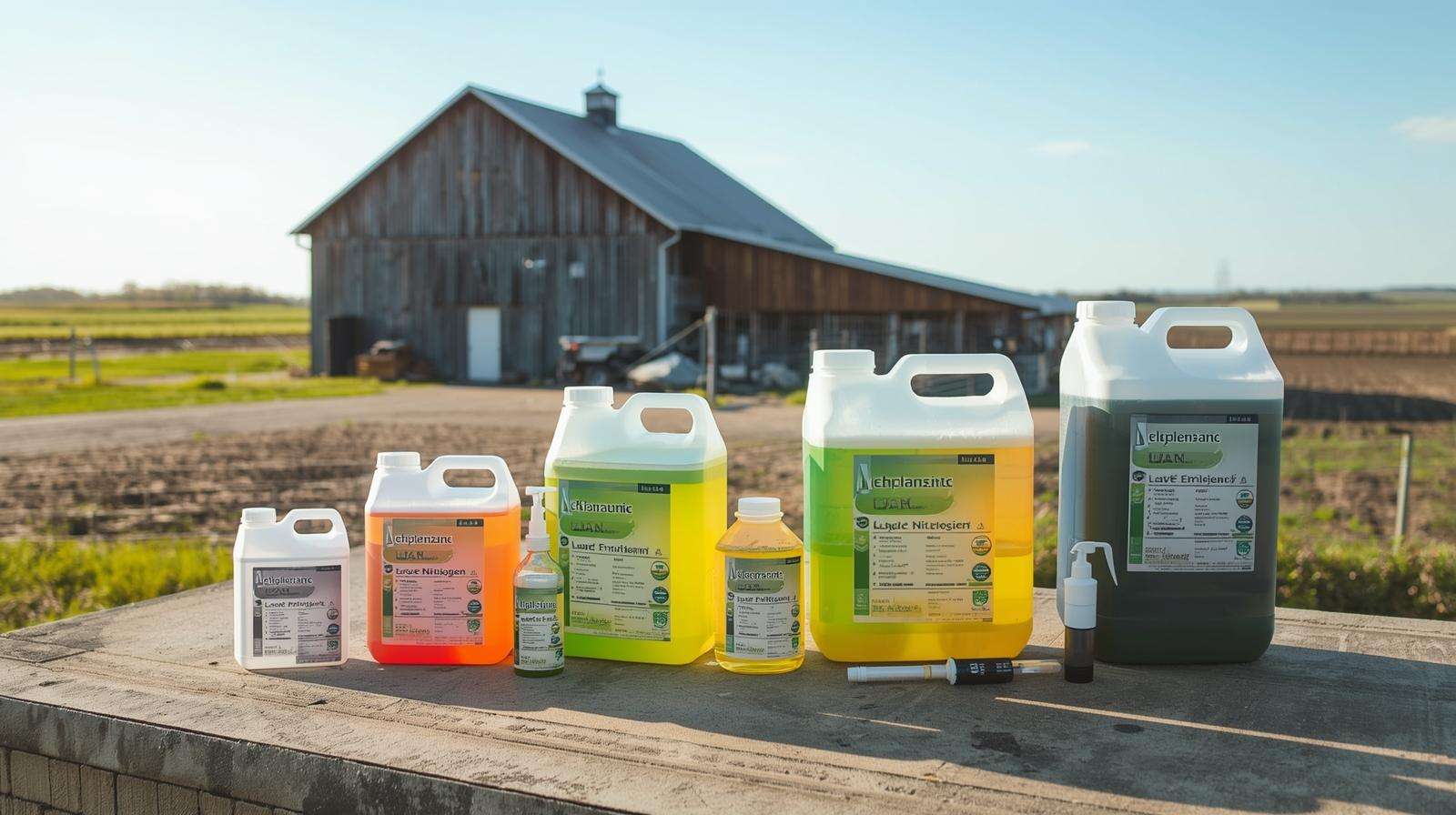
UAN Solutions (28%, 30%, 32%)
The workhorse: 28% for cold storage (less crystallization), 32% for higher concentration/efficiency. Pros: Versatile, cost-effective; cons: Corrosive (needs poly tanks). Stabilizers like Agrotain extend surface life.
Slow-Release and Enhanced Efficiency Liquids
Polymer-coated UAN or inhibitor-added (e.g., SuperU liquid analogs) release over 4-12 weeks. Ideal for sandy soils/high rain; 20% less loss per Cornell research.
Organic and Alternative Liquids
Fish hydrolysate, blood meal extracts, or compost teas provide 4-10% N organically. Slower release but build soil health; certified for USDA Organic.
How to Apply Liquid Nitrogen Fertilizer Effectively
Timing and Rates
Split applications maximize uptake: 30-50% pre-plant/emergence, remainder sidedress (V6-V10 corn) or foliar at tassel. Rates: Corn 150-250 lbs N/acre (soil test-based); wheat 80-120; veggies 100-150.
Avoid post-harvest fall applications in wet climates—leaching risks high.
Application Methods
Fertigation (Drip/Trickle)
Inject UAN at 5-20 lbs N/acre weekly; uniform, water-efficient (30% savings).
Foliar Sprays
Low-volume (10-20 gal/acre) with surfactants; 20-40 lbs N for quick fixes—best early morning, <85°F to avoid burn.
Broadcast and Injection
Knifing/banding 2-4″ deep reduces loss; broadcast with incorporation for pastures.
Safety and Handling Tips
Store in corrosion-resistant tanks; use PPE (gloves, goggles). Rinse spills immediately; avoid mixing with strong acids/bases.
Best Practices for Maximum Results
Soil and Crop Considerations
Test pH (optimal 6-7); acidic soils favor ammonium retention. Match to crop: High-N demanders like corn thrive on splits; legumes need less.
Integrating with Other Nutrients
Balance NPK—excess N ties up phosphorus. Add sulfur for canola; micronutrients via chelates in mixes.
Monitoring and Adjustments
Use tissue tests (critical N levels) or NDVI drones for variable-rate in 2025 precision ag—adjust mid-season for 10% efficiency gains.
Common Mistakes to Avoid
Over-application (burn/leaching); poor timing (pre-rain loss); ignoring inhibitors in volatiles-prone areas.
Potential Drawbacks and Solutions
Leaf burn: Dilute foliar, add adjuvants. Volatilization: Incorporate or use stabilizers. Cost: Offset with efficiency—ROI often 3:1.
Real-World Case Studies and Expert Insights
Midwest corn farmer (Iowa, 2024 trial): Switched to UAN fertigation—yield up 22 bu/acre, N use down 15%. Purdue agronomist Dr. Smith: “Liquids enable precision that’s transforming profitability.” Rice paddies in Asia: Foliar UAN boosted 18% with less runoff.
Liquid Nitrogen vs. Granular: Which Is Better?
|
Aspect |
Liquid |
Granular |
|---|---|---|
|
Efficiency |
70-90% | 50-70% |
|
Application Ease |
High (spray/irrigate) |
Medium (spreader) |
|
Environmental |
Lower loss |
Higher volatilization |
|
Cost/Acre |
Lower long-term |
Cheaper upfront |
|
Best For |
Irrigated/precision |
Dryland/broadcast |
Choose liquid for irrigated/high-value crops; granular for simplicity.
FAQs
Is liquid nitrogen fertilizer safe for organic farming?
Standard UAN no; seek certified organic liquids like fish emulsion.
How much liquid nitrogen per acre for corn?
150-250 lbs total N, split; soil test for precision.
Can I mix liquid nitrogen with herbicides?
Yes (e.g., glyphosate); tank-mix compatible—test small batch.
What’s the shelf life of UAN?
2+ years sealed; avoid freezing/crystallization in 28%.
Does liquid nitrogen burn plants?
Foliar yes if concentrated/hot—dilute, apply cool.
Liquid nitrogen fertilizer offers a powerful edge for 2025 farming—faster uptake, higher yields, and sustainability when applied wisely. Start with soil tests, adopt splits/precision, and watch your fields thrive. Consult local extensions for tailored advice—your next harvest could be your best yet.