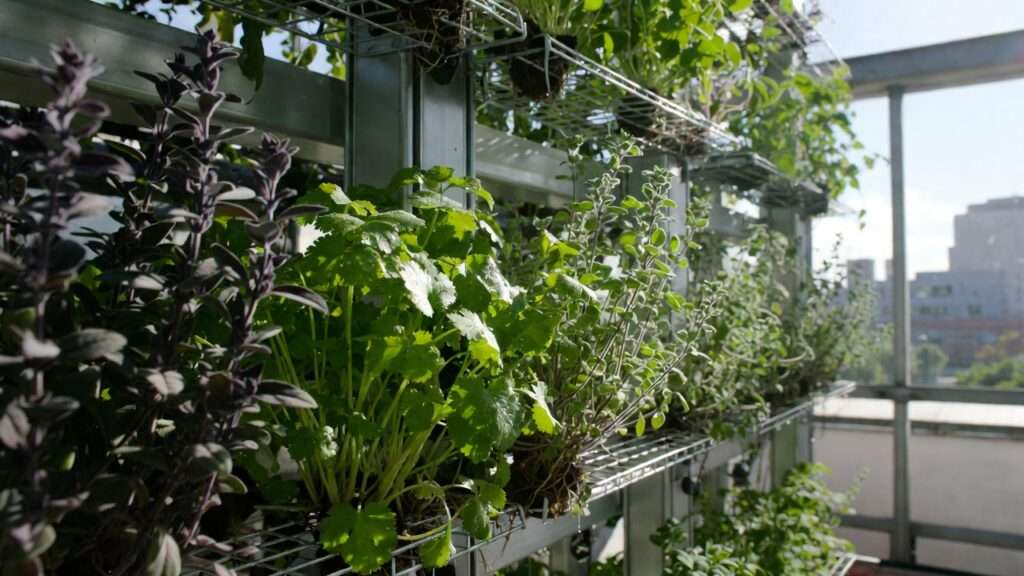
Imagine savoring the vibrant, authentic flavors of fresh cilantro in your homemade salsa, pungent epazote in your black beans, or robust Mexican oregano in your moles—no matter the season, without relying on imported bundles that lose potency during transport or dealing with unpredictable weather ruining your garden harvest. In regions where tropical heat, heavy rains, and limited space make traditional soil-based herb growing challenging, many home cooks, urban gardeners, and small-scale farmers face the same frustration: inconsistent access to high-quality Mexican herbs.
Mexican herbs bring irreplaceable depth to global cuisines, yet seasonal bolting, pest issues, and climate variability often limit their availability. Vertical farming innovations offer a game-changing solution: controlled-environment systems that deliver year-round freshness, dramatic water savings (up to 95% less than conventional methods), pesticide-free growth, and higher yields in compact spaces. This approach is particularly powerful for aromatic, leafy herbs that thrive in hydroponic or aeroponic setups.
In this comprehensive guide, we’ll explore the top Mexican herbs suited to vertical farming, why these systems excel for them, the most innovative techniques available today, a detailed step-by-step setup process, optimization tips to maximize flavor and yield, real-world examples, and practical troubleshooting. Whether you’re a home enthusiast seeking kitchen-fresh supplies or a small grower aiming for sustainable production, you’ll gain expert insights to achieve consistent, superior results.
What Are Mexican Herbs? Key Varieties for Authentic Cuisine
Mexican cuisine relies heavily on fresh herbs to balance heat, earthiness, and brightness in dishes from street tacos to complex moles. These herbs—many native or long-adapted to Mexico—offer not just bold flavors but also health benefits like antioxidants, digestive support, and anti-inflammatory properties.
Here are the most popular and vertical-farm-friendly varieties:
- Cilantro (Coriandrum sativum): The bright, citrusy staple in salsas, guacamole, tacos, and soups. Fast-growing (ready in 4-6 weeks) but prone to bolting in heat.
- Epazote (Dysphania ambrosioides): Pungent, resinous with notes of citrus, mint, and anise; essential for black beans, quesadillas, and mushroom dishes to reduce gas and enhance depth.
- Mexican Oregano (Lippia graveolens): Earthier and more potent than Mediterranean oregano, with hints of citrus and pepper; ideal for marinades, stews, and salsas.
- Culantro / Recao (Eryngium foetidum): A stronger, longer-lasting cilantro alternative used in sofritos, soups, and Caribbean-influenced Mexican recipes.
- Hierbabuena (Spearmint / Mentha spicata): Refreshing mint for aguas frescas, teas, and desserts; vigorous grower perfect for continuous harvest.
- Pipicha (Porophyllum tagetoides): A springtime Oaxacan favorite with a tangy, cilantro-like punch; used in fresh salsas and bean dishes.
- Others like bay leaves (Laurus nobilis, compact varieties) and parsley complement these as accents.
| Herb | Growth Cycle | Flavor Profile | Primary Culinary Uses | Vertical Suitability | Common Challenges |
|---|---|---|---|---|---|
| Cilantro | 4-8 weeks | Bright, citrusy, soapy to some | Salsas, tacos, garnishes | High (NFT/Aeroponics) | Bolting in heat |
| Epazote | 6-10 weeks | Pungent, medicinal, citrus-mint | Beans, quesadillas, moles | High | Strong flavor overuse |
| Mexican Oregano | 8-12 weeks | Earthy, robust, peppery | Stews, marinades, salsas | Excellent | Slower establishment |
| Culantro | 6-9 weeks | Intense cilantro-like | Sofritos, soups | High | Similar to cilantro |
| Hierbabuena | Continuous | Fresh, minty | Drinks, teas, desserts | Excellent | Overgrowth |
| Pipicha | 5-8 weeks | Tangy, cilantro-pine | Fresh salsas, beans | Good | Seasonal preference |
These herbs belong to families like Apiaceae (cilantro, culantro) and Lamiaceae (oregano, mint), which respond exceptionally well to controlled hydroponic/aeroponic environments due to their compact roots and preference for consistent moisture and nutrients.
Why Vertical Farming is Ideal for Mexican Herbs
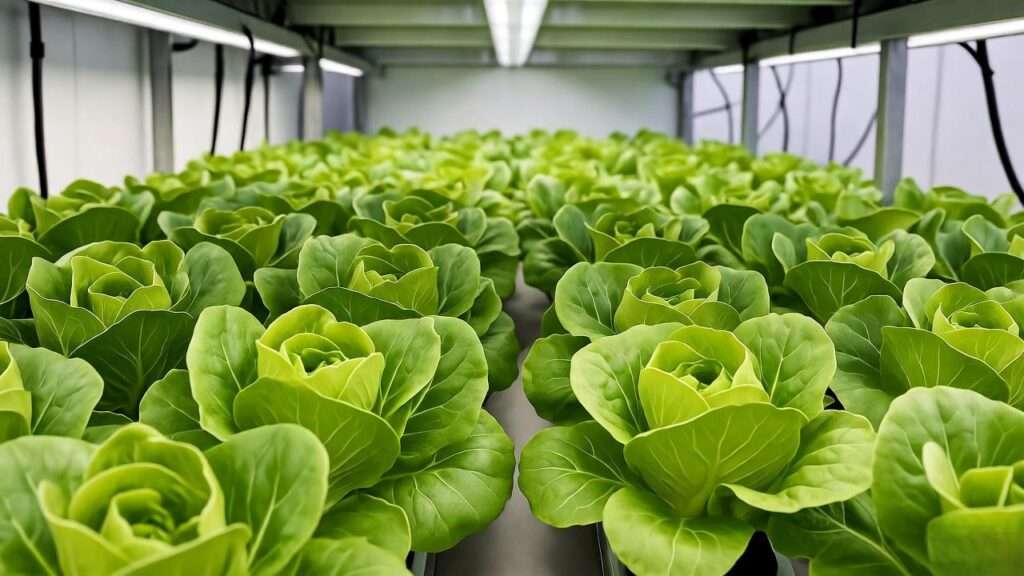
Traditional outdoor or greenhouse growing exposes herbs to pests, soil-borne diseases, extreme weather, and seasonal shifts—issues amplified in humid, flood-prone areas. Vertical farming addresses these with stacked, soilless systems in controlled environments.
Key advantages include:
- Year-round production: Independent of seasons; maintain optimal temperatures (65-75°F/18-24°C) to prevent bolting in heat-sensitive herbs like cilantro.
- Space optimization: Stack layers for 10-30x higher yields per square foot—perfect for urban or small plots.
- Resource efficiency: Recirculating systems use 90-95% less water through precise delivery and recapture of transpired moisture; minimal fertilizers via tailored nutrient solutions.
- Pesticide-free growth: Enclosed setups reduce pest pressure, yielding cleaner, more nutrient-dense herbs.
- Faster cycles and consistent quality: Enhanced oxygenation and lighting boost growth rates (e.g., cilantro in 4-5 weeks vs. 6-8 in soil) and preserve volatile oils for superior flavor.
- Sustainability: Lower transport emissions; studies show aeroponic systems can cut CO2 impact significantly when powered renewably.
In Mexico and Latin America, vertical farming (especially hydroponics) dominates for herbs and leafy greens, with companies like Origeen using proprietary VPOT systems to grow cilantro, hierbabuena, and more in urban settings. Research confirms these methods increase bioactive compounds while conserving resources—vital for water-scarce or urban regions.
Top Innovative Vertical Farming Systems for Mexican Herbs
Several soilless systems suit Mexican herbs, with differences in setup, cost, and performance.
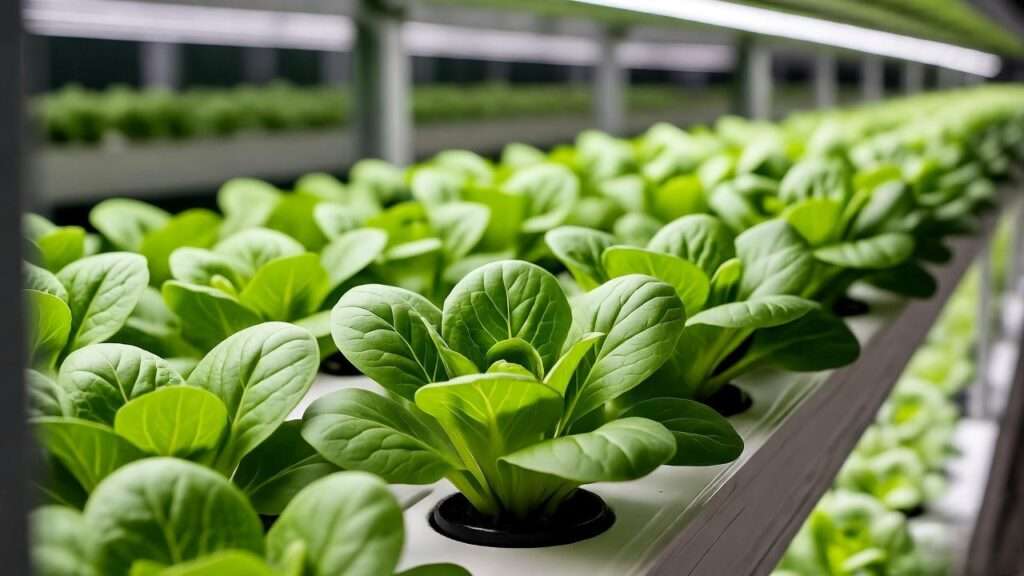
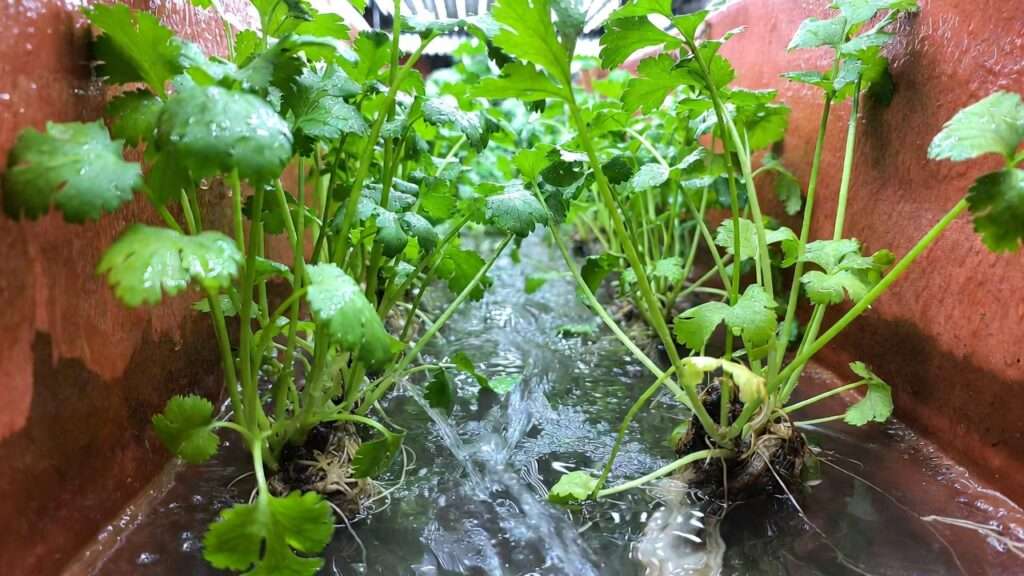
- Nutrient Film Technique (NFT): A thin nutrient film flows over roots in channels. Excellent for cilantro, Mexican oregano, and culantro due to constant moisture and oxygenation. Pros: Simple, low-cost; high density. Cons: Sensitive to pump failures. Ideal for beginners and commercial leafy production.
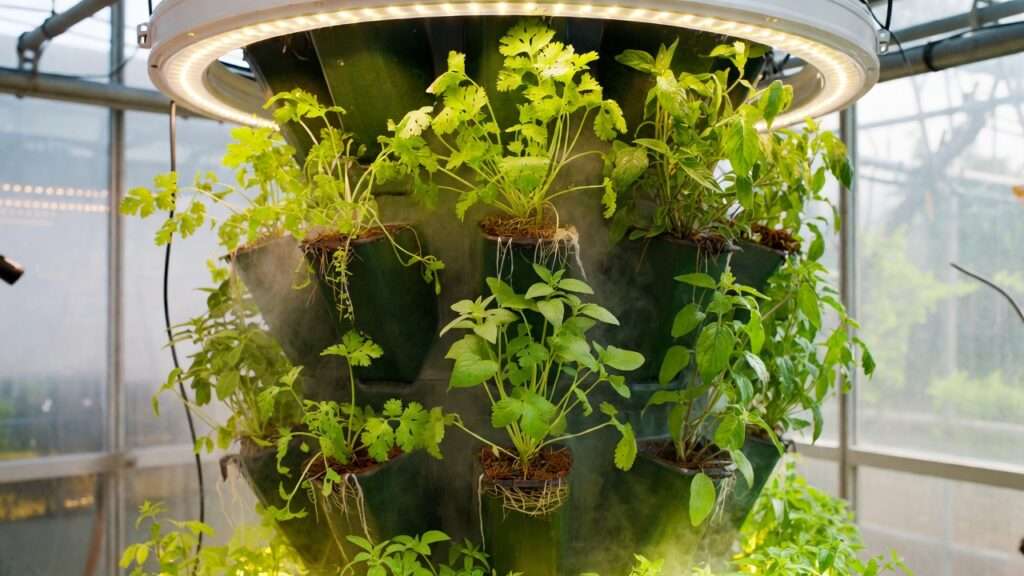
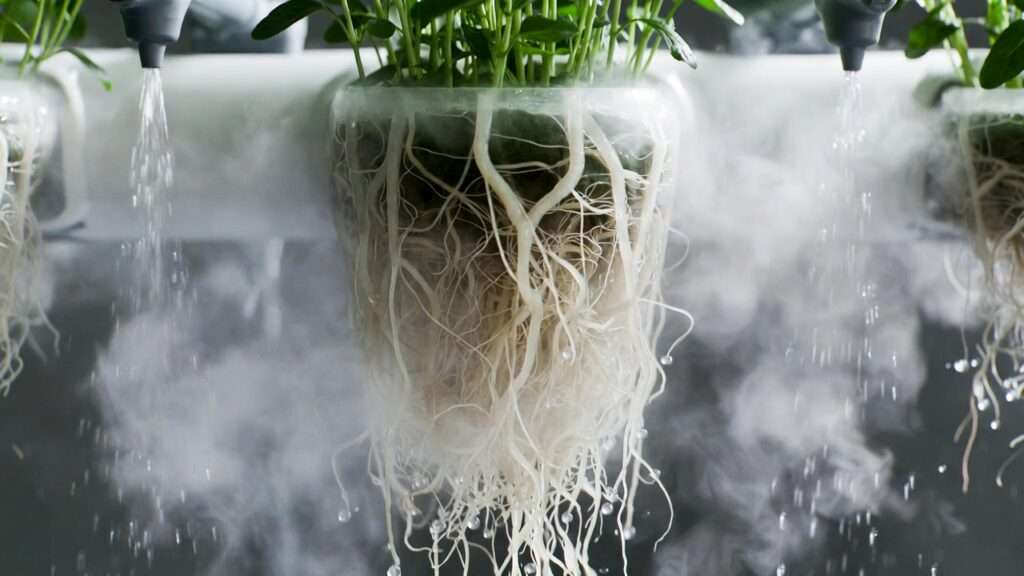
- Aeroponics: Roots misted with nutrient solution in air. Superior for epazote, hierbabuena, and cilantro—up to 20% faster growth, richer flavors from better oxygenation. Pros: 95%+ water savings, high yields (e.g., towers yield 7-9x more cilantro per m²). Cons: Higher initial cost. Towers like Agrotonomy or Origeen’s VPOT excel here.
- Deep Water Culture (DWC)/Raft: Roots suspended in oxygenated nutrient water. Great for mints and oregano. Pros: Forgiving for home use. Cons: Less efficient for fast-bolting types.
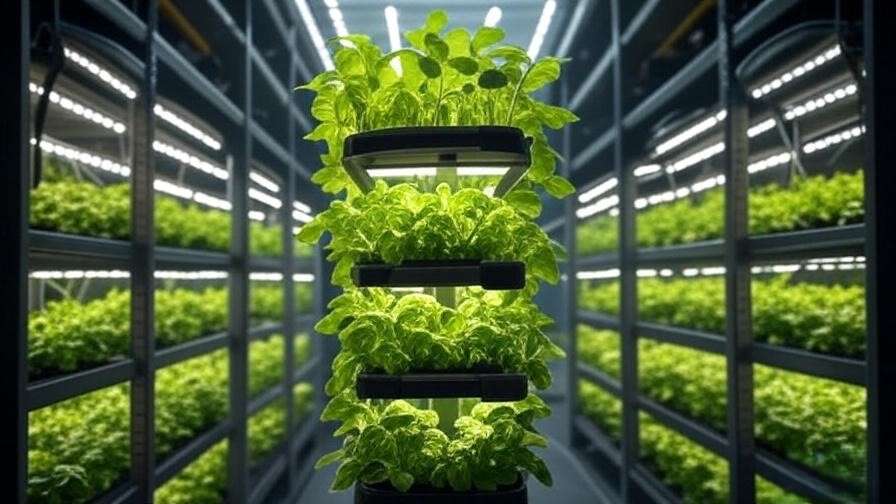
- Vertical Towers/Modular Systems: Stacked pods (e.g., aeroponic towers). High-density for small spaces; proven for cilantro (up to 52 plants/m²).
- Hybrid/Modular: Combine elements for scalability, from home units (AeroGarden-style) to commercial container farms.
Comparison Table:
| System | Best Herbs | Water Savings | Yield Boost | Cost Level | Scalability |
|---|---|---|---|---|---|
| NFT | Cilantro, Oregano, Culantro | 90% | High | Low-Medium | Good (channels) |
| Aeroponics | Epazote, Hierbabuena, Cilantro | 95%+ | Very High | Medium-High | Excellent (towers) |
| DWC | Mint, Oregano | 85-90% | Medium | Low | Home-focused |
| Towers | All leafy/aromatic | 90-95% | High | Medium | Urban/small comm. |
Aeroponics and NFT lead for Mexican herbs, aligning with Mexico’s growing vertical market (hydroponics at ~63% share, aeroponics fastest-growing).
Step-by-Step Guide: Setting Up Your Vertical System for Mexican Herbs
Setting up a vertical farming system for Mexican herbs is straightforward and scalable, whether you’re starting with a small home tower or expanding to a commercial setup. The process focuses on creating a stable, controlled environment that mimics ideal growing conditions while leveraging soilless efficiency.
- Choose Your System and Location Assess your space and goals. For beginners in areas like Barishal with humid, rainy climates, start with a compact aeroponic tower (e.g., 4-6 ft tall, holding 20-52 plants) or NFT channels on a wall/rack. These systems excel indoors or in covered patios, protecting against heavy rains and pests. Select a spot with access to electricity (for pumps/lights) and good ventilation. Aim for 65-75°F (18-24°C) ambient temperature; use fans or AC if needed.
- Gather Equipment and Materials
- Structure: Aeroponic tower (pre-built like Tower Garden or VPOT-style from Origeen-inspired designs), NFT channels (PVC pipes), or modular racks.
- Reservoir: 20-50 gallon food-grade tank for nutrient solution.
- Pump: Submersible, low-wattage (e.g., 200-400 GPH) with timer for misting (aeroponics) or flow (NFT).
- Lighting: Full-spectrum LED grow lights (PPFD 200-400 µmol/m²/s for herbs), 16-18 hours/day.
- Nutrients: Hydroponic formula balanced for leafy herbs (e.g., higher nitrogen for vegetative growth; brands like General Hydroponics or custom mixes with NPK 3-1-2 ratio). Include calcium/magnesium boosts.
- pH/EC Tools: Digital meter (target pH 5.5-6.5, EC 1.0-2.0 mS/cm).
- Seeds/Seedlings: Heirloom varieties for authenticity (e.g., slow-bolt cilantro, Mexican oregano from reliable suppliers).
- Net Pots/Plugs: Rockwool cubes or clay pebbles for support.
- Assembly and Installation
- Place reservoir on level ground; connect pump and tubing. For aeroponics, attach misting nozzles inside tower sections. For NFT, slope channels 1-2% for flow.
- Install lights 12-18 inches above plants (adjustable).
- Fill reservoir with water, add nutrients, adjust pH/EC. Test circulation—ensure even distribution without leaks.
- Add beneficial microbes (e.g., hydroguard) to prevent pathogens.
- Planting Specifics for Mexican Herbs
- Propagation: Start seeds in rockwool cubes under humidity dome (70-80% RH) for 7-14 days. Transplant at 2-4 true leaves. Cuttings work well for oregano, mint, epazote.
- Spacing: 4-8 inches apart in towers/channels (denser in aeroponics for high yields). Cilantro/culantro: 52 plants/m² possible; oregano: 20-30.
- Germination Tips: Cilantro germinates best at 60-70°F; epazote tolerates wider ranges. Keep media moist but not waterlogged.
- Nutrient and Environmental Management
- Use a vegetative formula initially, then transition to bloom if flowering (rare for herbs). Monitor weekly: Change solution every 1-2 weeks or top off with fresh mix.
- Temp/Humidity: 65-75°F day, 60-70°F night; 50-70% RH. Prevent bolting in cilantro with cooler nights.
- Lighting: 16-18 hours; dim slightly for mint to avoid legginess.
- Maintenance Routine
- Daily: Check pH/EC, reservoir level, pump function. Prune for bushiness (remove tops of cilantro to delay bolting).
- Weekly: Inspect roots (pearly white = healthy), clean filters, adjust nutrients.
- Harvest: Use cut-and-come-again—snip outer leaves for continuous regrowth. Peak flavor: Morning harvest when oils are highest.
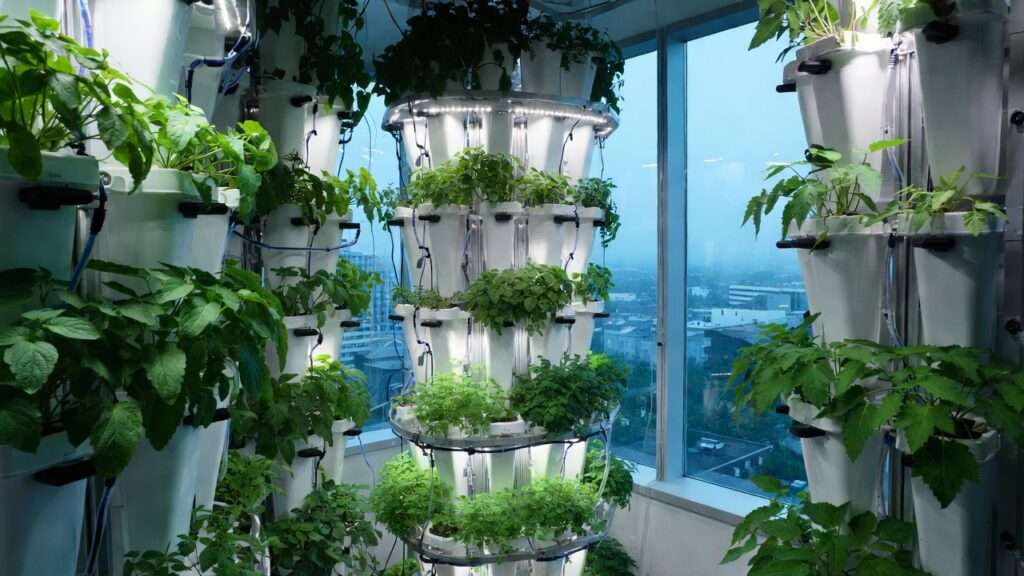
This setup can yield fresh cilantro in 4-6 weeks, with ongoing harvests for months.
Optimization Tips and Troubleshooting for Maximum Freshness and Yield
To elevate your system beyond basics, focus on flavor-enhancing tweaks and proactive fixes.
- Lighting Tweaks for Flavor Intensity: Increase blue-spectrum LEDs for compact growth and stronger aromatics in oregano/epazote. Extend to 18 hours for faster cilantro cycles.
- Preventing Common Issues:
- Bolting (especially cilantro): Maintain cooler temps (<75°F), provide shade cloth if needed, harvest early.
- Nutrient Deficiencies: Yellow lower leaves = nitrogen low; burnt tips = excess salts. Flush and recalibrate EC.
- Root Rot: Caused by low oxygen or pathogens (Pythium). Ensure strong aeration (air stones in reservoir), keep water <72°F, add beneficial bacteria. Brown, slimy roots signal trouble—trim affected parts, sterilize system.
- Pests: Rare in closed systems; use neem oil or sticky traps if aphids appear.
- Advanced Innovations: Add CO2 enrichment (800-1200 ppm) for 20-30% yield boost; use AI sensors for automated pH/EC adjustments. Integrate renewable solar power for sustainability.
With these, expect 7-10 kg cilantro per m² annually in aeroponics—far surpassing soil methods.
Real-World Examples and Case Studies
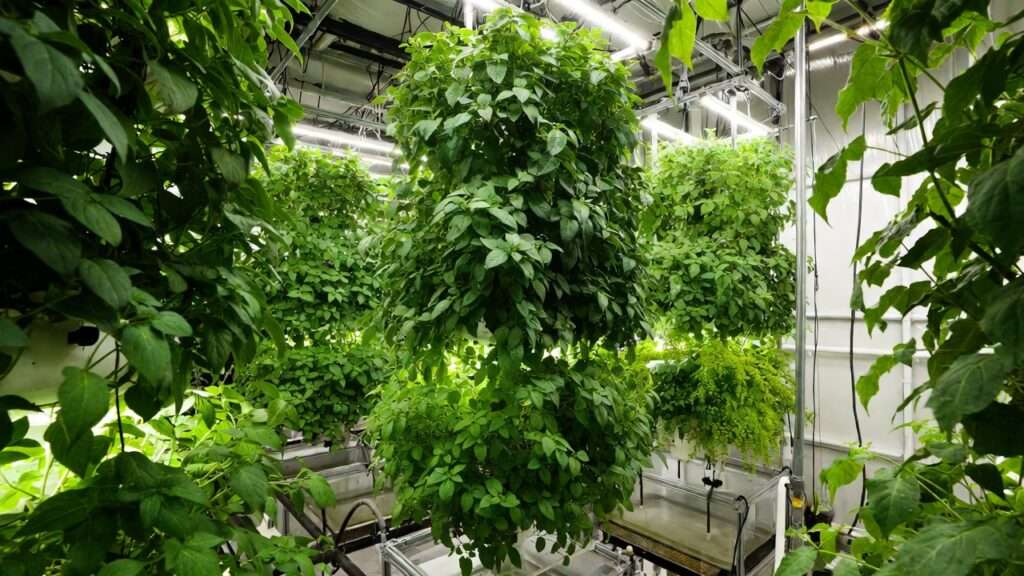
Vertical farming for herbs is gaining traction globally, including in Mexico. Origeen, a Mexican innovator, uses its patented VPOT modular hydroponic walls (up to 4m tall) to grow cilantro, hierbabuena (spearmint), basil, and more in urban settings. Their enclosed systems provide full control over environment, yielding pesticide-free, local produce for hotels and markets—reducing transport and ensuring freshness.
Internationally, Agrotonomy’s aeroponic towers demonstrate cilantro maturing in 4 weeks, with up to 52 plants/m² and 7 kg harvests per square meter. Florida greenhouse trials (2001, updated practices) show vertical hydroponics producing consistent fresh-cut herbs like oregano and parsley with high efficiency. Urban farmers using similar towers report year-round supply, even in challenging climates, with 90-95% water savings.
These examples prove the model’s viability for small-scale growers seeking authentic Mexican herb production.
Conclusion
Vertical farming transforms how we grow Mexican herbs, delivering year-round freshness, superior flavor, and sustainability in compact, controlled setups. By mastering innovative techniques like aeroponics and NFT, you overcome seasonal limitations, reduce resource use, and enjoy pesticide-free harvests straight to your kitchen or market.
Start small—perhaps with a single aeroponic tower for cilantro and hierbabuena—then scale as you gain confidence. Experiment with varieties, monitor closely, and you’ll achieve reliable, high-quality results that enhance authentic Mexican cooking while supporting eco-friendly agriculture. The future of fresh herbs is vertical—dive in and grow your own vibrant supply today.
FAQs
What is the best beginner system for growing Mexican herbs vertically? Aeroponic towers are ideal—simple assembly, high oxygenation for fast growth in cilantro, oregano, and mint. NFT channels offer a low-cost alternative for home use.
How do I prevent cilantro from bolting in vertical farming? Keep temperatures below 75°F (especially nights), use slow-bolt varieties, provide consistent moisture, and harvest frequently to encourage vegetative growth.
What are approximate costs for a home setup? Basic aeroponic tower kit: $300-800 (including lights/pump). Ongoing: $50-100/month for nutrients/electricity. Commercial scale starts at $5,000+ for multiple units.
Does hydroponic/aeroponic flavor match soil-grown Mexican herbs? Often better—enhanced oxygenation preserves volatile oils for bolder flavors in oregano and epazote. Many growers report superior taste due to nutrient precision.
Can these systems be organic-certified? Yes, with OMRI-listed nutrients and no synthetic pesticides. Focus on microbial inputs and clean practices.
How much water do vertical systems save compared to traditional growing? 90-95% less—recirculating designs recapture and reuse most water, ideal for water-conscious regions.
What if I experience root rot? Trim damaged roots, sterilize system with hydrogen peroxide, boost oxygenation (air stones), lower water temp, and add beneficial microbes. Prevention is key.
Are Mexican herbs like epazote suitable for aeroponics? Absolutely—its compact roots and aromatic profile thrive with misted oxygenation, yielding pungent leaves faster than soil.
How long until first harvest? Cilantro/culantro: 4-6 weeks; oregano/mint: 6-10 weeks from transplant, then continuous.
Can I grow these outdoors in tropical climates like Barishal? Yes, in shaded, covered setups to control humidity and prevent fungal issues—vertical towers protect from heavy rain.