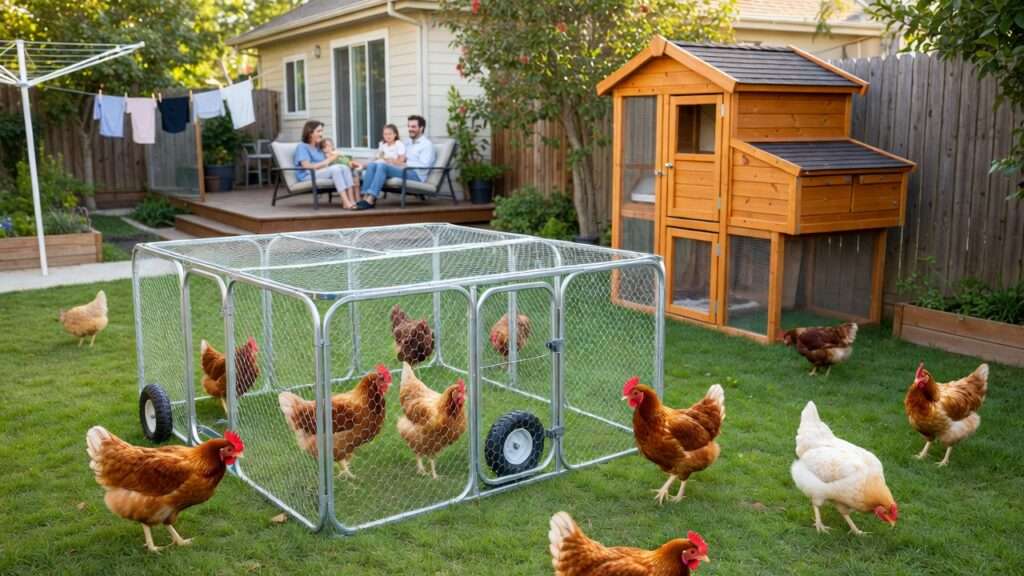
Picture this: It’s a crisp morning in your suburban backyard, and you’re greeted by the cheerful clucking of your small flock as they scratch and peck happily. Fresh eggs wait in the nesting boxes, your lawn looks lush and green, and there’s no muddy mess or bare patches to explain to the neighbors. For thousands of suburban homeowners and small homesteaders turning to backyard poultry for sustainable living, fresh food, and natural pest control, this idyllic scene is achievable — but only with the right coop setup.
The key decision? Mobile vs Permanent Coops for Suburban Backyards. In tight spaces where lot sizes often hover around a quarter-acre or less, HOA rules loom large, predator pressure from raccoons, foxes, hawks, and neighborhood dogs is real, and maintaining an attractive yard matters, choosing between a movable chicken tractor and a fixed stationary coop can make or break your experience.
As someone with over 15 years of hands-on experience raising chickens in suburban and small homestead settings — including trials of both mobile tractors and permanent structures across varying climates — I’ve seen what works and what leads to frustration. Drawing from practical insights shared in communities like BackYardChickens.com, real keeper case studies, and principles of sustainable agriculture (including how chickens naturally support soil health through rotational foraging similar to crop rotation strategies), this in-depth guide compares the two options head-to-head.
We’ll cover definitions, detailed pros and cons tailored to suburban realities, key decision factors like space, predators, regulations, and flock needs, real-world examples, expert tips, and a clear framework to pick the best fit for your healthy yard and happy birds. By the end, you’ll have the tools to avoid common pitfalls like yard destruction, flock stress, or security breaches, and instead build a low-maintenance, rewarding backyard poultry system.
Understanding Mobile and Permanent Coops: Definitions and Basics
What Is a Mobile Coop (Chicken Tractor)?
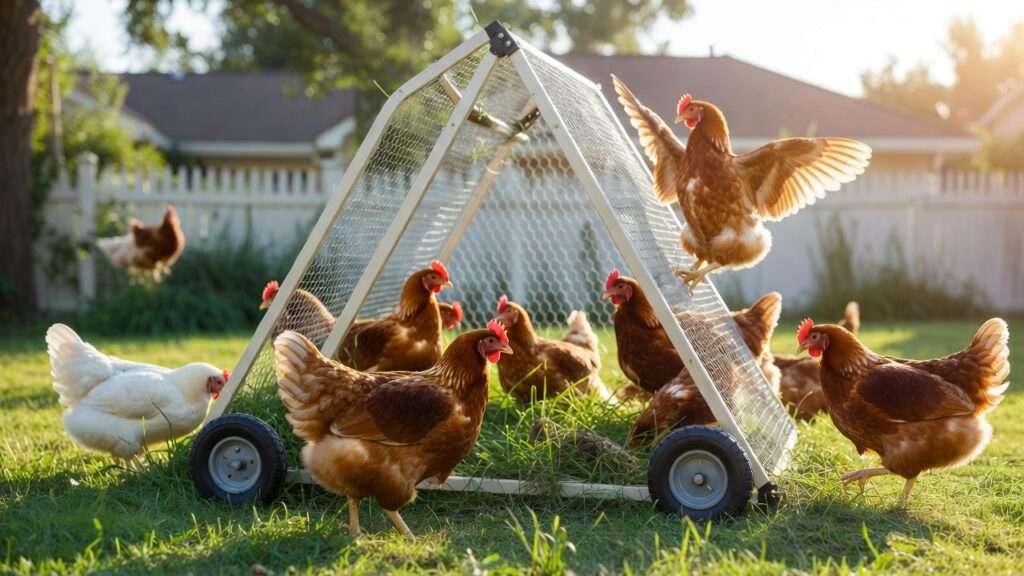
A mobile coop, often called a chicken tractor, is a lightweight, movable structure designed to house chickens while allowing regular relocation. Common designs include A-frame tractors, wheeled pens, or hoop-style units with skids or tires for easy pulling or rolling.
For suburban use, these typically accommodate 4–12 birds in footprints from 4×6 feet up to 8×10 feet. The bottom is usually open (or floored with wire for some protection), letting chickens directly access grass, bugs, and soil. You move the coop daily or every few days to fresh ground, mimicking natural foraging behavior.
This setup excels in providing rotational grazing — a core benefit for yard health — as chickens naturally till, fertilize, and control pests without concentrating damage in one spot.
What Is a Permanent (Stationary) Coop?
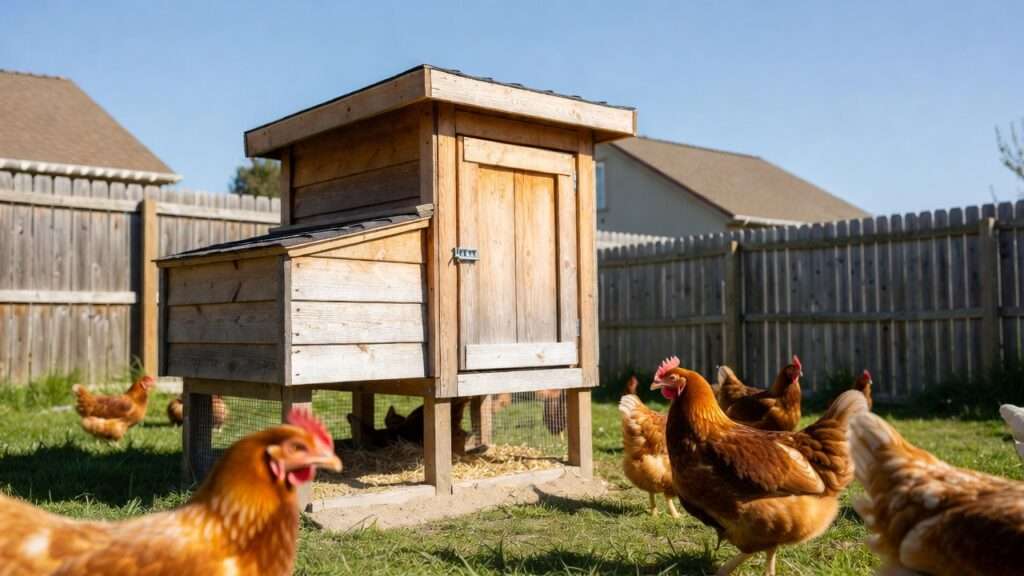
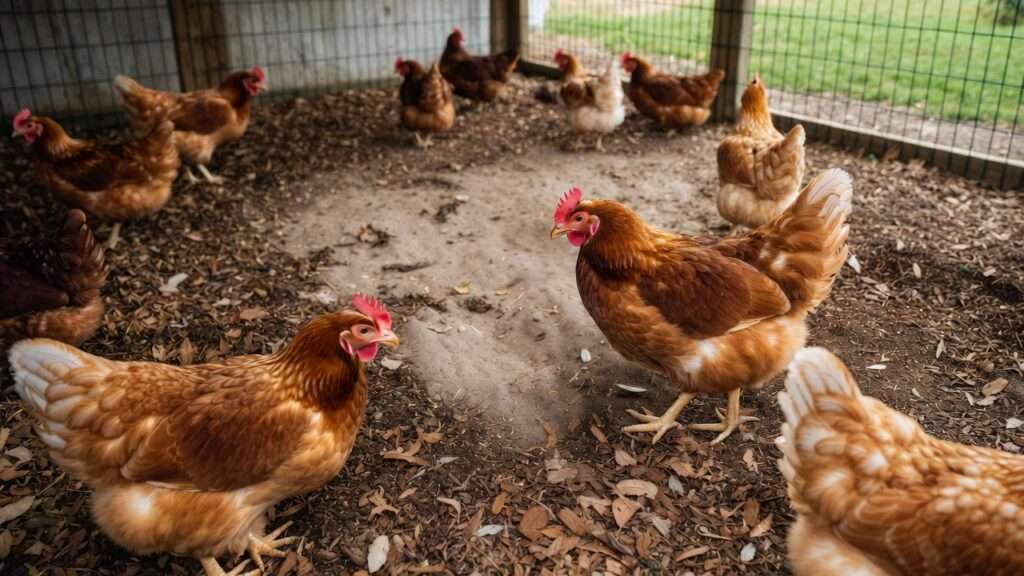
A permanent coop is a fixed, immovable structure, often with an attached run or enclosed pen. Built from wood, metal, or vinyl, these feature solid floors, insulation options, roosts, nesting boxes, and sometimes electricity for lights or heaters.
In suburban adaptations, they’re compact (fitting 6–15 birds in 8×10 to 12×16 footprints), aesthetically pleasing (painted to blend with homes or landscaped), and include buried wire aprons or concrete bases for security. They stay put year-round, offering consistency but requiring more intensive run maintenance to prevent mud and bare spots.
Key Comparison: Pros and Cons in Suburban Backyards
Advantages and Disadvantages of Mobile Coops for Suburban Settings
Pros
- Natural pasture rotation and yard health: Moving the coop spreads manure evenly, acting as free, nitrogen-rich fertilizer. Chickens scratch up bugs and weeds, reducing pests naturally while preventing concentrated soil compaction or “chicken bald spots.” This ties directly into sustainable practices like crop rotation — use the fresh spots for garden beds later for boosted soil fertility.
- Easier deep cleaning and hygiene: Simply relocate the coop to clean underneath or let rain/sun sanitize the ground. No heavy scooping of built-up litter in a fixed run.
- Reduced mud and yard damage: Frequent moves keep grass recovering; many keepers report healthier, greener lawns overall compared to stationary setups.
- Lower daytime predator exposure: Fresh ground disrupts digging patterns, and open designs allow quick escapes or visibility of threats.
- Cost-effective entry: Often cheaper to build or buy (DIY A-frames around $150–$600), ideal for beginners or small flocks.
- Flexibility: Shift for shade in summer, away from garden beds, or during yard work/parties.
Cons
- Limited space per bird: Smaller enclosures can stress larger flocks if not moved often enough, leading to boredom or feather pecking.
- Weaker weather protection: Less insulation means more vulnerability to wind, heavy rain, or extreme cold/hot spells without add-ons.
- Labor for moving: Daily or weekly relocation requires effort, especially in bad weather or for heavier units.
- Nighttime predator vulnerabilities: Open floors invite diggers unless reinforced with skirts/aprons or hardware cloth; some designs need extra fortification.
- Structural wear: Constant movement can loosen joints or damage wheels over time.
Advantages and Disadvantages of Permanent Coops for Suburban Settings
Pros
- Superior predator protection: Solid construction with buried hardware cloth (1/2-inch preferred over chicken wire), secure locks, and elevated floors make them far harder for raccoons, foxes, or dogs to breach — especially at night when chickens are locked in.
- Better weather resilience: Insulation, windproofing, and options for heat lamps or ventilation keep flocks comfortable in harsh conditions, maintaining egg production year-round.
- More room and amenities: Larger roosts, multiple nests, storage for feed, and even auto-doors for convenience.
- Low daily maintenance: No moving required; focus on weekly cleaning and run refresh (e.g., deep litter method with sand or wood chips).
- Aesthetic and regulatory appeal: Can be landscaped to look like a garden shed, often easier for HOA approval as a “permanent fixture.”
Cons
- Yard damage over time: Fixed runs turn to mud or bare dirt without rotation, requiring remediation like gravel bases or frequent raking.
- Harder deep cleaning: Built-up waste and parasites can accumulate if not managed rigorously.
- Higher upfront cost: Quality builds range $800–$3000+, plus permits in some areas.
- Less natural foraging: Chickens miss constant fresh grass unless you add supervised free-range or attach a mobile tractor.
- Inflexibility: Hard to relocate for seasonal needs or yard changes.
Suburban-Specific Factors to Consider
Suburban backyard chicken keeping comes with unique challenges that amplify the differences between mobile and permanent coops. Limited space, aesthetic expectations, and heightened predator risks in residential areas mean your choice must balance practicality, neighborhood harmony, and flock welfare.
Space Constraints and Yard Impact in Suburban Homes
Most suburban lots range from 0.1 to 0.5 acres, with much of that taken by house, driveway, patio, and garden beds. A permanent coop with a fixed run can quickly create “chicken bald spots” — bare, compacted, or muddy areas where birds concentrate scratching and droppings. Over months, this leads to erosion, weed issues, and complaints from neighbors or HOAs.
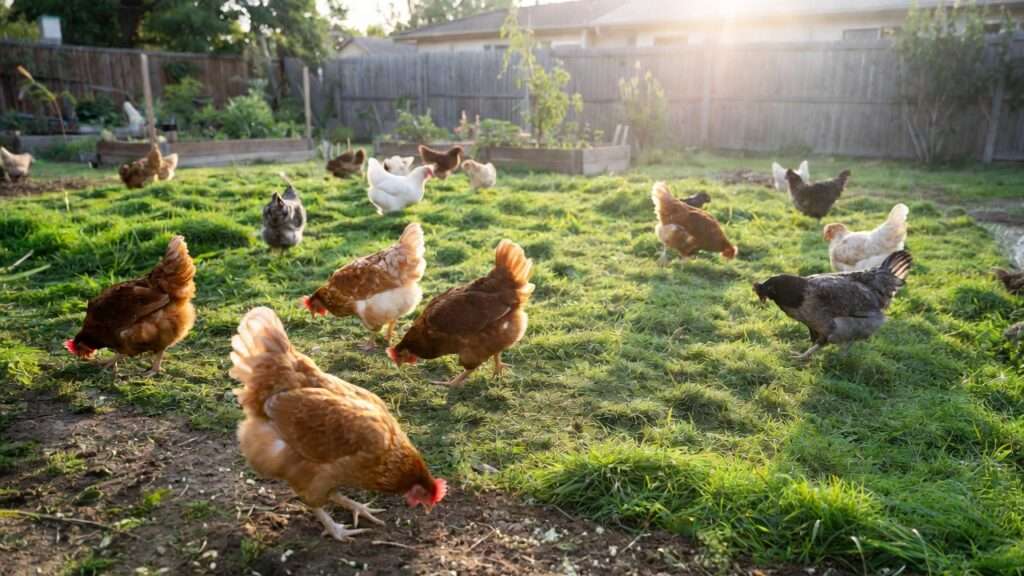
Mobile coops shine here. By relocating every 1–3 days (depending on flock size and grass recovery), chickens act as natural lawn mowers and fertilize evenly. Manure breaks down quickly on fresh grass, adding nitrogen without burning spots. Many suburban keepers report greener, healthier lawns overall, plus bonus pest control as birds devour grubs and ticks. This rotational approach even supports garden integration: move the tractor over future veggie beds to till soil lightly and deposit nutrients, aligning with crop rotation strategies for improved soil health.
For permanent setups, mitigate damage with smart design — use deep litter method (layering carbon materials like wood chips over droppings), sand or gravel bases in runs for drainage, or attach modular paddocks that allow semi-rotation. Still, these require more effort to maintain aesthetics.
Predator Protection in Urban/Suburban Environments
Suburbs often host sneaky predators: raccoons that can open latches, foxes digging under fences, hawks swooping from trees, stray dogs, and even opossums. Permanent coops generally offer superior security — solid walls, buried hardware cloth aprons (extending 12–24 inches outward), reinforced doors, and elevated floors reduce breaches dramatically.
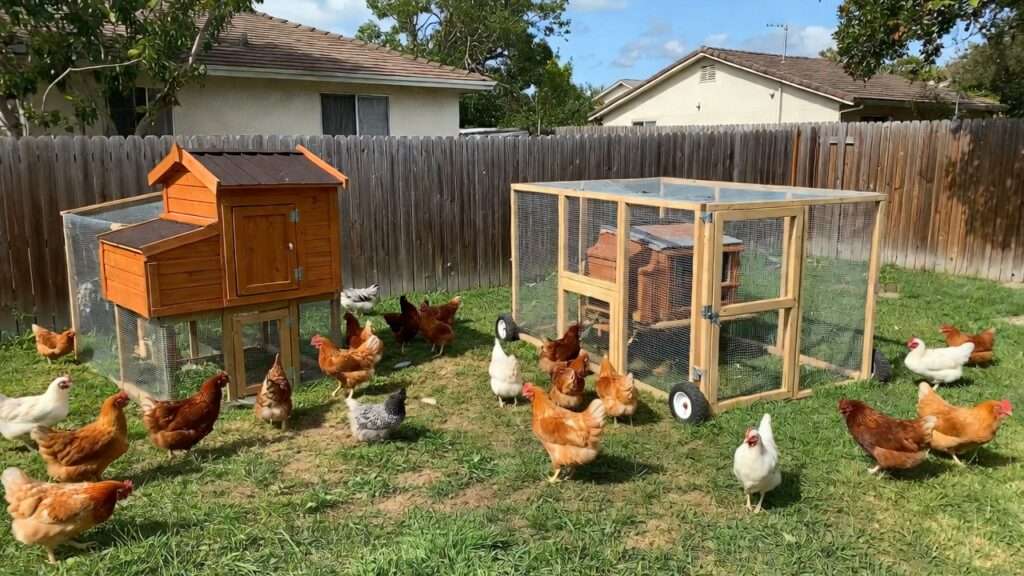
Mobile coops can be fortified (hardware cloth on all sides, secure locks, apron skirts), but lighter construction and open floors make them more vulnerable, especially at night. Real experiences from backyard communities show higher losses in tractors unless owners add electric fencing or move them inside fenced areas nightly. For high-risk suburbs, many recommend a hybrid: permanent secure sleeping quarters + daytime mobile tractor.
Local Regulations, HOAs, and Neighbor Considerations
Zoning laws vary — some areas limit flock size (4–6 birds common), ban roosters, or require setbacks. HOAs often scrutinize “permanent structures” for appearance, size, or odor. Mobile coops frequently fly under the radar as “temporary” or “movable equipment,” appearing less obtrusive. They’re easier to store or relocate during inspections.
Odor and noise are managed better with rotation in mobile setups (fresh ground absorbs waste faster). Permanent coops need vigilant cleaning and ventilation to avoid complaints.
Flock Size, Breed, and Climate Suitability
Small flocks (4–8 birds) thrive in mobile coops — enough space when moved regularly, plus natural enrichment. Larger flocks (10+) or heavy breeds (e.g., Orpingtons) may feel cramped without ample moves.
Climate matters: In hot summers, mobile units provide shade mobility and airflow; in cold winters, permanent insulated coops with heaters maintain egg laying. Breeds like Silkies need more protection, favoring stationary. Dual setups work well: permanent for nights/winter, mobile for growing season.
Real-World Examples and Expert Insights
Case Studies from Suburban Chicken Keepers
- Mobile Success Story: A family in a 0.25-acre Midwest suburb started with an A-frame tractor for 6 hens. Daily moves kept their lawn pristine, reduced feed costs via foraging, and integrated with raised garden beds — chickens prepped soil pre-planting. After reinforcing with hardware cloth, predator losses dropped to zero over three years.
- Permanent Reliability: A busy professional in a Northeast suburb chose a compact walk-in stationary coop (e.g., similar to Petmate or OverEZ models) with a 10×12 run on sand base + deep litter. Minimal daily work, excellent winter egg production, and landscaped screening satisfied HOA rules. They added supervised free-range time for enrichment.
- Hybrid Winner: Many suburban keepers settle on hybrids — a small permanent coop for secure roosting + a lightweight tractor for daytime grazing. This combines nighttime safety with yard health benefits.
Expert Tips from Experienced Homesteaders
Here are battle-tested tips drawn from years in the field and community feedback:
- Reinforce any mobile coop with ½-inch hardware cloth (not chicken wire) buried 12+ inches to deter diggers.
- Use wheels or handles for easy moving; add a pull hitch for lawn tractors if needed.
- For permanent runs, implement deep litter method — add carbon weekly to control odor and flies.
- Integrate with gardens: Position mobile tractors over compost piles or future beds for natural tilling.
- Monitor grass recovery — move sooner in wet seasons to avoid mud.
- Add enrichment (perches, dust baths, treats) in smaller mobile units to prevent boredom.
- Secure all latches with carabiners — raccoons are puzzle masters.
- Start small: Begin with 4–6 birds to test your setup before expanding.
- Track egg production and health — rotation often boosts both via better nutrition.
- Budget for upgrades: Electric netting around mobile units adds daytime security.
Making Your Decision: Which Is Better for You?
Use this step-by-step framework:
- Assess flock size: <8 birds? Mobile often ideal. >10? Lean permanent or hybrid.
- Evaluate yard space and terrain: Flat/open lawn favors mobile; hilly/rocky suits permanent.
- Rate predator pressure: High (frequent sightings)? Prioritize permanent security.
- Consider time commitment: Busy schedule? Permanent requires less daily effort.
- Check budget and regulations: Mobile cheaper/quick to start; permanent more investment but durable.
- Factor climate: Extreme weather? Permanent wins for protection.
Recommendation Matrix
- Best for most suburban backyards (lawn health + ease): Mobile-first with secure nighttime housing (hybrid).
- Best for high predators or minimal time: Permanent with managed run.
- Best for sustainability/soil improvement: Mobile or hybrid emphasizing rotation.
Hybrid Solutions for the Win
The “best of both worlds” approach — permanent coop for roosting/security + attachable or separate mobile tractor for daytime — maximizes benefits while minimizing drawbacks. Many suburban keepers report this as the ultimate low-stress, high-reward setup.
Top Recommendations: Best Mobile and Permanent Coops for Suburban Use (2026 Update)
Mobile Coops/Chicken Tractors
- Aivituvin AIR7006 or similar combo models — Lightweight, wheeled tractor + enclosed coop area; great for 4–8 birds, easy suburban moves.
- EZ-Fit 4×6 Portable — Amish-crafted, durable for small flocks; good mobility.
- DIY A-Frame (plans from The Garden Coop or Fresh Eggs Daily) — Customizable, cost-effective (~$450–600 materials); ideal 6–10 hens.
- Farm & Yard or Carolina Homestead Tractors — Sturdy aluminum/wood, predator-resistant, up to 8 birds.
Permanent Coops
- Petmate Superior Construction — Easy assembly, customizable paint, good for 6 birds; slide-out trays for cleaning.
- OverEZ or Snap Lock models — Walk-in access, durable; suburban-friendly aesthetics.
- Urban Coop Company or Nestera — Compact, stylish for tight spaces; focus on small backyard needs.
(Always check current reviews and local availability.)
Maintenance Tips for Healthier Yards and Chickens
- Weekly: Rake runs, refresh litter, check for parasites.
- Monthly: Deep clean, inspect hardware cloth.
- Seasonal: Add insulation in winter; increase ventilation in summer.
- Biosecurity: Limit visitors, quarantine new birds.
- Garden tie-in: Use chicken-fertilized spots for veggies — natural rotation boosts yields.
Frequently Asked Questions (FAQs)
Will a mobile coop destroy my lawn? No — frequent moves prevent damage and often improve grass via natural fertilization. Over-moving or wet conditions can cause issues; adjust accordingly.
How predator-proof are mobile coops? Varies by design — fortified models with aprons and locks work well, but permanent usually edges out for nighttime. Add electric netting for extra safety.
Can I use a mobile coop in winter? Yes, with windbreaks and deep bedding; some keepers move to permanent for extreme cold.
What’s the ideal flock size for suburban backyards? 4–8 birds balances space, eggs, and manageability.
Do permanent coops need permits? Often yes if over a certain size; mobile usually doesn’t.
How do I integrate chickens with my garden? Mobile tractors prep beds; permanent setups benefit from supervised ranging or compost sharing.
Is one cheaper long-term? Mobile lower upfront; permanent lower maintenance costs over years.
Can chickens be happy in either? Yes — enrichment, space, and health care matter more than type.
Conclusion
Choosing between mobile vs permanent coops for suburban backyards boils down to your priorities: yard aesthetics and natural benefits favor mobile/hybrid, while security and convenience favor permanent. Many suburban keepers thrive with hybrids, enjoying fresh eggs, healthier soil, and happy flocks without yard headaches.
Start small, observe your setup, and adjust — backyard chickens can enhance your homestead sustainably. Share your experiences or questions below; happy keeping!