Imagine stepping into your garden after weeks of careful tending, only to find leaves riddled with holes, sticky honeydew coating stems, or clusters of tiny green invaders sucking the life from your prized vegetables. The frustration is real — especially when you worry that reaching for a harsh chemical spray could harm beneficial insects, pollinators like bees and butterflies, your family’s health, and the soil that sustains future harvests.
This scenario plays out in gardens worldwide, driving more growers toward safer alternatives. An Organic Pest Control Toolkit offers a complete, proactive system that combines monitoring tools, mechanical barriers, biological allies, and targeted natural solutions to manage pests effectively without synthetic chemicals.
With years of hands-on experience in sustainable agriculture and integrated pest management (IPM), I’ve helped countless gardeners and small-scale farmers build resilient ecosystems. This comprehensive guide delivers everything you need: a ready-to-assemble toolkit, pest identification tips, prevention strategies, step-by-step DIY recipes, and an actionable IPM framework. By the end, you’ll have the knowledge and confidence to protect your garden while supporting biodiversity and long-term soil health.
Whether you manage a backyard vegetable patch, raised beds, or a small homestead plot, this Organic Pest Control Toolkit addresses the core need for chemical-free methods that deliver real results. Let’s build it together.
Why Choose an Organic Pest Control Toolkit? Benefits for Gardeners and the Environment
Synthetic pesticides often provide quick knockdown but come with significant drawbacks. They can kill non-target organisms, including pollinators and predatory insects that naturally keep pest populations in check. Over time, repeated use leads to pest resistance, soil degradation, and potential residues on edible crops. Runoff can also contaminate water sources and harm aquatic life.
In contrast, an Organic Pest Control Toolkit aligns with Integrated Pest Management (IPM) principles — a science-based approach emphasizing prevention, monitoring, and least-toxic interventions. Benefits include:
- Protection of beneficial insects and pollinators: Organic methods preserve ladybugs, lacewings, predatory mites, and bees, which provide free, ongoing pest control.
- Improved soil biology: Avoiding broad-spectrum chemicals maintains earthworm populations, beneficial microbes, and organic matter that enhance nutrient cycling and plant resilience.
- Safer harvests: No toxic residues mean healthier produce for your family and reduced exposure risks for children and pets.
- Long-term cost savings: While initial setup requires investment, prevention and biological controls reduce recurring pesticide purchases and yield losses.
- Biodiversity support: A balanced garden ecosystem becomes naturally more resistant to outbreaks, supporting birds, beneficial insects, and overall garden health.
- Environmental sustainability: Lower carbon footprint from reduced chemical manufacturing and transport, plus contributions to soil carbon sequestration in organic systems.
Studies and field experience consistently show that organic practices foster stronger plant vigor and lower parasite loads in pollinators compared to conventional systems. Healthy soil and diverse plantings suppress pests before they become problems, making reactive sprays less necessary.
Building Your Organic Pest Control Toolkit – Essential Tools and Supplies
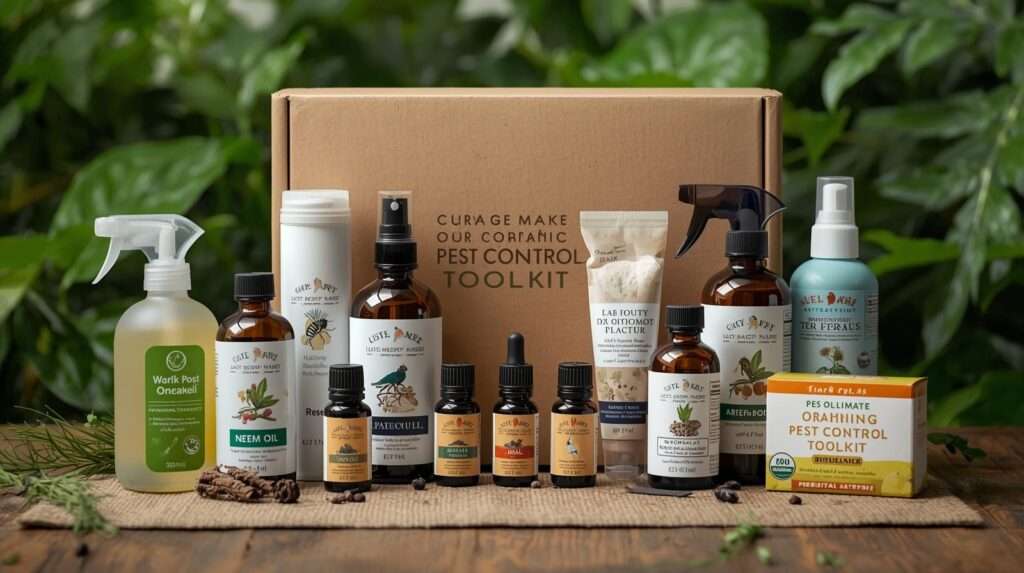
A well-stocked Organic Pest Control Toolkit combines monitoring equipment, physical barriers, application tools, and natural materials. Focus on OMRI-listed (Organic Materials Review Institute) products when possible for certified organic compliance.

Core Monitoring & Identification Tools
Accurate scouting forms the foundation of effective control:
- Hand lens or 10x magnifier for close inspection of small pests like aphids or mites.
- Garden journal or smartphone app to record observations, dates, and treatments.
- Yellow and blue sticky traps to monitor flying insects (aphids, whiteflies, thrips).
- Pheromone traps for specific pests like squash vine borers or Japanese beetles.
Physical & Mechanical Tools
- Floating row covers or insect netting to exclude pests while allowing light, air, and water.
- Copper tape or diatomaceous earth (food-grade) barriers for slugs and snails.
- Sturdy gloves, hand pruners, and a strong hose nozzle for dislodging soft-bodied insects with water sprays.
- Beer traps or boards for slug collection.
Application Equipment
- Pump or backpack sprayer (1–2 gallon capacity) for even coverage of foliar sprays.
- Fine-mist spray bottles for small areas or DIY remedies.
- Watering can for soil drenches (e.g., with beneficial nematodes).
Natural Materials & Products
Stock these staples:
- Neem oil (cold-pressed, high azadirachtin content) — disrupts insect feeding and reproduction.
- Insecticidal soap — effective against soft-bodied pests by breaking down their protective coating.
- Bacillus thuringiensis (Bt) — targets caterpillars specifically without harming beneficials.
- Spinosad — derived from soil bacteria, controls a broader range of chewing insects.
- Horticultural oils and pyrethrin (plant-derived) for quick knockdown when needed.
- Diatomaceous earth (DE) — abrasive powder that dehydrates crawling insects.
- Beneficial nematodes — microscopic worms that attack soil-dwelling larvae like grubs and vine borers.
Biological Allies
Purchase or attract:
- Ladybugs (consume aphids).
- Green lacewings (larvae devour aphids, mites, whiteflies).
- Predatory mites for spider mite control.
- Parasitic wasps for caterpillars and aphids.
DIY Essentials
Keep garlic, onions, chili peppers, mild castile soap, and essential oils (peppermint, neem) on hand for homemade sprays.
Starter Toolkit Checklist (approximate costs vary by region):
- Monitoring basics: $15–30
- Sprayer + row covers: $40–80
- Core natural products (neem, soap, Bt, DE): $50–100 initial stock
- Beneficial insects/nematodes: $20–50 per release
Source from reputable suppliers specializing in organic gardening. Start small and expand based on your garden size and common pest pressures.
Understanding Common Garden Pests – Identification and Damage Signs
Successful organic control begins with correct identification. Misdiagnosis leads to ineffective treatments and wasted effort. Scout weekly, checking both leaf undersides and stems.
Here are some of the most frequent culprits in vegetable and flower gardens:
Aphids: Tiny (1–3 mm), pear-shaped, often green, black, or gray. Signs include curled/distorted new growth, sticky honeydew, and black sooty mold. They cluster on tender shoots and reproduce rapidly. Affected plants: tomatoes, beans, roses, brassicas.
Caterpillars (including Cabbage Worms/Loopers and Tomato Hornworms): Green or striped larvae that chew large, irregular holes in leaves. Look for frass (droppings). Bt is highly effective here.
Slugs and Snails: Soft-bodied mollusks leaving silvery slime trails and ragged holes, especially at night or in damp conditions. Common on leafy greens, seedlings, and strawberries.
Squash Bugs and Vine Borers: Squash bugs are shield-shaped, gray-brown adults with nymphs that suck sap. Vine borers cause sudden wilting as larvae tunnel into stems. Target cucurbits.
Japanese Beetles: Metallic green/copper adults skeletonize leaves. Grubs damage roots.
Flea Beetles: Tiny, jumping beetles creating “shot-hole” damage on eggplant, potatoes, and brassicas.
Spider Mites and Whiteflies: Mites cause stippling and fine webbing (dry conditions). Whiteflies resemble tiny white moths on leaf undersides.
Colorado Potato Beetles: Striped adults and orange larvae defoliate potatoes and tomatoes.
For each pest, note life cycle: many have rapid reproduction in warm weather. Take clear photos if unsure and cross-reference with local extension resources. Early detection is key — act at the first signs rather than waiting for widespread damage.
Prevention First – Cultural and Habitat Practices to Build Pest Resistance
The strongest defense in any Organic Pest Control Toolkit is prevention. Healthy, vigorous plants resist pests better than stressed ones.

Soil Health as Foundation: Build rich, biologically active soil through regular composting, cover cropping, and minimal tillage. Well-nourished plants produce stronger cell walls and secondary metabolites that deter feeding. Test soil periodically and amend with organic matter.
Crop Rotation and Diversity: Avoid planting the same family in the same spot consecutively (e.g., rotate tomatoes away from potatoes). Interplant and use succession planting to disrupt pest life cycles.
Companion Planting: Strategic pairings confuse pests or attract beneficials:
- Marigolds near tomatoes or beans to repel nematodes and some beetles.
- Nasturtiums as trap crops for aphids (plant as borders).
- Basil with tomatoes to deter hornworms and thrips.
- Garlic/onions with carrots or brassicas to repel flies and aphids.
- Dill, fennel, or yarrow to draw parasitic wasps and hoverflies.
Proper Cultural Practices:
- Provide adequate spacing for air circulation to reduce fungal issues that weaken plants.
- Water at the base in the morning to keep foliage dry and discourage mildew or fungal gnats.
- Mulch with organic materials (straw, wood chips) to suppress weeds and retain moisture while discouraging some crawling pests.
- Choose resistant varieties when available (e.g., certain cucumber or squash cultivars less susceptible to vine borers).
Sanitation: Remove and dispose of (don’t compost) heavily infested or diseased plant material. Clean tools between uses. Clear garden debris at season’s end to reduce overwintering sites.
Attracting Beneficial Insects: Plant diverse flowering borders with alyssum, cosmos, dill, and buckwheat. Provide water sources and insect hotels. Avoid broad-spectrum sprays that kill the “good guys.”
Mechanical and Physical Controls in Your Organic Pest Control Toolkit
Mechanical methods provide immediate, non-toxic intervention and form an essential layer in every effective Organic Pest Control Toolkit. These techniques physically remove, exclude, or trap pests without introducing any substances into the garden ecosystem.
Hand-Picking and Direct Removal For larger, visible pests such as tomato hornworms, Japanese beetles, cabbage worms, and squash bugs, hand-picking remains one of the most reliable and satisfying controls. Do this early in the morning when insects are sluggish. Drop collected pests into a bucket of soapy water or crush them. Wear gloves if handling squash bugs, as they can emit an unpleasant odor. Regular daily checks on high-value crops can prevent major outbreaks.
Water Sprays for Soft-Bodied Insects A strong jet of water from a garden hose effectively dislodges aphids, spider mites, whiteflies, and mealybugs from leaf surfaces. Focus on the undersides of leaves where these pests congregate. Repeat every 2–3 days until populations decline. This method is particularly useful in the early stages of infestation and causes no harm to beneficial insects when used carefully.
Physical Barriers and Row Covers Floating row covers (lightweight fabric) or fine-mesh insect netting create a physical shield that prevents flying and crawling insects from reaching plants while still allowing sunlight, air, and rain through. Use them on young seedlings, brassicas, or squash family crops. Secure edges firmly with soil, pins, or weights. Remove covers during flowering for pollinator access or when hand-pollinating is needed.
Slug and Snail Barriers
- Copper tape wrapped around raised bed edges or pots creates a mild electrical reaction that repels slugs and snails.
- Diatomaceous earth (food-grade) forms a sharp, abrasive barrier around plants that dehydrates soft-bodied mollusks. Reapply after rain.
- Beer traps (shallow containers buried at soil level filled with beer) attract and drown slugs overnight.
Traps and Reflective Mulches Yellow sticky traps capture flying pests like aphids, whiteflies, and fungus gnats. Blue traps work well for thrips. Reflective silver mulch or aluminum foil strips around young plants can disorient aphids and flea beetles by reflecting light and confusing their navigation.
Cutworm Collars Protect young transplants from cutworms by placing cardboard or plastic collars around the stem base, extending 1–2 inches above and below the soil line.
These mechanical controls are highly targeted, cost-effective, and immediately available in your Organic Pest Control Toolkit. They work best when combined with strong prevention practices.
Biological Control – Harnessing Nature’s Helpers
Biological control uses living organisms to suppress pest populations and represents one of the most sustainable pillars of any Organic Pest Control Toolkit. When established properly, beneficial insects and microbes provide ongoing, self-sustaining protection.
Beneficial Predators and Parasitoids
- Ladybugs (Lady Beetles): Both adults and larvae consume large quantities of aphids, scale insects, and mites. Release them in the evening after lightly misting plants.
- Green Lacewings: Their larvae (often called “aphid lions”) are voracious predators of aphids, thrips, whiteflies, and small caterpillars.
- Predatory Mites: Excellent for controlling spider mites in hot, dry conditions.
- Parasitic Wasps (e.g., Trichogramma or Aphidius): They lay eggs inside pest eggs or bodies, eventually killing the host.
Beneficial Nematodes These microscopic worms actively seek out and destroy soil-dwelling larvae such as grubs, cutworms, squash vine borers, and root-knot nematode hosts. Apply as a soil drench with a watering can or sprayer during early morning or evening when soil is moist and temperatures are moderate (above 55°F/13°C). Steinernema and Heterorhabditis species are commonly used.
Microbial Insecticides
- Bacillus thuringiensis (Bt): A naturally occurring soil bacterium that produces proteins toxic only to certain caterpillars (cabbage worms, tomato hornworms, loopers). Spray on foliage where caterpillars feed. It is safe for humans, pets, and beneficial insects.
- Spinosad: Derived from Saccharopolyspora spinosa bacteria, it controls a wider range of chewing insects including caterpillars, thrips, and some beetles. Use it judiciously to avoid impacting beneficials.
Tips for Success with Biological Controls
- Release beneficials when pest populations are low to moderate — not after a heavy infestation.
- Provide habitat and alternative food sources (nectar plants) so predators stay in your garden.
- Avoid broad-spectrum sprays (even some organic ones like pyrethrin) immediately before or after releasing beneficial insects.
Biological methods may take slightly longer to show results than chemical sprays, but they create a balanced, self-regulating ecosystem that reduces future pest pressure dramatically.
Natural and Botanical Solutions – DIY Recipes and Ready-to-Use Options
When prevention and mechanical methods need reinforcement, your Organic Pest Control Toolkit should include fast-acting natural sprays and dusts. Always test any new spray on a small section of plant first and apply in the evening to protect pollinators.
Neem Oil Spray (Most Versatile Option) Neem oil works as an anti-feedant, growth regulator, and repellent. It disrupts insect molting and reproduction. Recipe:
- 1–2 teaspoons cold-pressed neem oil
- 1 teaspoon mild liquid castile soap (emulsifier)
- 1 quart (1 liter) warm water
Mix thoroughly in a spray bottle. Shake well before each use. Apply every 5–7 days or after rain. Effective against aphids, mites, whiteflies, mealybugs, and some beetles. It also has mild fungicidal properties.
Insecticidal Soap Spray Excellent for soft-bodied insects. It dissolves the protective waxy coating, causing dehydration. Recipe:
- 1–2 tablespoons pure liquid castile soap (no additives)
- 1 quart warm water
Spray directly on pests, ensuring good coverage on leaf undersides. Repeat every 3–4 days as needed. Safe for most plants but avoid use on very young or stressed seedlings in hot sun.
Garlic-Chili-Pepper Repellent Spray A strong-smelling homemade deterrent for chewing and sucking insects. Recipe:
- 2–3 garlic cloves, crushed
- 1–2 hot chili peppers or 1 teaspoon chili powder
- 1 small onion, chopped
- 1 quart water
- 1 teaspoon mild soap
Blend ingredients, steep for 24 hours, strain, and spray. Reapply after rain. Great for repelling aphids, cabbage worms, and some beetles.
Other Ready-to-Use Botanical Options
- Horticultural Oils (summer or dormant oils): Suffocate soft-bodied pests and some eggs.
- Pyrethrin: Fast-acting contact spray derived from chrysanthemum flowers. Use sparingly as it can affect beneficial insects.
- Diatomaceous Earth (DE): Dust on dry foliage or soil to control crawling insects and slugs. Reapply after watering.
Comparison of Common Organic Treatments
| Treatment | Best Against | Mode of Action | Reapplication | Bee Safety (when used correctly) |
|---|---|---|---|---|
| Neem Oil | Aphids, mites, beetles | Growth disruption, repellent | 5–7 days | High (apply at dusk) |
| Insecticidal Soap | Aphids, whiteflies, mites | Physical dehydration | 3–4 days | High |
| Bt | Caterpillars only | Gut toxin (specific) | 7–10 days | Very High |
| Spinosad | Caterpillars, thrips, beetles | Nerve toxin (derived) | 5–7 days | Moderate |
| Diatomaceous Earth | Slugs, crawling insects | Physical abrasion | After rain | Very High |
Rotate between different modes of action to prevent pest resistance and maintain effectiveness.
Integrated Pest Management (IPM) – Step-by-Step Action Plan
The most successful Organic Pest Control Toolkit users follow Integrated Pest Management — a systematic, four-step approach:
- Monitor Regularly: Scout your garden at least twice weekly. Check undersides of leaves, stems, and soil surface. Use sticky traps and record findings.
- Identify Accurately: Determine the exact pest and its life stage before acting.
- Set Action Thresholds: Decide when intervention is necessary (e.g., 5–10 aphids per shoot on young plants may warrant action; lower tolerance for seedlings).
- Apply Least-Toxic Controls First: Start with cultural/mechanical methods, then biological, and finally botanical sprays only if needed.
Weekly Garden Patrol Routine
- Morning inspection
- Note new damage or pest sightings
- Remove heavily infested leaves or plants if necessary
- Apply preventive sprays or release beneficials as planned
Troubleshooting Common Scenarios and Advanced Tips
Even with a well-equipped Organic Pest Control Toolkit, occasional heavy infestations or unexpected pest surges can occur. Here’s how to troubleshoot effectively while staying fully organic.
Heavy Aphid Outbreaks Aphids can explode in numbers during warm, humid conditions. First, blast them off with a strong water spray for several consecutive days. Follow up with neem oil or insecticidal soap every 4–5 days. Introduce ladybugs or lacewings once the initial population drops. For persistent cases, combine neem with companion planting (nasturtiums as trap crops) and ensure plants receive adequate potassium to strengthen cell walls.
Caterpillar Damage on Brassicas and Tomatoes If hand-picking isn’t enough, apply Bt thoroughly to leaf undersides and new growth in the evening. For tomato hornworms, look for white egg-like structures on their backs — these are beneficial parasitic wasp cocoons; leave those caterpillars alone as the wasps will emerge and control the population naturally.
Slug and Snail Problems in Wet Climates Improve drainage, reduce overhead watering, and apply diatomaceous earth or copper barriers early in the season. Hand-pick at night with a flashlight. Beer traps work well but need daily emptying. In severe cases, use iron phosphate-based organic slug baits, which are safer for pets and wildlife than metaldehyde.
Squash Vine Borer Damage Prevention is critical. Use row covers until plants begin flowering, then remove for pollination. If wilting appears, slit the stem carefully, remove the larvae, and mound soil over the damaged area to encourage new roots. Apply beneficial nematodes to the soil early in the season as a proactive measure.
Spider Mites in Dry, Dusty Conditions Increase humidity around plants by misting foliage and mulching well. Spray with horticultural oil or neem, ensuring excellent coverage on leaf undersides. Release predatory mites for longer-term control. Avoid over-fertilizing with nitrogen, as it promotes tender growth that mites prefer.
Advanced Tips from Years of Experience
- Rotate Products: Never rely on the same spray repeatedly. Alternate between neem, soap, spinosad, and Bt to prevent resistance.
- Timing Matters: Always spray in the late evening or early morning when beneficial insects are less active and temperatures are cooler.
- Observe Ecosystem Balance: A few pests are normal and necessary to feed beneficial insects. Aim for management, not total eradication.
- Soil Health Connection: Gardens with high organic matter and diverse microbial life experience significantly fewer severe pest outbreaks. Test and amend soil annually.
- Regional Adaptation: In humid tropical or subtropical areas (common in regions like Bangladesh), focus more on airflow, sanitation, and fungal-resistant varieties. In drier zones, prioritize spider mite and flea beetle vigilance.
- Container and Small-Space Gardening: Use the same principles but on a smaller scale. Quarantine new plants and inspect regularly, as pests can spread quickly in confined spaces.
The proactive mindset — prevention first, then layered controls — consistently delivers better long-term results than reactive spraying alone.
Maintaining and Updating Your Organic Pest Control Toolkit
An effective Organic Pest Control Toolkit requires ongoing care to remain ready when needed.
Storage Best Practices
- Store neem oil, horticultural oils, and soaps in a cool, dark place. Check expiration dates annually.
- Keep dry powders like diatomaceous earth and Bt in airtight containers away from moisture.
- Beneficial nematodes are live organisms — use them shortly after purchase and store in the refrigerator if needed.
- Clean sprayers thoroughly after each use to prevent clogs and bacterial buildup.
Seasonal Checklist
- Early Spring: Inspect and repair row covers, stock fresh neem and Bt, prepare compost.
- Mid-Season: Monitor trap catches, reorder beneficial insects as needed, refresh mulch.
- End of Season: Clean all tools, dispose of old sprays safely, remove garden debris to reduce overwintering pests.
- Off-Season: Research new resistant varieties and plan crop rotation for the coming year.
Scaling Your Toolkit
- Backyard Garden: Focus on hand tools, basic sprays, and a few beneficial releases.
- Small Farm or Larger Plot: Invest in a backpack sprayer, bulk neem, and regular nematode applications. Consider building insectaries (dedicated beneficial insect habitats).
Tracking Results Maintain a simple garden journal noting pest pressure, treatments used, weather conditions, and outcomes. Over time, you’ll discover what works best in your specific microclimate and soil type — turning your Organic Pest Control Toolkit into a highly personalized, highly effective system.
Building and using an Organic Pest Control Toolkit transforms pest management from a stressful battle into a rewarding part of sustainable gardening. By combining prevention, mechanical barriers, biological allies, and carefully chosen natural solutions, you can protect your plants, safeguard pollinators, improve soil health, and enjoy bountiful, chemical-free harvests season after season.
Start small: Assemble the core tools and materials outlined here, commit to weekly monitoring, and prioritize cultural practices. Within one or two growing seasons, you’ll notice fewer outbreaks and a more balanced, vibrant garden ecosystem.
Sustainable agriculture isn’t about perfection — it’s about working with nature rather than against it. Your garden will thank you with healthier plants, better yields, and the satisfaction of knowing you’re contributing to a healthier environment.
Ready to build your own Organic Pest Control Toolkit? Begin today with a simple garden inspection and one or two preventive steps. Share your experiences, successes, and favorite natural remedies in the comments below — your insights help fellow gardeners too.
For more practical agricultural tips and guidelines, explore our other guides on companion planting, soil regeneration, and organic fertilization.
Happy gardening!
Frequently Asked Questions (FAQs)
Is neem oil safe for edible plants and pollinators? Yes, when used correctly. Neem oil is approved for organic use on food crops. Apply in the evening after bees have finished foraging, and always follow dilution rates. It breaks down quickly in sunlight and has low toxicity to mammals.
How often should I apply organic pest controls? It depends on the product and pest pressure. Most foliar sprays (neem, soap) are applied every 5–7 days or after heavy rain. Preventive measures and biological controls require less frequent intervention. Always follow label instructions and monitor results.
What is the most effective organic method for aphids? A combination approach works best: strong water sprays to knock them off, followed by insecticidal soap or neem oil, plus release of ladybugs or lacewings. Addressing underlying stress (overcrowding, excess nitrogen) prevents recurrence.
Can these organic methods be used in container gardening? Absolutely. The same principles apply, often with even better results due to easier monitoring. Use smaller sprayers, ensure good drainage, and inspect container plants frequently as pests can spread quickly in limited space.
What’s the difference between organic and chemical pest control? Organic methods focus on long-term ecosystem balance, use naturally derived or living controls, and avoid persistent synthetic toxins. Chemical pesticides often provide faster knockdown but can harm beneficial insects, create resistance, and leave residues. Organic approaches may require more patience but deliver safer, more sustainable results.
Are beneficial nematodes safe for pets and children? Yes. Beneficial nematodes are completely safe for humans, pets, and wildlife. They target specific soil pests and do not harm earthworms or plants.
How do I know when to use Bt versus neem oil? Use Bt specifically for caterpillars (cabbage worms, hornworms, loopers). Neem oil is broader-spectrum and works well against sucking insects (aphids, mites) and as a general repellent. Many gardeners keep both in their Organic Pest Control Toolkit.
Can I make all my sprays at home to save money? Yes, garlic-chili sprays and basic soap solutions are inexpensive and effective for mild problems. However, for consistent results on larger gardens or stubborn pests, combining homemade remedies with high-quality OMRI-listed products like neem and Bt often provides the best balance of cost and performance.