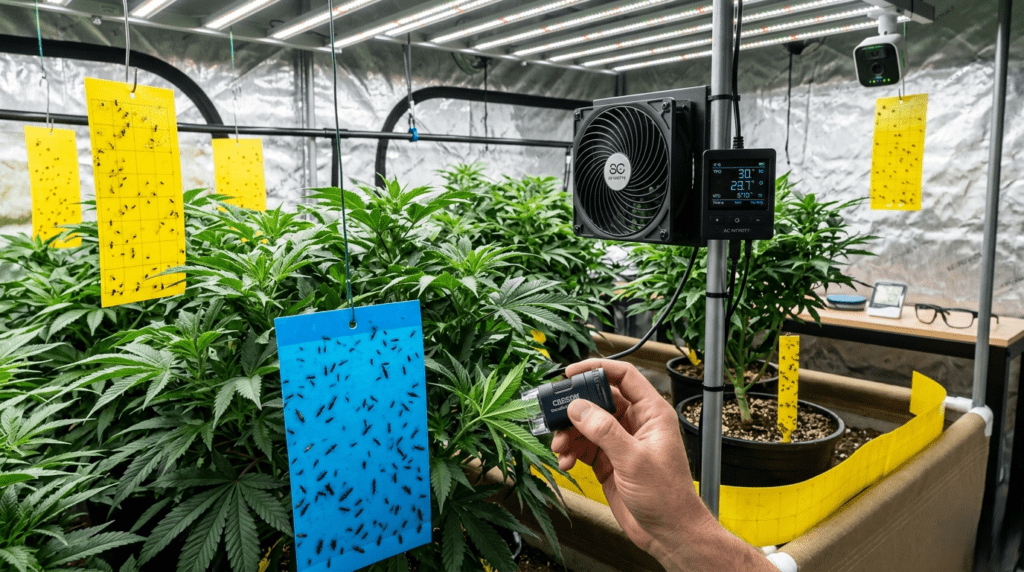
Imagine the heartbreak: you’ve spent months meticulously dialing in your nutrients, managing your VPD, and watching your canopy explode with vibrant growth. Then, just days before harvest, you notice a faint silvery stipple on a leaf or a cloud of tiny black specks rising from the soil. By the time these signs are visible to the naked eye, you aren’t just dealing with a few “bugs”—you’re facing a full-scale infestation that could decimate your yield.
For many growers, the reaction is to reach for heavy sprays, but the secret to a professional-grade harvest lies in prevention. Utilizing the best 10 Pest monitoring strategies allows you to shift from a reactive “war” footing to a proactive “security” mindset. In the closed ecosystem of a US indoor grow space, where warmth and humidity create a literal paradise for spider mites, thrips, and fungus gnats, a 24/7 surveillance system is your only true line of defense.
Modern Pest monitoring has evolved far beyond basic yellow cards. Today’s high-performance grow rooms integrate smart sensors, AI-assisted identification, and species-specific lures to catch “scouts” before they become colonies. In this guide, we’ve analyzed the latest data from 2026 to bring you the best 10 Pest monitoring tools that every serious indoor gardener needs to maintain a clean, high-yielding environment.
The Buyer’s Logic: What Makes a Monitor “The Best”?
Before diving into the reviews, it is essential to understand that not all monitors are created equal. To make an informed decision, consider these three pillars of Integrated Pest Management (IPM):
-
Detection Speed: Does the tool catch pests in the larval or nymph stage, or only once they are flying adults? Early detection (eggs/larvae) is the difference between a minor spot-treatment and a lost crop.
-
Target Specificity: Different pests are attracted to different stimuli. Yellow traps are the “generalists” for gnats and whiteflies, while blue traps are specifically tuned to the light spectrum preferred by thrips.
-
Data vs. Visual: Simple sticky cards provide a “snapshot” of what is already there. Smart environmental monitors (like AC Infinity or Aranet) provide “predictive” data, alerting you when temperature and humidity levels create a high-risk zone for outbreaks.
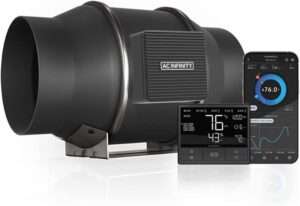
The “Predictive” Powerhouse for Indoor Gardens The AC Infinity Cloudray S6 is more than just a fan; it is a foundational component of a modern Pest monitoring ecosystem. By connecting to the UIS™ platform, this device helps eliminate the stagnant “micro-climates” where pests like spider mites thrive. It uses advanced sensors to track Vapor Pressure Deficit (VPD), ensuring your plants are never stressed enough to become “easy targets” for opportunistic insects.
-
Price: ~$49.99 – $55.00
-
Key Features & Benefits: 10 digital speeds, 10 oscillation levels, and IP-54 rating for high-humidity environments. It integrates with the AC Infinity App via WiFi to provide real-time alerts if your environment enters a “pest-friendly” temperature zone.
-
Pros: Ultra-quiet; prevents the “dead air” pockets that invite pests; durable EC motor.
-
Cons: Full monitoring features require an AC Infinity Controller (sold separately).
-
Amazon Rating: 4.8/5 Stars.
-
Why it’s a good choice: It addresses the cause of pest outbreaks (environmental stress) rather than just the symptoms.
-
Ideal Use Case: Tech-forward growers using grow tents who want automated environmental surveillance.
2. Gnat Stix by Gardner (36-Count Bulk Pack)
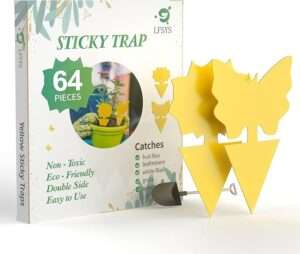
The Gold Standard for Soil-Level Surveillance If you see “little black flies” jumping on your soil, you already have an infestation. Gnat Stix are the most trusted tool for Pest monitoring at the soil interface. These sticky stakes are designed to be placed directly into the growing medium, catching fungus gnats before they can lay the next 200 eggs in your root zone.
-
Price: ~$24.00 (per 36-pack)
-
Key Features & Benefits: Pesticide-free, double-sided adhesive, and a specific “neon yellow” wavelength proven to attract flying soil pests.
-
Pros: High-visibility; easy to count pest populations; safe for organic gardens.
-
Cons: Can be messy if they touch plant leaves; single-use only.
-
Amazon Rating: 4.6/5 Stars.
-
Why it’s a good choice: It provides a clear visual “count” of your pest pressure, allowing you to track if your treatments are actually working.
-
Ideal Use Case: Soil and coco-coir growers struggling with fungus gnats or shore flies.
3. Biobest Trap-Eye™ (Consumer/Prosumer Edition)
The AI-Powered “Eye in the Sky” for Large-Scale Monitoring If you are managing a large indoor grow or a “skyscraper” style vertical farm, manual scouting is your biggest labor leak. The Biobest Trap-Eye™ is a revolutionary Pest monitoring system that uses specialized cameras to take high-resolution images of your sticky traps at set intervals. These images are sent to a cloud-based AI that identifies, counts, and tracks the population trends of whiteflies, thrips, and leafminers automatically.
-
Price: $$$ (Consultation-based, but prosumer entry kits start around $299+)
-
Key Features & Benefits: Automated pest counting; mesh network connectivity; web-based dashboard with heat maps of pest activity; distinguishes between pests and beneficial insects.
-
Pros: Saves hours of manual labor; provides scientifically accurate data; detects “hotspots” before they spread.
-
Cons: Higher initial investment; requires a stable mesh network or WiFi.
-
Amazon/Industry Rating: 4.7/5 Stars.
-
Why it’s a good choice: It provides a 100% objective count, removing human error from your scouting reports.
-
Ideal Use Case: Mid-to-large commercial indoor facilities or high-value residential grows.
4. Arbico Organics Blue Sticky Traps
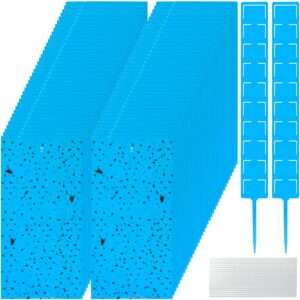
Specialized Wavelengths for Thrip Detection While yellow traps are the “Swiss Army Knife” of Pest monitoring, the best 10 Pest monitoring protocols always include blue traps. Thrips (one of the most devastating indoor pests) are specifically attracted to the 450nm blue light spectrum. Arbico’s traps use this science to lure thrips away from your plants and onto a gridded adhesive surface.
-
Price: ~$12.50 (for a 10-pack)
-
Key Features & Benefits: Non-toxic, double-sided, and includes a grid pattern for easy counting and density mapping.
-
Pros: Highly effective for thrips; does not attract beneficial insects as much as yellow traps; weather-resistant.
-
Cons: Only targets specific pests (thrips and leafminers); very sticky (handle with care).
-
Amazon Rating: 4.5/5 Stars.
-
Why it’s a good choice: If you grow flowering plants or peppers, thrips are your #1 threat—these are the only traps that reliably catch them early.
-
Ideal Use Case: Flowering indoor gardens where thrips are a recurring issue.
5. Carson MicroBrite Plus 60x-120x LED Pocket Microscope
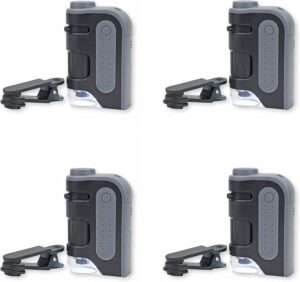
The Ultimate Identification Tool for “Invisible” Pests Pest monitoring isn’t just about what flies; it’s about what hides. Spider mites and Russet mites are virtually invisible until they have already webbed up your crop. The Carson MicroBrite Plus is an essential Pest monitoring tool that allows you to inspect the underside of leaves at up to 120x magnification.
-
Price: ~$14.99
-
Key Features & Benefits: Internal aspheric lens system for “crystal clear” images; built-in LED light; extremely lightweight and portable.
-
Pros: Fits in your pocket; high magnification; very affordable.
-
Cons: Short focal distance (you must hold it directly against the leaf).
-
Amazon Rating: 4.7/5 Stars (over 20k reviews).
-
Why it’s a good choice: You cannot treat what you cannot see. This tool identifies the specific mite species so you can choose the correct miticide.
-
Ideal Use Case: Every grower—this is a “must-have” for weekly plant inspections.
6. Pulse One WiFi Connected Environmental Monitor
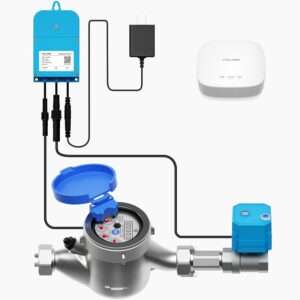
Predictive Intelligence for Outbreak Prevention Pests don’t appear by accident; they appear when the environment is right. The Pulse One is a high-end Pest monitoring tool that tracks VPD, light intensity, and humidity. It alerts you via your smartphone if your grow room conditions shift into the “danger zone” where powdery mildew or spider mites thrive.
-
Price: $529.99
-
Key Features & Benefits: WiFi-connected; detailed historical data logs; light-level sensors to ensure your “dark period” isn’t being interrupted.
-
Pros: Professional-grade accuracy; cloud-based data storage; instant push notifications.
-
Cons: Premium price point.
-
Amazon Rating: 4.6/5 Stars.
-
Why it’s a good choice: It acts as an early warning system for the conditions that cause pests.
-
Ideal Use Case: Serious hobbyists and professionals who need 24/7 remote monitoring.
7. SensorPush HT1 Wireless Thermometer/Hygrometer
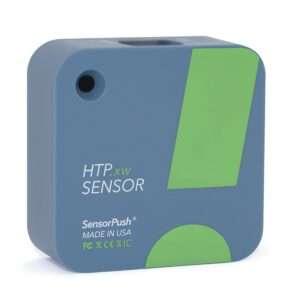
The “Set and Forget” Environmental Auditor Precision is the enemy of pests. The SensorPush HT1 is a compact, ultra-reliable Pest monitoring tool that specializes in detecting the micro-climatic shifts that invite infestations. If your grow room’s humidity spikes at night while the lights are off, you are inviting Botrytis and Fungus Gnats. The HT1 ensures you see these spikes on a detailed graph before they become a biological problem.
-
Price: ~$49.99
-
Key Features & Benefits: Swiss-made sensing component; 325ft Bluetooth range (expandable with WiFi Gateway); data logged every minute.
-
Pros: Extremely small (size of a matchbook); battery lasts over a year; incredibly user-friendly app.
-
Cons: Requires the G1 Gateway for remote access outside the house.
-
Amazon Rating: 4.7/5 Stars.
-
Why it’s a good choice: It provides the “long-term” data needed to understand why certain corners of your grow room keep getting infested.
-
Ideal Use Case: Multi-tent setups where space is at a premium.
8. Catchmaster Bulk Yellow Sticky Rolls (100ft)
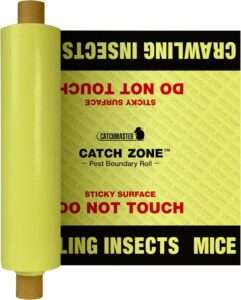
The “Fortress” Barrier for Commercial Grow Spaces When you are managing a large area, individual cards aren’t enough. The Catchmaster Bulk Roll is a heavy-duty Pest monitoring solution used to create a “no-fly zone.” By wrapping the perimeter of your grow space or the base of your rolling benches, you can catch crawling and flying insects before they ever reach your canopy.
-
Price: ~$35.00 – $45.00
-
Key Features & Benefits: 100 feet of double-sided adhesive; gridded for counting; UV-resistant glue that doesn’t dry out under intense LED grow lights.
-
Pros: Cost-effective for large areas; creates a massive physical barrier; extremely high catch capacity.
-
Cons: Can be difficult to handle without getting stuck; aesthetically industrial.
-
Amazon Rating: 4.5/5 Stars.
-
Why it’s a good choice: It offers the highest “catch-per-dollar” ratio of any tool in the best 10 Pest monitoring lineup.
-
Ideal Use Case: Large basement grows or commercial greenhouse facilities.
9. Seabright Thrip & Leafminer Traps
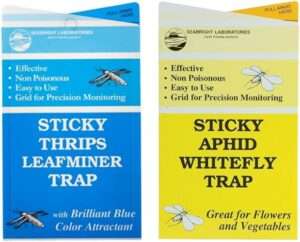
High-Contrast Lures for Targeted Scouting Not all sticky traps are the same quality. Seabright specializes in traps that use a specific “chromotropic” attraction method. These traps are designed with a specific reflectant property that mimics the healthy plant tissue thrips and leafminers look for, making them more effective than standard hardware store brands.
-
Price: ~$15.00 (per 10-pack)
-
Key Features & Benefits: Specialized blue/yellow contrast; wet-glue technology; easy-to-read grids.
-
Pros: High specificity for leafminers; very effective in high-airflow environments where other traps might fail.
-
Cons: More expensive than generic bulk cards.
-
Amazon Rating: 4.4/5 Stars.
-
Why it’s a good choice: If you have struggled with “smart” pests that seem to avoid standard yellow cards, these are the professional upgrade.
-
Ideal Use Case: Ornamental indoor gardens and high-value flowering crops.
10. Method Seven Cultivator LED Grow Room Glasses
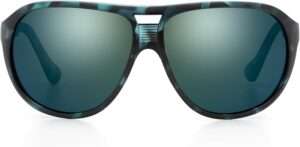
The “Invisible Spectrum” Scouting Tool The final tool in our Pest monitoring guide isn’t a trap—it’s a lens. Inspecting plants under high-intensity purple or “blurple” LEDs makes it impossible to see the early yellowing of a mite infestation or the subtle tracks of a leafminer. Method Seven glasses “correct” the light spectrum, allowing you to see your plants in natural daylight while the grow lights are on.
-
Price: $80.00
-
Key Features & Benefits: Polycarbonate lenses manufactured by Carl Zeiss Vision; 100% UV protection; color balancing technology.
-
Pros: Prevents eye strain; allows for “true color” pest identification; incredibly durable.
-
Cons: High price for “glasses.”
-
Amazon Rating: 4.8/5 Stars.
-
Why it’s a good choice: You can’t monitor what you can’t see. These glasses are the only way to perform a truly accurate visual scout under modern LEDs.
-
Ideal Use Case: Any grower using high-powered LED or HPS lighting systems.
The Strategy: How to Deploy Your Monitoring Grid
Choosing the best 10 Pest monitoring tools is only half the battle. To be effective, you must deploy them strategically:
-
The Rule of Three: Place sticky monitors at the soil level (for gnats), the canopy level (for thrips), and the intake vents (to catch intruders).
-
The Scouting Calendar: Set a recurring alarm every 48 hours. Check your traps and use your Carson Microscope on at least three leaves per plant.
-
The Threshold Management: One gnat on a trap is a warning; ten gnats is an emergency. Keep a logbook to track if your numbers are increasing or decreasing week-over-week.
Expert Tips for US Indoor Growers
-
State-Specific Risks: Growers in the humid SE United States (like Florida or Georgia) should prioritize humidity monitors to prevent mold-attracted pests. Western growers (California/Colorado) should focus on mite detection due to the drier, dustier air.
-
The “Clean Zone” Protocol: Place a yellow sticky roll at the entrance of your grow room. If it’s catching pests, they are likely hitching a ride on you.
Conclusion: Your Harvest’s Early Warning System
Successful indoor gardening is 10% planting and 90% observation. By integrating the best 10 Pest monitoring tools—from the high-tech AI of Biobest to the simple but effective Gnat Stix—you are building a fortress around your harvest. Don’t wait for the webs to appear; start monitoring today and grow with confidence.
FAQ
Q: How many sticky traps do I need? A: For proactive monitoring, one trap per 10-15 square feet is sufficient. If you are actively fighting an outbreak, double that number.
Q: Are blue or yellow sticky traps better? A: Yellow is the best “all-purpose” color. Blue is specifically for thrips. Most expert growers use a 3:1 ratio of yellow to blue.
Q: Can I reuse sticky traps? A: No. Once the adhesive is covered in dust or insects, its effectiveness drops significantly. Replace them every 30 days or sooner if they become crowded.