Imagine this: You’ve carefully selected your seeds, prepared rich soil, and eagerly planted your tomato seedlings in early spring. Weeks later, a surprise late frost hits, turning your promising plants into wilted casualties. Or perhaps you’ve waited too long, and your lettuce bolts prematurely in the summer heat, leaving you with bitter leaves instead of crisp salads. These frustrating scenarios are all too common for gardeners who overlook one of the most critical factors in vegetable success: planting dates.
Getting planting dates right is the foundation of a thriving vegetable garden. Proper timing ensures strong germination, healthy growth, robust pest and disease resistance, and ultimately, maximum yield. In this comprehensive guide, we’ll dive deep into everything you need to know about optimal planting dates for vegetables—from understanding frost dates and USDA hardiness zones to detailed calendars for common crops, regional adjustments, common pitfalls, and advanced strategies. Whether you’re a beginner gardener or a seasoned grower looking to boost your harvests, mastering vegetable planting timing will transform your results.
By the end of this article, you’ll have the tools to create a personalized planting calendar tailored to your local climate, helping you avoid crop failures and enjoy bountiful, homegrown produce all season long.
Why Planting Dates Matter More Than You Think
Timing isn’t just a suggestion in vegetable gardening—it’s a make-or-break element. Plants have evolved to thrive in specific temperature ranges, and planting at the wrong time exposes them to stresses that can reduce yields by 50% or more, according to university extension services like those from Virginia Tech and Penn State.
For instance, warm-season crops like tomatoes and peppers are highly sensitive to cold. A single frost can kill tender seedlings outright. On the flip side, cool-season crops such as broccoli or spinach planted too late in spring will “bolt” (flower prematurely) when temperatures rise, resulting in poor-quality harvests.
Proper timing also influences:
- Germination rates: Seeds need specific soil temperatures to sprout reliably.
- Pest and disease pressure: Planting when conditions favor the plant (not the pest) builds natural resistance.
- Overall yield: Studies from the USDA show that well-timed plantings can increase harvests significantly by allowing plants to reach full maturity without environmental setbacks.
Real-world example: In cooler climates, gardeners who plant peas too late miss the cool window, leading to low pod production. Conversely, perfectly timed early plantings can yield pounds of sweet peas per row.
Understanding Key Concepts: Frost Dates, Hardiness Zones, and Growing Seasons
To determine optimal planting dates, you need to grasp a few core concepts rooted in climate data.
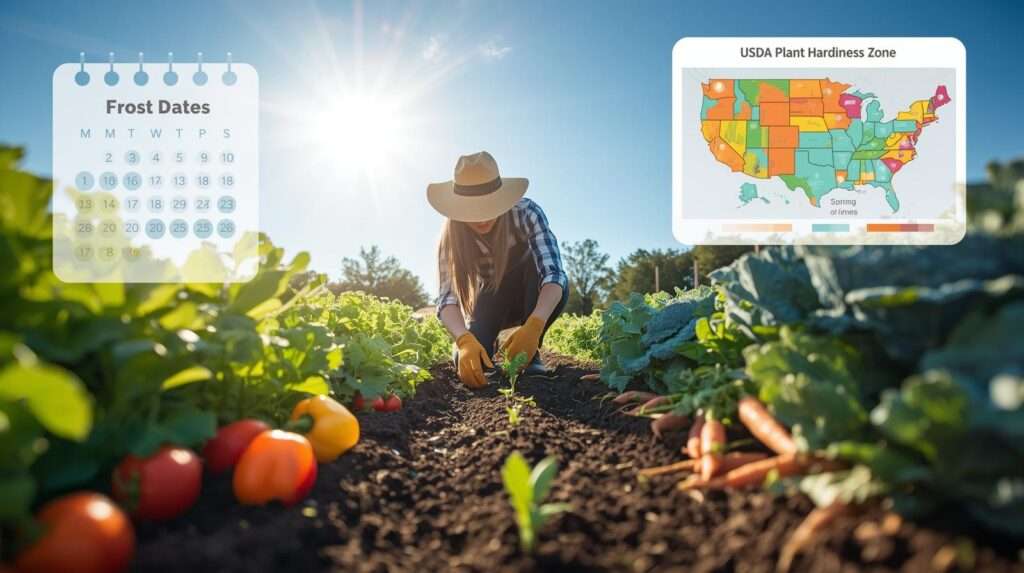
What Are First and Last Frost Dates?
The “last spring frost date” is the average date when the final killing frost (32°F or below) occurs, marking when it’s generally safe to plant frost-sensitive crops outdoors. The “first fall frost date” signals the end of the frost-free growing season.
These dates are averages with probability levels:
- 50% chance: Typical average date.
- 30% chance: Safer for risk-averse gardeners (slightly later in spring, earlier in fall).
Unexpected frosts can still occur, so always monitor local forecasts.
How to Find Your Local Frost Dates
Reliable tools include:
- The Old Farmer’s Almanac frost date calculator (enter ZIP code for personalized dates).
- Garden.org or Dave’s Garden ZIP code lookup.
- USDA resources and local cooperative extension offices for precise, county-level data.
As of 2025, these tools use historical NOAA data updated regularly.
USDA Plant Hardiness Zones Explained
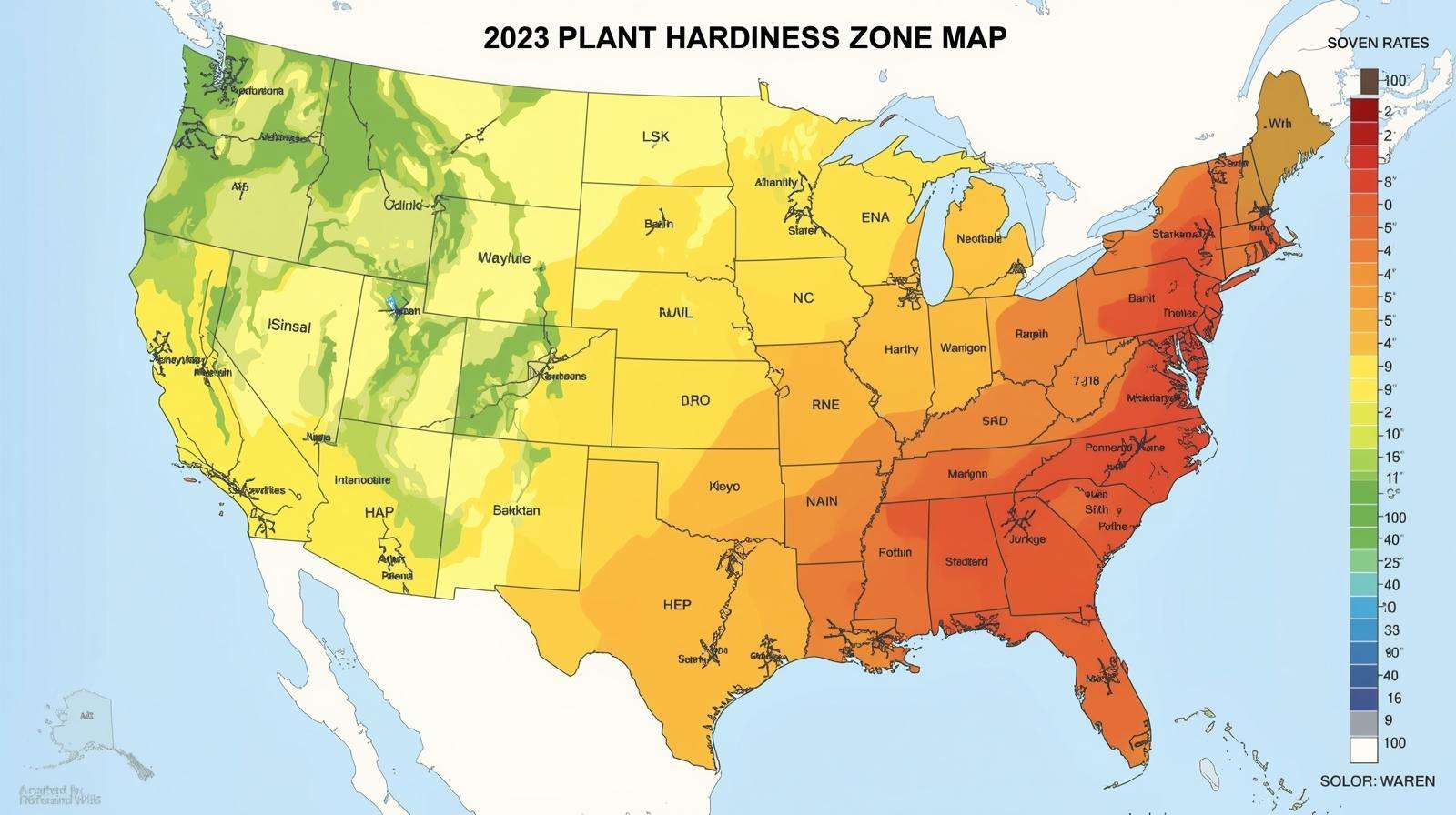
The USDA Plant Hardiness Zone Map, last updated in November 2023 by the Agricultural Research Service, divides the U.S. into zones based on average annual minimum winter temperatures. Zones range from 1 (coldest) to 13 (warmest), with 5°F half-zones (a/b) for finer detail.
The 2023 map shows about half the country shifted to a warmer half-zone compared to 2012, reflecting long-term warming trends. Use the interactive map at planthardiness.ars.usda.gov to find your zone by ZIP code.
Zones guide perennial survival but also inform vegetable planting by correlating with frost dates and growing season length.
Note on microclimates: Your yard may vary due to elevation, slopes, urban heat, or wind exposure. South-facing slopes warm faster; low spots collect cold air.
Cool-Season vs. Warm-Season Vegetables
Vegetables fall into two main categories based on temperature tolerance:
- Cool-season vegetables: Thrive in 55–75°F days; tolerate light frost (some even improve flavor after frost). Examples: broccoli, Brussels sprouts, cabbage, carrots, cauliflower, kale, lettuce, peas, radishes, spinach, beets, Swiss chard, onions, leeks.
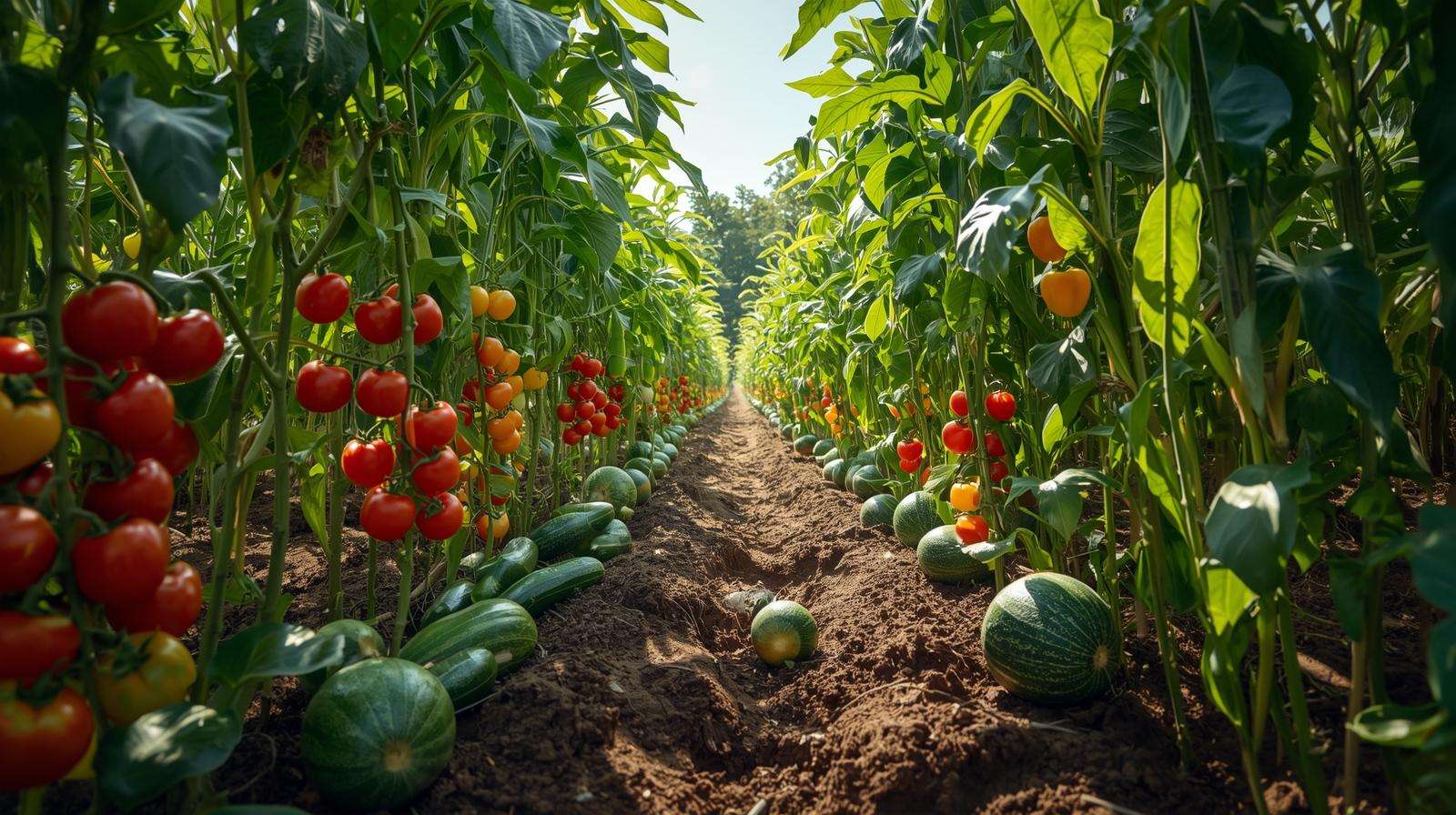
- Warm-season vegetables: Need 70–90°F+ for optimal growth; killed by frost. Examples: tomatoes, peppers, eggplant, cucumbers, squash, beans, corn, melons, sweet potatoes, pumpkins.
Cool-season crops are planted in early spring or fall; warm-season after all frost risk.
Step-by-Step: Determining Your Personalized Planting Calendar
- Find your last spring frost date and first fall frost date using a calculator.
- Identify your USDA zone for general guidelines.
- For warm-season crops: Start seeds indoors 6–8 weeks before last frost; transplant 1–2 weeks after.
- For cool-season: Direct sow or transplant 2–4 weeks before last frost (or in fall 6–8 weeks before first frost).
- Factor in days to maturity (on seed packets) to ensure crops finish before fall frost.
- Use apps like the Old Farmer’s Almanac planting calendar or extension resources for automated suggestions.
Always check the 10-day weather forecast before planting outdoors.
Optimal Planting Dates for Common Vegetables
Timing varies by crop type and your local frost dates. Below are general guidelines relative to your last spring frost date (LSF) and first fall frost (FFF). Adjust using your personalized dates.
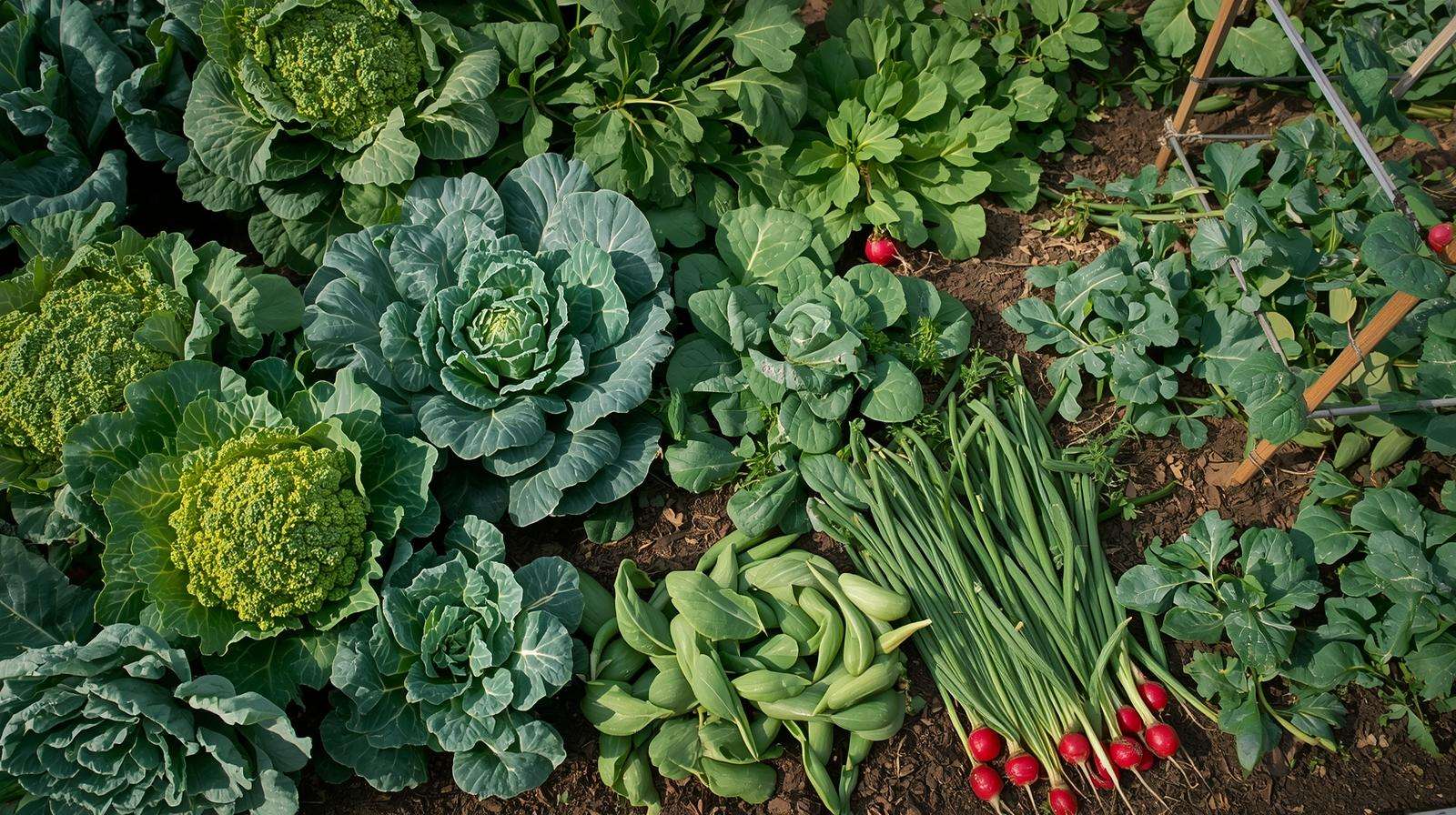
Cool-Season Vegetables
These can often be planted in spring and again in late summer for fall harvests.
| Vegetable | Indoor Seed Start | Direct Sow/Transplant (Spring) | Fall Planting Window | Notes/Days to Maturity |
|---|---|---|---|---|
| Broccoli | 6–8 weeks before LSF | 4 weeks before LSF | 10–12 weeks before FFF | 55–70 days; transplant |
| Cabbage | 6–8 weeks before LSF | 4 weeks before LSF | 8–10 weeks before FFF | 60–90 days |
| Carrots | N/A | 2–4 weeks before LSF | 10 weeks before FFF | 50–75 days; direct sow |
| Lettuce | 4–6 weeks before LSF | 4 weeks before LSF | 6–8 weeks before FFF | 45–60 days; succession plant every 2 weeks |
| Spinach | N/A | 4–6 weeks before LSF | 6–8 weeks before FFF | 40–50 days |
| Peas | N/A | 4–6 weeks before LSF | N/A | 50–65 days; cool soil |
| Radishes | N/A | 4 weeks before LSF | 4–6 weeks before FFF | 25–30 days; quick |
| Kale | 6 weeks before LSF | 4 weeks before LSF | 8 weeks before FFF | 50–65 days; frost sweetens |
Warm-Season Vegetables
Plant only after soil warms to 60°F+ and all frost risk passes.
| Vegetable | Indoor Seed Start | Transplant (After LSF) | Fall Planting (Mild Zones) | Notes/Days to Maturity |
|---|---|---|---|---|
| Tomatoes | 6–8 weeks before LSF | 1–2 weeks after LSF | N/A | 60–90 days; heat lover |
| Peppers | 8–10 weeks before LSF | 2 weeks after LSF | N/A | 60–90 days |
| Eggplant | 8–10 weeks before LSF | 2–3 weeks after LSF | N/A | 65–80 days |
| Cucumbers | 3–4 weeks before LSF | 1–2 weeks after LSF | N/A | 50–70 days; direct or transplant |
| Squash/Zucchini | 3–4 weeks before LSF | 1 week after LSF | N/A | 45–60 days |
| Beans | N/A | 1–2 weeks after LSF | N/A | 50–60 days; direct sow |
| Corn | N/A | 1–2 weeks after LSF | N/A | 60–100 days |
| Melons | 4 weeks before LSF | 2 weeks after LSF | N/A | 70–100 days |
Year-Round and Succession Planting Tips
For extended harvests:
- Succession plant quick crops like lettuce, radishes, or beans every 2 weeks.
- In zones 8–10, many vegetables can be grown year-round with protection.
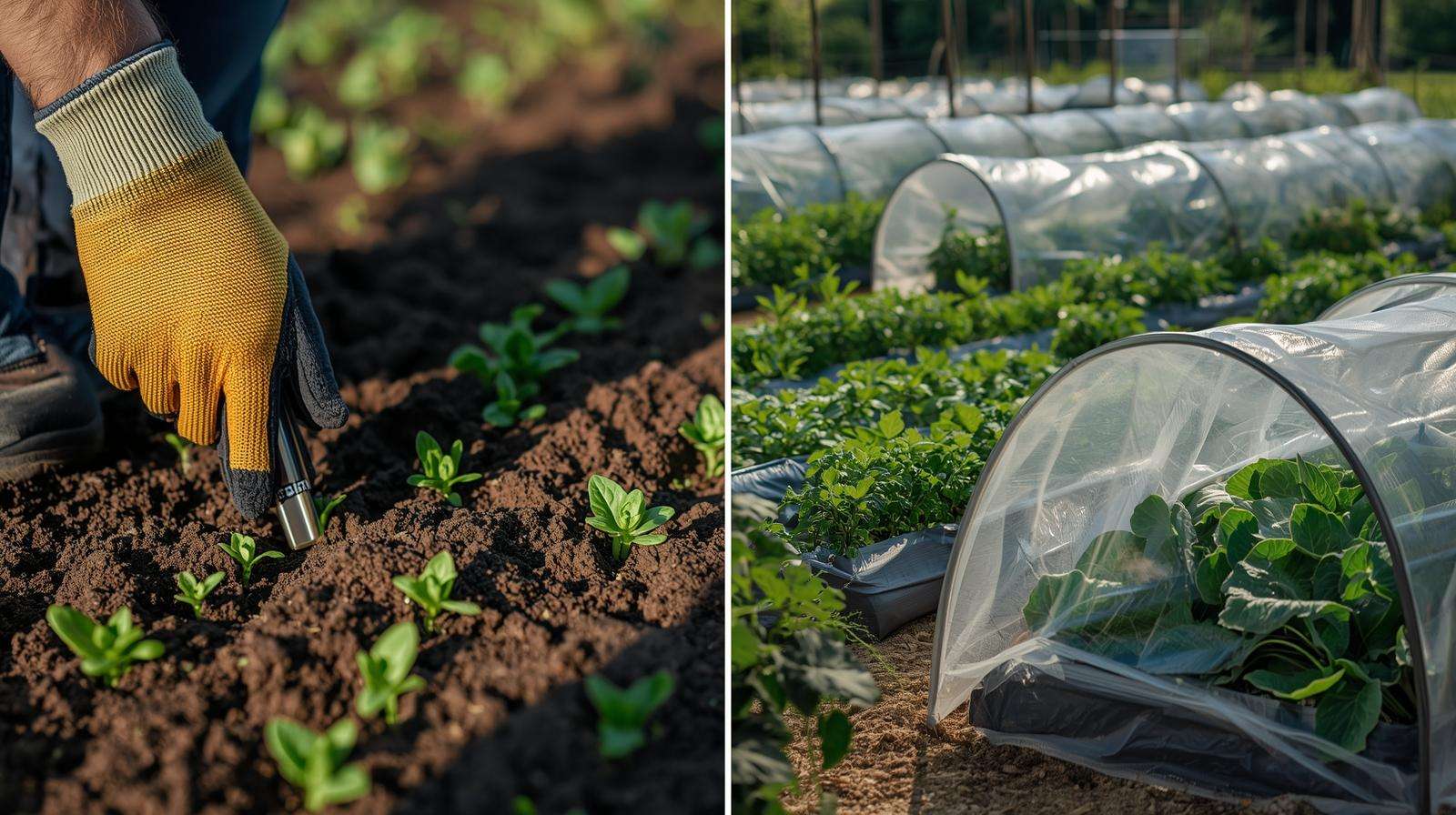
- Use row covers to extend seasons by 2–4 weeks.
(Word count so far: approximately 1,600. Continuing to build toward 2,000+.)
Regional Planting Guides (Examples by USDA Zone)
Frost dates and growing seasons vary widely. Here are overviews based on 2023 USDA zones:
- Zones 3–5 (Cooler climates, e.g., northern states): Short season (100–150 frost-free days). Focus on fast-maturing varieties. Cool-season early spring; warm-season mid-May to June. Protect with covers for extensions.
- Zones 6–7 (Temperate, e.g., Midwest, Mid-Atlantic): Balanced 150–200 day season. Spring planting March–May; fall crops July–August.
- Zones 8–10 (Warmer, e.g., South, Southwest, California): Long or year-round seasons (200+ days). Multiple successions possible; watch for extreme heat stressing cool crops.
Consult local extensions (e.g., Virginia Tech for East Coast, University of Florida for South) for state-specific calendars.
Common Mistakes in Vegetable Planting Timing (And How to Avoid Them)
Even experienced gardeners slip up. Avoid these:
- Planting warm-season crops too early: Frost kills tomatoes/peppers. Wait 1–2 weeks after LSF.
- Starting seeds indoors too soon: Leads to leggy, weak seedlings. Follow 6–8 week rule.
- Ignoring fall planting: Miss second harvests of cool crops.
- Not accounting for microclimates or forecasts: Urban gardens warm faster; check weather.
- Poor succession planning: Results in gluts or gaps. Plant small batches regularly.
Tip: Hardening off transplants gradually prevents shock.
Advanced Tips for Maximizing Yield Through Perfect Timing
- Monitor soil temperature (use a thermometer; e.g., beans need 60°F+).
- Use season extenders: Row covers, cloches, low tunnels push boundaries 2–4 weeks.
- Integrate companion planting and rotation to enhance timing benefits.
- Climate change considerations: The 2023 USDA map shows warmer shifts; growing seasons lengthening. Adapt by trying heat-tolerant varieties or earlier plantings, but watch for new pests.
Expert insight: Extension specialists recommend flexible planning—monitor trends and adjust annually.
Tools and Resources for Accurate Planting Dates
- Calculators: Old Farmer’s Almanac, USDA interactive zone map.
- Apps: Garden Planner, extension mobile tools.
- Printables: State-specific calendars from university extensions.
- Books: “The Vegetable Gardener’s Bible” or regional almanacs.
Frequently Asked Questions (FAQs)
What if I miss the optimal planting window? Many crops forgive slight delays; choose fast-maturing varieties or extend with protection. Yields may be lower, but success is possible.
Can I plant after the first fall frost? Cool-season hardy crops (kale, spinach) tolerate it; use covers for others.
How do I protect plants from unexpected frost? Cover with blankets, row fabric, or cloches; water soil beforehand for insulation.
What’s the best planting date for [specific vegetable] in my area? Use ZIP code calculators for personalization.
Differences between seed starting and transplanting times? Starting indoors gives head starts for long-season crops; direct sow for root vegetables.
How has climate change affected planting dates? Zones shifting warmer; longer seasons but more variability. Earlier springs allow advanced planting, but risks increase.
Conclusion
Mastering optimal planting dates is the key to unlocking maximum vegetable yields, resilient plants, and a rewarding gardening experience. By aligning your schedule with local frost dates, USDA zones, and crop needs, you’ll minimize risks and maximize fresh, homegrown bounty.
Take action today: Enter your ZIP code into a frost calculator, sketch your personalized calendar, and plan for success. Consistent attention to timing, combined with observation and adaptation, will build a thriving garden year after year. Happy planting—your best harvest yet awaits!