Losing half your flock in a single night to a determined coyote pack, a stealthy fox, or even a neighborhood dog is one of the most devastating setbacks a homesteader or backyard chicken keeper can face. The heartbreak is real: scattered feathers, missing birds, and the sudden silence where clucking once filled the air. These ground predators—coyotes, foxes, and dogs—are among the most persistent and adaptable threats to poultry, especially in rural, suburban, or peri-urban areas where human development pushes wildlife closer to homes and gardens.
Protecting chickens from coyotes foxes dogs isn’t about one quick fix or lethal traps; it’s about building a resilient, layered system that works with nature rather than against it. In permaculture design, we apply principles like redundancy (multiple overlapping defenses), stacking functions (elements that serve more than one purpose), and observation to create self-regulating systems. Chickens aren’t just egg-layers or meat sources—they contribute to soil fertility through scratching and manuring, control pests in orchards or gardens, and integrate into food forests or rotational pastures. When predators strike, the entire homestead ecosystem suffers.
This comprehensive guide draws from years of hands-on experience in regenerative agriculture, wildlife behavior knowledge, and real-world trials on small-scale farms. You’ll learn proven, non-lethal strategies that emphasize permaculture-style fences (movable, living, and electric), integrated guardian animals, habitat modifications, and daily routines that dramatically reduce losses. Whether you’re in a coyote-heavy region, dealing with urban foxes, or managing stray dogs, these methods focus on prevention, deterrence, and long-term harmony—delivering safer flocks without constant worry or ecosystem harm.
Understanding Your Predators: Know Thy Enemy
To protect effectively, observe and understand the threats. Coyotes, foxes, and dogs each have distinct behaviors that exploit common flock vulnerabilities.
Coyote Behavior and Tactics Coyotes are highly intelligent pack hunters, often most active at dawn, dusk, and night. They dig under fences, leap over low barriers (up to 4–5 feet), and learn quickly from failed attempts. A single coyote may test defenses repeatedly; a pack can overwhelm weak spots. They target easy meals—free-ranging birds, unsecured coops, or poorly lit areas.
Fox Strategies Red and gray foxes are solitary, stealthy opportunists. Excellent diggers and climbers, they squeeze through gaps as small as 4–5 inches, tunnel under runs, or scale wire. They often strike quickly, taking one bird and leaving, or cache extras. Foxes habituate to human areas, making suburban flocks especially vulnerable.
Domestic and Stray Dogs Neighborhood or feral dogs often kill for sport rather than hunger, chasing and mauling multiple birds. They exploit familiar human environments, ignoring some deterrents that work on wild canids. Persistence and strength make them dangerous, especially if unchained at night.
Signs of Predator Activity Learn to read evidence: paw prints (coyote tracks show claw marks and are elongated; fox prints are more compact with fur between pads); scat (coyote often contains hair/bones); kill patterns (foxes may decapitate and carry heads away; dogs leave torn, scattered remains). Prompt identification allows quick system adjustments.
From wildlife ecology, these predators succeed through trial-and-error learning—random scares fail, but consistent, multi-layered defenses succeed.
Layered Defense: The Permaculture Principle of Redundancy
Permaculture teaches “don’t put all your eggs in one basket.” A single fence or coop can fail; redundancy creates resilience. Chickens in a well-protected system forage, fertilize, and control pests while staying safe.
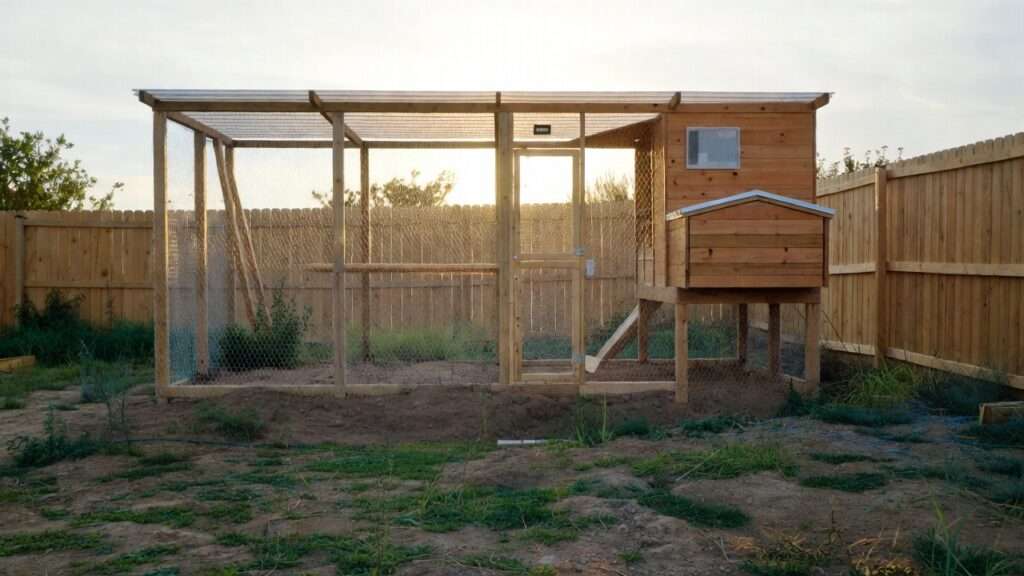
Secure Night Housing and Coop Design The coop is your flock’s fortress. Use ½-inch hardware cloth (not chicken wire, which predators tear or reach through) for all openings. Cover vents, windows, and pop doors completely. Elevate roosts 2–3 feet to deter reaching paws. Install auto-closing doors timed for dusk. Use carabiner or padlocks—raccoons and foxes manipulate latches.
Extend an “apron” of hardware cloth 12–24 inches outward from the base, buried 4–6 inches or pinned with landscape staples/rocks. This stops digging predators cold. Add overhangs or roof lips to prevent climbing over tops.
Permaculture-Style Fencing Solutions Traditional static fences limit chicken benefits; permaculture favors dynamic, multi-functional ones.
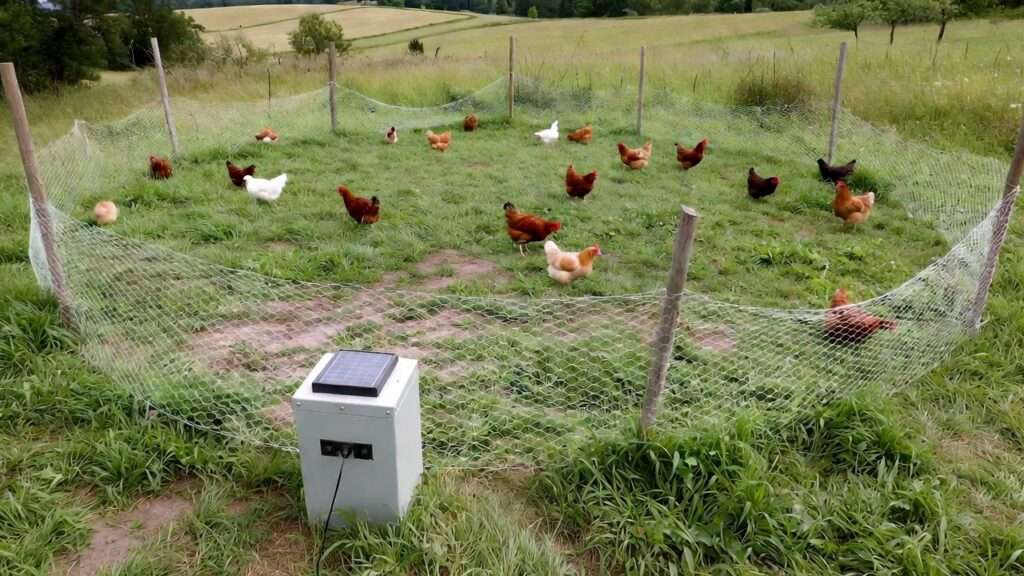
- Electric Poultry Netting — Solar-powered, portable 42–48 inch netting (brands like Premier 1) deters coyotes, foxes, and dogs effectively. Multiple horizontal strands shock at nose/chest height. Movable for rotational grazing, it allows chickens to fertilize new areas while containing them safely. Train birds to respect it first (bait with treats). In trials, well-maintained electric netting reduces ground predator losses by 80–90%.
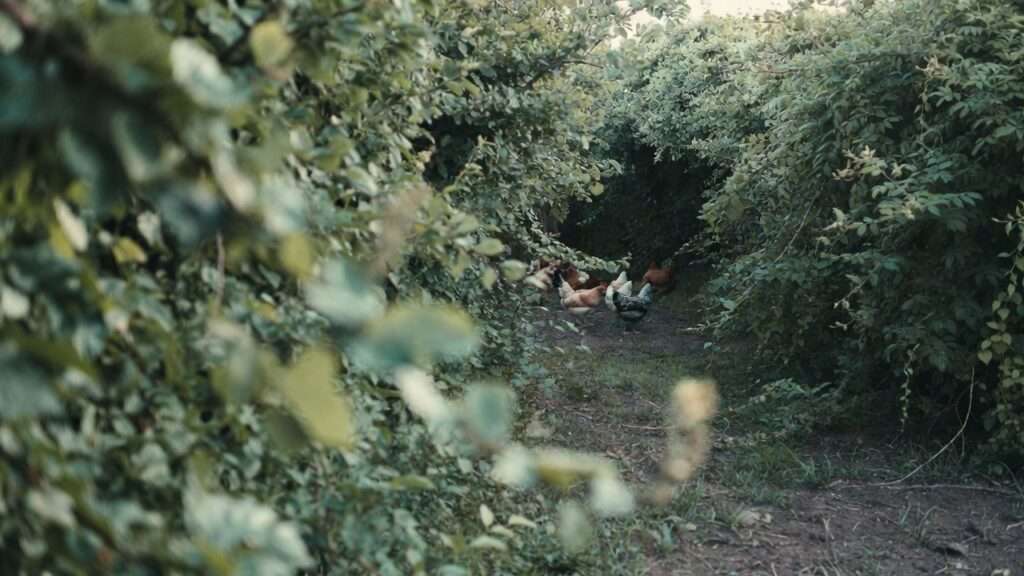
- Living Fences and Hedgerows — Plant thorny, dense species like blackberry, hawthorn, rugosa rose, or Osage orange along perimeters. These create visual barriers, hide escape routes, and provide food/medicine (berries for chickens). Over time, they become impenetrable thickets that deter canines while stacking functions (windbreak, biodiversity, forage).
- Tall Perimeter with Enhancements — 6–8 foot welded wire or chain-link with outward-sloping tops or electric top wires stops jumpers/climbers. Combine with living elements for aesthetics and ecology.
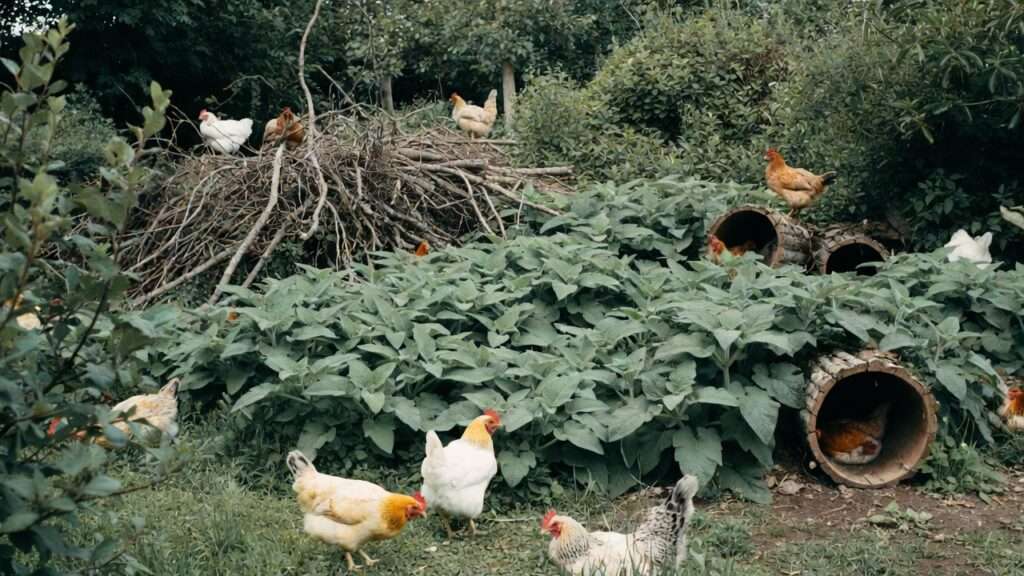
Habitat Design to Reduce Attractiveness and Increase Safety Make your space less appealing and more defensible. Dense shrub plantings, berry bushes, and comfrey provide quick cover and escape routes. Create “safety zones” with brush piles, log hideouts, or vine-covered A-frames where birds can duck from threats.
Remove attractants: store feed in metal bins, compost carcasses far away, eliminate standing water that draws wildlife. Integrate chickens into food forests or orchards—under trees they scratch pests, but with cover and mobility.
Guardian Strategies: Living Defenses in a Permaculture Context
Living guardians add dynamic protection, biodiversity, and manure cycling—true permaculture stacking.
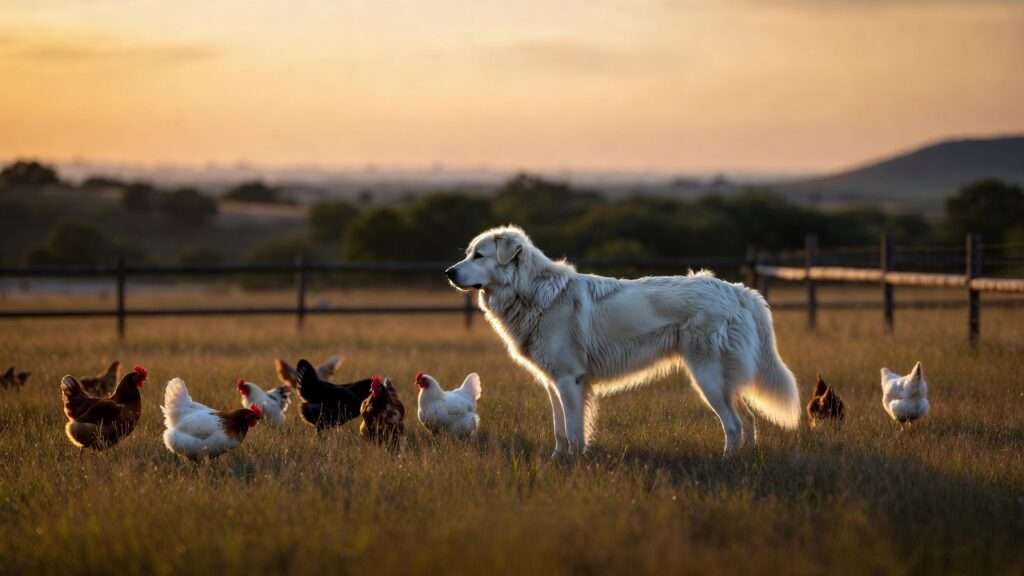
Livestock Guardian Dogs (LGDs) Breeds like Great Pyrenees, Anatolian Shepherd, or Maremma bond with poultry if raised from puppyhood around them. They patrol, bark at threats, and confront canines. One well-bonded LGD can deter packs. Provide shelter, training (no chasing chickens), and space. In integrated systems, they guard multiple species.
Other Guardians
- Aggressive roosters alert and fight off smaller threats.
- Geese (especially Roman Tufted) honk loudly, flap, and chase intruders—raise with chicks for bonding.
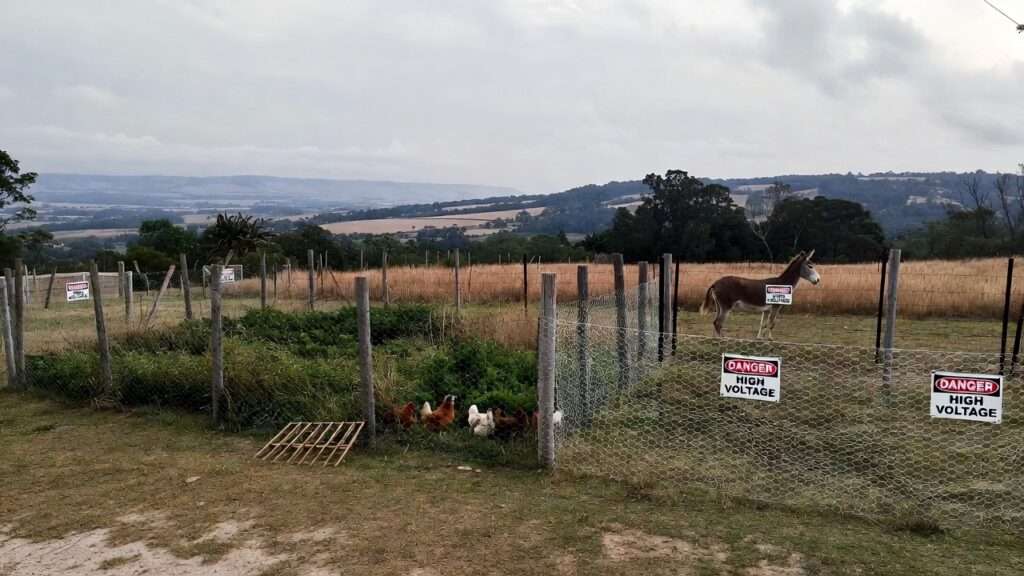
- Donkeys or llamas (if acreage allows) aggressively repel dogs/coyotes.
| Guardian Type | Best Against | Pros | Cons |
|---|---|---|---|
| LGD (e.g., Pyrenees) | Coyotes, foxes, dogs | Reliable, 24/7 patrol | Needs training/space |
| Geese | Foxes, small threats | Cheap, noisy alarm | Can be aggressive to birds |
| Rooster | Daytime aerial/ground | Natural flock leader | May fight other roosters |
| Donkey/Llama | Canines | Strong deterrent | Requires larger space |
Daily and Seasonal Routines That Prevent Attacks
Consistency in daily management is one of the most under-rated yet powerful tools for protecting chickens from coyotes foxes dogs. Predators are creatures of opportunity and habit—disrupting their patterns through reliable human routines makes your flock a much less predictable and therefore less attractive target.
Lock-Up Discipline and Evening Headcounts Never rely on “they usually go in by themselves.” Train your flock to enter the coop at dusk using a consistent cue (e.g., shaking a treat container or a specific call), but always do a full headcount and physically lock doors yourself. Use automatic pop-door openers with battery/solar backups, but manually verify closure on high-risk nights (full moon, recent sightings). Install bright motion-activated LED lights (low-wattage, warm color to minimize wildlife disruption) around the coop and run entrances—many predators avoid well-lit areas.
Feed and Water Management Never leave feed or scraps outside overnight. Store all feed in metal garbage cans with tight lids inside a shed or locked area. Remove uneaten kitchen scraps or spilled grain immediately. Standing water sources (leaky hoses, open buckets) attract thirsty predators—use nipple drinkers or elevated waterers inside secure runs.
Seasonal Adjustments for Changing Predator Pressure
- Spring (March–May): Young coyote pups and fox kits are learning to hunt. They are less cautious but also less skilled—extra vigilance during this “training season” pays off. Increase daytime supervision if free-ranging.
- Summer: Longer days mean more foraging time, but also more human activity that can mask predator approaches. Rotate pasture areas frequently to prevent scent trails from building up.
- Fall: Predators bulk up for winter; food may become scarcer in wild areas, increasing pressure on domestic flocks. Secure everything tightly.
- Winter: Shorter days push more nocturnal activity. Coyotes and foxes become bolder in search of easy calories. Clear snow drifts that could allow jumping over fences; check electric fence voltage daily (cold reduces battery efficiency).
Rotational Pasturing to Break Habituation Move portable runs, chicken tractors, or electric netting every 3–7 days depending on flock size and forage. This prevents predators from memorizing a fixed location and timing. It also spreads manure evenly, improves soil health, and keeps pasture from becoming overgrazed and bare—another permaculture win.
Additional Natural and Low-Tech Deterrents
These boosters work best layered on top of strong physical barriers and guardians.
Scent-Based Repellents
- Commercial predator urine (coyote, wolf, fox) sprinkled around perimeters can create a “territory already claimed” signal. Reapply after rain.
- Essential oils (peppermint, citrus, eucalyptus) soaked rags hung near weak points. Use sparingly—strong smells can stress chickens if overdone.
- Human hair clippings or used cat litter scattered around runs (some dogs and foxes avoid areas marked by dominant carnivores).
Visual and Noise Scare Devices
- Fladry lines: Red flags tied to cord at 18–24 inch intervals fluttering in wind—very effective against coyotes and wolves in ranch settings.
- Reflective tape, old CDs, pie tins, or Mylar balloons tied to fences create unpredictable flashes.
- Radio tuned to talk station left on low volume overnight (mimics human presence).
- Motion-activated sprinklers placed at entry points—water startles most canines without harm.
Monitoring Tools Trail cameras (inexpensive models with night vision) placed at fence corners and coop entrances provide invaluable data. Review footage weekly to spot patterns, weak points, or new visitors, then adapt your system accordingly.
Real-World Case Studies and Examples
These anonymized examples come from permaculture homesteaders and small regenerative farms in North America and similar climates.
Case 1: Suburban Edge Property (High Fox & Stray Dog Pressure) A family in a peri-urban area lost 8 birds in two months to foxes and roaming dogs. They installed 48-inch solar electric poultry netting around a ¼-acre Zone 2 garden, planted a living fence of blackberry and rugosa rose along the property line, and added two bonded Toulouse geese raised with the flock. Losses dropped to zero for 18 months running. The geese’s constant honking deterred daytime attempts, while the electric net stopped nighttime breaches.
Case 2: Rural Coyote Territory A 5-acre homestead with heavy coyote activity switched from static 4-foot chicken wire to movable Premier 1 electric netting + a 7-foot welded-wire perimeter with 24-inch buried apron. They integrated a Great Pyrenees puppy (bonded slowly over 8 months) and created dense escape cover with comfrey patches and brush piles. After initial training challenges, predation fell from 12–15 birds/year to 1–2, mostly from rare fence maintenance lapses.
Case 3: Small Urban Backyard (Neighborhood Dogs) Limited space ruled out large guardians. The owner built a fully hardware-cloth enclosed run with buried apron, added motion lights and reflective tape, locked birds in every night by 7 PM, and used a trail camera to identify the problem dog. After sharing footage with the owner, the dog was kept indoors at night—problem solved without any lethal measures.
These stories highlight a common thread: no single method worked alone, but consistent layering delivered near-complete protection.
Troubleshooting Common Failures
Even the best systems occasionally have breaches. Here’s how to diagnose and fix:
- Digging under fence → Reinforce or extend apron; add large rocks or logs along the base.
- Climbing or jumping → Add outward overhang, increase height, or run hot wire at top.
- Guardian not working → Re-evaluate bonding process, age, or breed fit; consider adding a second guardian.
- Electric netting fails → Check voltage (should be 4,000–7,000 volts), vegetation touching wires, battery charge, grounding.
- Birds escaping netting → Retrain with temporary smaller pen; use treats to reinforce boundary respect.
Act fast—each successful breach teaches the predator that your system can be beaten.
Conclusion
Protecting chickens from coyotes foxes dogs in a permaculture context is about designing with nature: observe predator behavior, stack redundant defenses, integrate guardians and habitat features, and maintain disciplined routines. When done right, your flock becomes a thriving, contributing part of a resilient homestead rather than a constant source of worry.