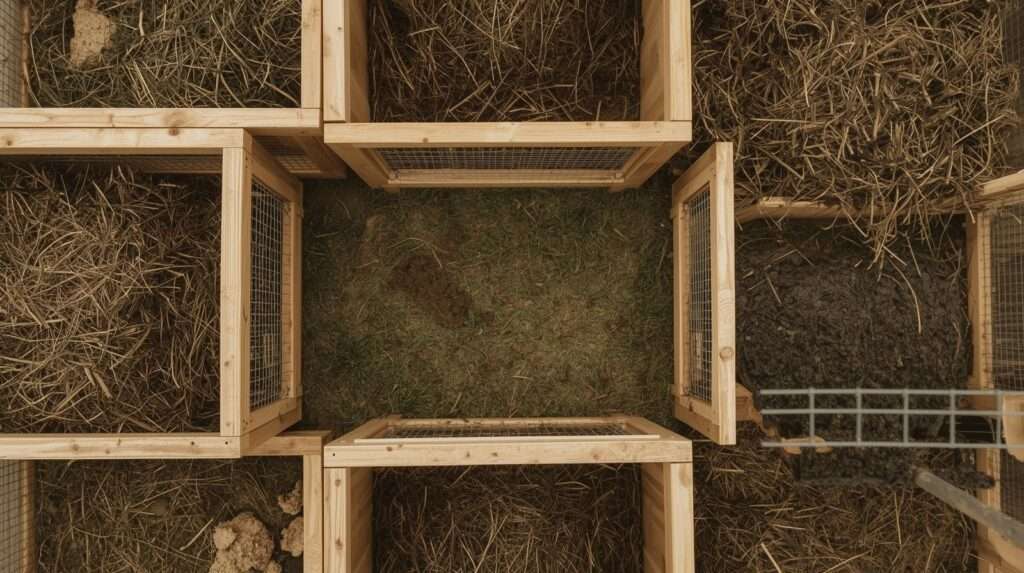
Imagine this: You’re a backyard rabbit keeper, excited about raising these gentle animals, but every cleaning day turns into a dreaded chore. Messy cages, scattered waste, odors building up, and the nagging thought that all that valuable fertilizer is going to waste. Sound familiar? Many rabbit owners struggle with traditional housing that makes manure management a hassle, leading to wasted “gardener’s gold” – one of the richest, most versatile organic fertilizers available.
The good news? With the right rabbit setups that make manure easy to use, you can transform this frustration into an effortless system. Smart hutch and cage designs allow manure to drop cleanly for simple collection, turning waste into a nutrient-packed resource that supercharges your garden without the backbreaking work.
In this comprehensive guide, we’ll explore why rabbit manure is superior to other animal fertilizers, the essential design principles for easy collection, proven setups (from DIY to commercial-inspired), and practical ways to apply it in your garden. Whether you’re a homesteader, urban gardener, or small-scale farmer, these clever rabbit housing ideas will help you harvest high-quality manure with minimal effort – boosting soil health, plant growth, and sustainability.

Why Rabbit Manure is Gardening Gold
Rabbit manure stands out as one of the most effective organic fertilizers for homestead and garden use. Often called a “cold” manure, it can be applied fresh without risking plant burn, unlike “hot” manures from chickens or horses that require lengthy composting.
The Unique Benefits of Rabbit Manure
Nutrient-wise, rabbit manure typically analyzes at an NPK (nitrogen-phosphorus-potassium) ratio of around 2.4-1.4-0.6, making it richer and more balanced than many common alternatives:
- Chicken manure: ~1.1-0.8-0.5
- Horse manure: ~0.7-0.3-0.6
- Cow manure: ~0.6-0.4-0.5
- Sheep manure: ~0.7-0.3-0.9
These values can vary based on diet and conditions, but rabbit manure consistently outperforms in nitrogen and phosphorus content, promoting lush foliage, strong roots, and abundant blooms/fruits.
Beyond NPK, it’s loaded with micronutrients like calcium, magnesium, boron, zinc, manganese, sulfur, copper, and cobalt. As organic matter, it enhances soil structure, improving drainage in clay soils and moisture retention in sandy ones. It also feeds beneficial microbes and earthworms, creating a thriving soil ecosystem.
Unlike messier manures, rabbit droppings are dry, pelletized, and virtually odorless – perfect for easy handling and storage. In permaculture systems, it closes nutrient loops, reducing waste while providing free, superior fertilizer.
How Much Manure Can You Expect?
A single adult rabbit produces 200-300 pellets daily. Over a year, one rabbit can generate substantial volume – estimates suggest a small colony (e.g., a buck and two does with offspring) yields at least 1-2 cubic yards annually. For manure-focused production, 5-10 rabbits easily supply enough for a large vegetable garden, turning “waste” into hundreds of pounds of premium fertilizer.
Real-world homesteaders report transforming poor soil into productive beds using nothing but rabbit manure, often outperforming commercial options in yield and plant health.
Key Principles for Rabbit Setups Focused on Easy Manure Collection
Effective manure management starts with housing design prioritizing cleanliness, rabbit welfare, and gravity-assisted collection.
Essential Design Features
- Wire mesh floors: Use 14-16 gauge galvanized wire with 1/2″ x 1″ grid (narrower dimension on top for better weight distribution). This prevents sore hocks (ulcerated feet) while allowing pellets and urine to drop through.
- Elevated structures: Hutches or cages raised 3-4 feet off the ground enable easy access underneath.
- Collection systems: Slanted trays, gutters, tarps, or direct-drop into bins/buckets funnel waste efficiently.
- Urine handling: Separate pure pellets for immediate use or collect mixed for composting.
- Welfare priorities: Include resting boards (solid platforms) for comfort, proper ventilation, shade, and protection from predators/elements.
Ethical designs keep rabbits healthy and stress-free, which in turn produces better manure quality.
Common Mistakes to Avoid
- Solid floors: Lead to buildup, odors, flies, and health issues like parasites or foot problems.
- Oversized wire (e.g., 1″ x 1″): Risks sore hocks or trapped feet.
- Poor ventilation: Traps ammonia from urine, causing respiratory issues.
- Inaccessible collection: Makes cleaning infrequent, defeating the purpose.
By focusing on these principles, your setup becomes low-maintenance and productive.

Top Rabbit Hutch and Cage Designs for Effortless Manure Collection
Here are proven designs that maximize ease while supporting rabbit health.
1. All-Wire Hanging Cages with Drop Pans
The gold standard for commercial and backyard breeders. Cages suspend from frames or ceilings, with removable metal or plastic trays below.
- Benefits: Cleanest option – manure falls straight down; excellent ventilation; minimal bedding needed.
- Pros/Cons: Ideal for barns or covered areas; trays slide out for weekly emptying.
- DIY Tips: Use 14-gauge galvanized wire; build 30″ x 36″ cages for adults. Cost: $50-150 per unit.
2. Elevated Hutches with Slanted Collection Trays or Gutters
Outdoor favorites using angled metal sheets, PVC gutters, or tarps to direct waste into buckets.
- Description: Elevated wooden frames with wire floors; slanted surfaces create “automatic” flow.
- Examples: Metal roofing scraps or dedicated gutters funnel to one end.
- DIY Overview: Frame from treated lumber; add wire floor and gutter system. Popular for homesteads.

3. Rabbit Tractors (Movable Pasture Pens) for Direct Soil Fertilization
Mobile pens allow rabbits to graze while depositing manure directly on soil.
- How it works: Wire-bottomed frames moved daily/weekly over garden beds.
- Benefits: Natural fertilization; pest control via grazing; no collection needed.
- Tips: Rotate to avoid over-fertilization; use for fallow areas.

4. Integrated Worm Bin Systems (Vermicomposting Under Hutches)
Drop manure into worm bins below for double-processed castings.
- Benefits: Worms consume waste, producing ultra-rich vermicompost; reduces volume/odors.
- DIY Guide: Shallow bins with red wigglers under elevated cages.
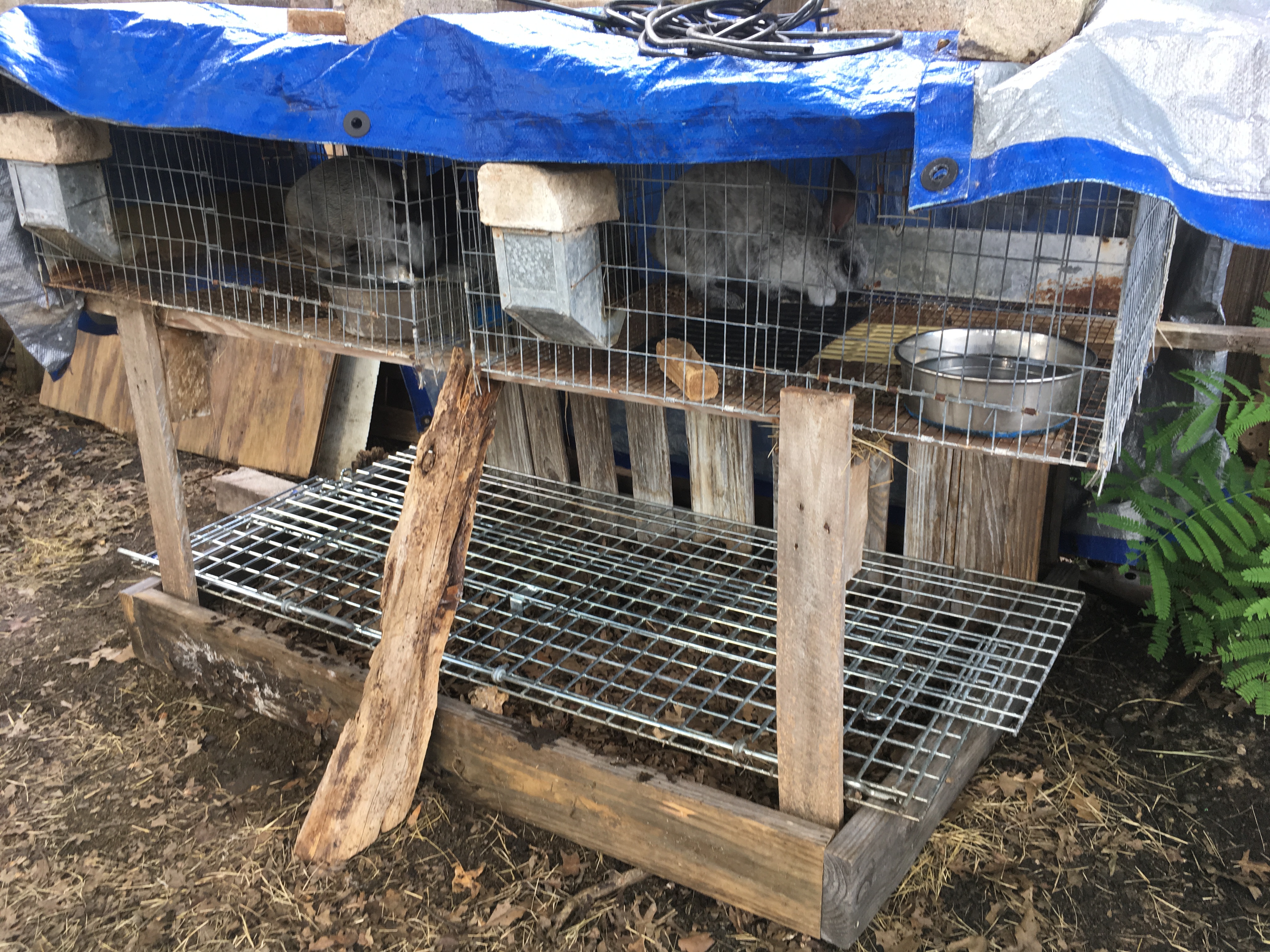
5. Stacked or Multi-Level Hutches with Centralized Collection
Space-efficient for larger colonies; shared trays or systems.
- Options: Commercial stacked units or DIY tiers with funneled collection.
Expert Tips for Choosing or Building Your Setup
- Budget: Scavenged materials for under $100; quality builds $200-500.
- Scale: Simple for pets; advanced for production.
- Customization: Add wheels for mobility or insulation for climate.
Collecting, Storing, and Preparing Rabbit Manure
Once your rabbit setup is optimized for easy drop-through collection, the next step is turning that daily output into a usable resource. The beauty of rabbit manure is its simplicity – the dry pellets require minimal processing compared to other animal manures.
Best Collection Methods
Frequency and tools make all the difference in keeping things effortless:
- Pure pellet collection: In wire-floor systems with trays or gutters, pellets accumulate dry and separate from urine-soaked areas. Sweep or scoop trays weekly (or more often in humid climates) using a flat shovel, cat litter scoop, or dedicated manure fork.
- Mixed collection (with bedding): If you use minimal hay or shavings for nesting only, sift pellets through a 1/4-inch hardware cloth screen to separate clean manure from bedding.
- Daily spot checks: Many keepers quickly rake trays each morning while feeding – a 2-minute habit that prevents buildup and odors.
Pro tip from long-time breeders: Line trays with newspaper or cardboard for even faster cleanup – simply roll up and compost the liner if lightly soiled.
Storage Tips
Rabbit manure pellets are remarkably stable:
- Dry storage: Store in covered buckets, bins, feed sacks, or old fertilizer bags in a dry shed or garage. Properly dried pellets last indefinitely without losing nutrient value.
- Volume management: A 5-gallon bucket holds about 50-60 pounds of pellets – easy to stack and move.
- Urine-soaked material: If your system collects urine with pellets (common in gutter designs), spread on tarps to air-dry for a few days or add directly to compost piles.
Label containers with collection dates if you rotate stock, though degradation is negligible.
How to Use Rabbit Manure in Your Garden
This is where the real payoff happens. Rabbit manure’s gentle nature allows multiple application methods that other manures can’t match safely.
Direct Application Methods (No Composting Needed)
Because it’s a cold manure with low risk of pathogen transmission or nitrogen burn, you can use rabbit pellets fresh:
- Top-dressing: Scatter 1/2 to 1 inch layer around established plants (vegetables, flowers, shrubs, fruit trees). Lightly rake into the topsoil. Ideal for mid-season nitrogen boosts on leafy greens like lettuce, spinach, kale, and cabbage.
- Side-dressing: Dig a shallow trench 4-6 inches from plant stems and sprinkle pellets, then cover with soil. Excellent for heavy feeders like tomatoes, peppers, corn, and squash.
- Planting holes: Add a handful (about 1/2 cup) to each transplant hole or seed furrow, mixed with native soil. Seedlings and transplants thrive without setback.
- Application rates: General guideline is 100-200 pounds per 1,000 square feet annually, split into 2-4 applications. Adjust based on soil tests and crop needs.
Homesteaders consistently report deeper green foliage, larger fruits, and extended harvests compared to synthetic fertilizers.
Making Rabbit Manure Tea (“Bunny Brew”)
For a quick liquid feed, especially useful for containers, seedlings, or foliar feeding:
- Fill a 5-gallon bucket 1/3 full with rabbit pellets.
- Top with water (rainwater preferred).
- Stir daily and steep 3-7 days (longer for stronger brew).
- Strain or use a perforated bag setup for easy pouring.
- Dilute 1:10 with water before applying (brew is dark tea-colored when ready).
Apply every 1-2 weeks during active growth. The resulting tea delivers readily available nutrients and beneficial microbes.
Composting Rabbit Manure for Even Greater Benefits
While not required, composting unlocks additional advantages:
- Hot composting: Mix pellets with carbon-rich materials (straw, leaves, shredded paper) at a 30:1 C:N ratio. Turns quickly (4-8 weeks) into dark, crumbly humus.
- Vermicomposting: As mentioned in integrated systems, red wigglers process pellets rapidly into premium worm castings – considered the gold standard of soil amendments.
- Adding to existing piles: Rabbit manure acts as an accelerator when layered into garden waste or other animal manure composts.
Composted rabbit manure improves long-term soil organic matter, water-holding capacity, and microbial diversity.
Safety and Best Practices
Rabbit manure has an excellent safety profile:
- Low pathogen risk compared to poultry or swine manure (studies show negligible E. coli or Salmonella when sourced from healthy rabbits).
- Avoid direct contact with edible portions near harvest (standard good practice for any manure).
- Wear gloves during handling and wash hands afterward.
- Do not use manure from rabbits treated with certain medications (e.g., ivermectin) on edible crops – wait appropriate withdrawal periods.
FAQs
Is rabbit manure safe to use fresh?
Yes – it’s one of the few manures classified as “cold” and safe for direct garden application without composting.
How does rabbit manure compare to commercial fertilizers?
It provides balanced slow-release nutrients plus micronutrients and organic matter that synthetics lack, often producing healthier plants and better flavor in vegetables.
Can I sell rabbit manure?
Absolutely. Many homesteaders bag and sell dry pellets locally or online as premium organic fertilizer, often fetching $10-20 per 25-40 lb bag.
What if my current setup has bedding mixed in?
Sift clean pellets for direct use and compost the bedding-manure mix. Transitioning to minimal bedding maximizes pure pellet harvest.
How many rabbits do I need to fertilize my garden?
For a 1,000 sq ft vegetable garden, 4-6 adult rabbits typically provide ample manure annually. Scale up for larger areas or heavier feeding.
Are wire floors cruel to rabbits?
When properly designed (correct gauge and grid size, with resting boards), wire floors are hygienic and widely recommended by veterinarians and experienced breeders. Solid resting areas prevent sore hocks while allowing waste drop-through.
Transforming rabbit keeping from a messy chore into a seamless, productive system is entirely achievable with the right setup. By choosing or building hutches, cages, or tractors that prioritize effortless manure collection, you unlock one of nature’s best-kept gardening secrets: odorless, nutrient-dense pellets that work harder than most commercial fertilizers – all for free.
Whether you implement a simple elevated hutch with trays, a mobile tractor for direct soil enrichment, or an advanced worm-integrated system, the result is the same: healthier rabbits, less work for you, zero waste, and a thriving garden fueled by sustainable, closed-loop fertility.
Start small if needed – even one or two rabbits in a well-designed setup can supply meaningful amounts of this gardening gold. Your soil, plants, and future harvests will thank you.