Imagine stepping into your backyard each morning to collect fresh eggs for breakfast, knowing you’ve raised sustainable meat for dinner—all while keeping your garden thriving with natural fertilizer. For many homesteaders and urban farmers, this dream becomes reality with small livestock. But with limited space, time, and budget, the big question arises: rabbits vs chickens vs ducks—which is the right choice for you?
As a homesteader with over 15 years of hands-on experience raising all three on small acreage, I’ve learned the hard truths and hidden gems through trial and error. Rabbits vs chickens vs ducks isn’t a one-size-fits-all debate; each excels in different areas like egg production, meat yield, maintenance, and even pest control. In this ultimate guide, we’ll compare them head-to-head using real-world data, practical insights, and proven strategies to help you decide based on your goals—whether that’s daily eggs, efficient homegrown protein, or low-effort care.
This comparison draws from established homesteading practices, breed recommendations, and long-term observations to give you the most comprehensive resource available. Let’s dive in and find your perfect backyard addition.

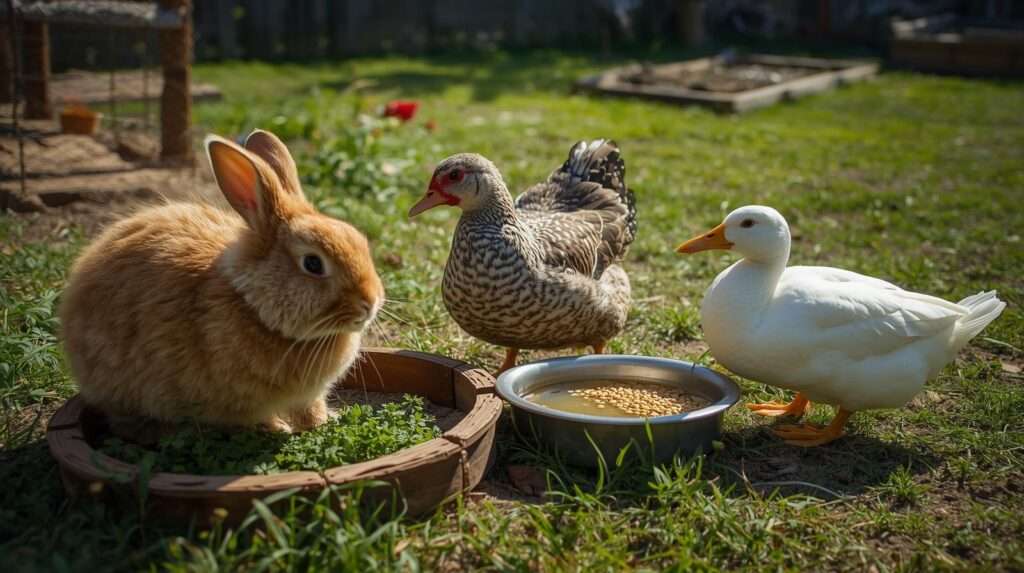
(Caption: Typical setups for rabbits (top), chickens (middle), and ducks (bottom) in backyard homesteading.)
Why Compare Rabbits, Chickens, and Ducks?
These three animals top the list for backyard livestock because they’re accessible, productive, and versatile for beginners and seasoned farmers alike. Chickens have long been the gateway animal for fresh eggs, ducks bring unique flavors and foraging prowess, and rabbits offer unparalleled efficiency for meat production in tight spaces.
In today’s homesteading movement—driven by rising food costs, sustainability concerns, and the joy of self-reliance—choosing the right animal prevents costly mistakes. I’ve seen new homesteaders overwhelmed by messy duck ponds or noisy roosters, while others thrive with quiet, compact rabbit hutches. By understanding their strengths in areas like feed conversion, output, and daily chores, you can build a resilient mini-farm that fits your lifestyle.
Whether you’re in a suburban lot with HOA rules or a rural plot aiming for off-grid living, this rabbits vs chickens vs ducks breakdown will guide you toward informed success.
Key Comparison Factors
To make an apples-to-apples evaluation, we’ll examine practical metrics that matter most to homesteaders: space, costs, care, production, and bonuses like garden integration.
Space Requirements
Space is often the biggest constraint for backyard farmers.
Rabbits are the undisputed champions for compact living. A breeding trio (one buck, two does) can thrive in 30-50 square feet using stacked wire cages or a colony setup on the ground. They’re perfect for urban homesteads or even apartment balconies with proper enclosures. No need for expansive runs—just elevated hutches to protect from predators and allow droppings to fall for easy collection.
Chickens require more room: about 4 square feet per bird inside the coop and 10 square feet in a secure outdoor run. For a flock of 6-8 hens, plan on 100-150 square feet total. They love scratching and dust bathing, so skimping here leads to stress and feather picking.
Ducks need similar coop space to chickens but demand extra for water features—a kiddie pool, pond, or trough they can dunk their heads in. Without it, health issues arise. They quickly turn areas muddy, so allocate 150+ square feet and consider drainage solutions.
Winner for Small Spaces: Rabbits—ideal if you’re maximizing every square foot.
Startup and Ongoing Costs
All three are budget-friendly starters compared to larger livestock, but long-term expenses vary.
Startup costs range from $20-50 per animal for quality stock. Rabbits require wire cages or hutches ($150-300 for a durable setup). Chickens and ducks need predator-proof coops ($300-600) and fencing.
Feed is the ongoing heavyweight. Rabbits boast the best feed-to-protein ratio among small animals—converting pellets, hay, and garden scraps efficiently. A trio might cost $20-40/month, less if you grow forage.
Chickens eat layer pellets or crumbles ($30-50/month for 6-8 birds), but free-ranging cuts bills. Ducks consume more (up to 20% higher) due to their size and appetite, around $40-60/month, though excellent foraging helps.
Veterinary care is minimal for all with good husbandry—focus on prevention like clean housing and parasite control. Predator protection (electric fencing, hardware cloth) is the biggest unexpected expense for poultry.

Most Budget-Friendly Long-Term: Rabbits, thanks to superior efficiency and lower consumption.
Ease of Care and Maintenance
Daily chores determine if your livestock feels like a joy or a burden.
Rabbits are low-maintenance stars: feed and water once daily, spot-clean weekly, deep clean monthly. They’re quiet (no crowing or quacking to annoy neighbors) and handle routine care in minutes.
Chickens need egg collection, water refreshing, and coop checks daily—about 15-20 minutes. Hens are relatively quiet, but roosters aren’t neighbor-friendly.
Ducks are the most demanding due to water management. Their splashing creates mud quickly, requiring frequent pool drains and bedding changes. Expect 20-30 minutes daily, more in wet seasons.
All three are hardy with proper shelter. Rabbits tolerate cold well but need shade and frozen water prevention in extremes. Chickens are resilient; ducks excel in wet/cold but overheat easily.
Easiest Overall: Rabbits—perfect for busy families or beginners wanting minimal disruption.
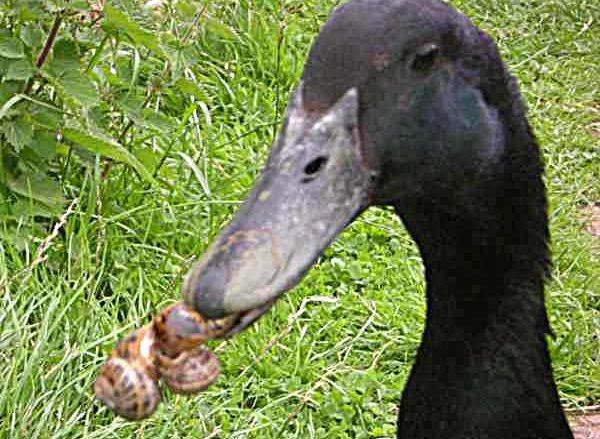
(Caption: Ducks excel at natural pest control, devouring slugs and insects without damaging plants.)
Egg Production
If fresh eggs are your priority, poultry wins—but which bird?
Chickens set the standard: high-producing breeds like Rhode Island Reds or Leghorns lay 250-300 eggs per hen annually. Expect near-daily collection in peak seasons, with familiar-sized eggs perfect for eating or selling.
Ducks produce 200-300 larger, richer eggs per year—ideal for baking (higher fat content makes fluffier cakes). Breeds like Khaki Campbells or Indian Runners lay consistently, even through winter when chickens slow down.
Rabbits contribute zero eggs, focusing instead on rapid reproduction for meat.
Best for Eggs: Chickens for quantity and reliability; ducks for superior quality and off-season production.
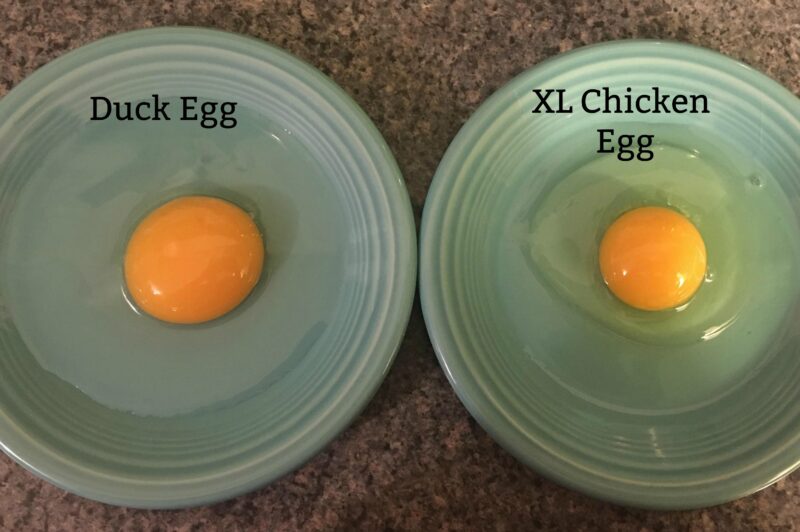
(Caption: Size comparison—duck eggs (left) are noticeably larger and richer than chicken eggs.)
Meat Production
For sustainable protein, all three deliver, but efficiency differs dramatically.
Rabbits are meat-producing powerhouses. Breeds like New Zealands or Californians reach fryer weight (4-5 lbs dressed) in just 8-12 weeks on minimal feed. One doe can produce 40-60 kits yearly, yielding 150-200 lbs of lean, healthy meat. Processing is straightforward—no plucking, just skinning.
Chickens offer dual-purpose options: heritage breeds provide eggs plus meat at 16-20 weeks, or fast-growing Cornish Cross broilers ready in 8 weeks (5-7 lbs dressed).
Ducks grow quickly too—Pekins hit 6-7 lbs in 8-12 weeks, with rich, flavorful meat higher in fat. Muscovies are leaner and mosquito-eaters but slower.
Best for Meat: Rabbits for speed, efficiency, and ease; ducks for gourmet taste.

(Caption: Rabbit processing is quick and clean compared to plucking poultry.)
Manure and Garden Benefits
Livestock manure is black gold for gardens.
Rabbit droppings are “cold” manure—safe to apply directly without composting, packed with nitrogen, phosphorus, and potassium. It’s odorless and pelletized for easy spreading.
Chicken manure is “hot” and nutrient-rich but requires 6 months composting to avoid burning plants.
Duck manure is wet and abundant, excellent when composted but messy fresh.
Best Fertilizer: Rabbits—hands-down the gardener’s favorite.

(Caption: Rabbit manure applied directly boosts garden health without composting.)
Pest Control and Foraging
Integration with your garden adds value.
Ducks are pest-control MVPs, gobbling slugs, snails, and insects while leaving plants intact (no scratching).
Chickens forage well but till soil aggressively, damaging crops.
Rabbits graze selectively but offer limited pest help.
Best for Pest Control: Ducks—natural, chemical-free slug assassins.
Side-by-Side Comparison Table
| Factor | Rabbits | Chickens | Ducks |
|---|---|---|---|
| Primary Output | Meat, Manure | Eggs, Meat | Eggs, Meat |
| Space Needed (for 6-8 equivalents) | Low (50 sq ft) | Medium (100-150 sq ft) | High (150+ sq ft) |
| Noise Level | Silent | Moderate (hens quiet) | Loud quacking |
| Mess Level | Low | Moderate | Very High (mud/water) |
| Feed Efficiency | Excellent | Good | Fair |
| Egg Yield (per female/year) | None | 250-300 | 200-300 (larger/richer) |
| Meat Readiness | 8-12 weeks | 8-20 weeks | 8-16 weeks |
| Best For | Meat, Small Spaces, Fertilizer | Reliable Eggs, Versatility | Flavor, Pest Control |
Pros and Cons Summary
Rabbits
Pros:
- Extremely space- and feed-efficient
- Quiet and neighbor-friendly
- Superior cold manure for gardens
- Fast meat production with easy processing
- Rapid breeding for quick scaling
Cons:
- No eggs
- Requires breeding management (kindling every 31 days)
- Sensitive to extreme heat (provide fans/misters)
- Predators like dogs can stress colonies
Chickens
Pros:
- Consistent, high-volume eggs
- Entertaining personalities and good foragers
- Dual-purpose breeds balance eggs/meat
- Wide breed variety for climates/personalities
Cons:
- Roosters noisy (avoid for urban)
- Scratching can destroy lawns/gardens
- Plucking required for meat birds
- Vulnerable to predators without secure runs
Ducks
Pros:
- Rich, large eggs excellent for baking
- Superior pest control (slugs/snails)
- Hardy in cold/wet conditions
- Fun, social behaviors
Cons:
- Messy—create mud pits quickly
- Louder quacking
- Higher feed/water needs
- Difficult processing (plucking/waxing feathers)
Expert Recommendations: Which is Best for You?
From years raising all three simultaneously, here’s tailored advice:
- Best for Beginners/Easy Care: Start with rabbits. Minimal daily work, quick meat returns, and silent operation make them forgiving.
- Best for Eggs: Chickens for sheer quantity and marketability. Go ducks if you bake often or need winter layers.
- Best for Meat: Rabbits win on efficiency and ease. Ducks if you crave restaurant-quality flavor.
- Best for Pest Control and Garden Integration: Ducks—pair with fenced garden runs for organic slug elimination.
- Best Overall for Most Homesteads: Diversify! Many successful setups include chickens for eggs, rabbits for meat/fertilizer, and ducks for variety (if space allows).
- Urban/Suburban Tip: Rabbits or hen-only chickens (quiet breeds like Orpingtons). Check local ordinances—some ban roosters/ducks.
- Family-Friendly: All engage kids, but rabbits are cuddly (with handling), chickens predictable, ducks hilariously entertaining.
Common Mistakes to Avoid
- Underestimating predators—use 1/2-inch hardware cloth, not chicken wire.
- Overcrowding—leads to disease and aggression.
- Poor ventilation in housing—causes respiratory issues, especially in rabbits.
- Mixing species carelessly—ducks’ water splashes stress rabbits; chickens may bully.
- Ignoring breed selection—choose heritage for longevity, hybrids for production.
- Skipping quarantine for new animals—prevents parasite spread.
FAQs
Can I raise rabbits, chickens, and ducks together? Yes, with separate housing. Shared free-range time works if supervised—ducks’ mess can contaminate rabbit areas, and poultry may carry diseases rabbits are sensitive to.
Which is most profitable? Chickens often win via egg sales ($5-8/dozen locally). Rabbit meat/manure has niche markets; duck eggs command premium prices.
Are any better for families with kids? All are educational, but start with chickens or rabbits for handling. Ducks are slippery when wet!
How many should I start with? Small: Rabbit trio, 4-6 chickens, 4-5 ducks. Scale after mastering care.
Do they need special feed in winter? Supplement foraging with quality pellets/hay. Ducks benefit from niacin-rich brewer’s yeast.
What’s the lifespan? Rabbits 8-12 years (breeders retire earlier), chickens 5-10, ducks 8-12.
In the rabbits vs chickens vs ducks debate, there’s no outright winner—each shines in specific roles. Rabbits dominate for low-maintenance meat and fertilizer in small spaces, chickens deliver reliable eggs and versatility, while ducks offer gourmet products and unmatched pest control.
Assess your priorities: space constraints favor rabbits, egg needs point to chickens, flavor and garden help to ducks. Many experienced homesteaders like myself raise all three for a balanced, resilient system—diversification reduces risks and maximizes benefits.
Start small, learn from reputable sources (like extension services or trusted breeders), and enjoy the journey. Your backyard livestock will reward you with food security, joy, and a deeper connection to sustainable living. Happy homesteading!