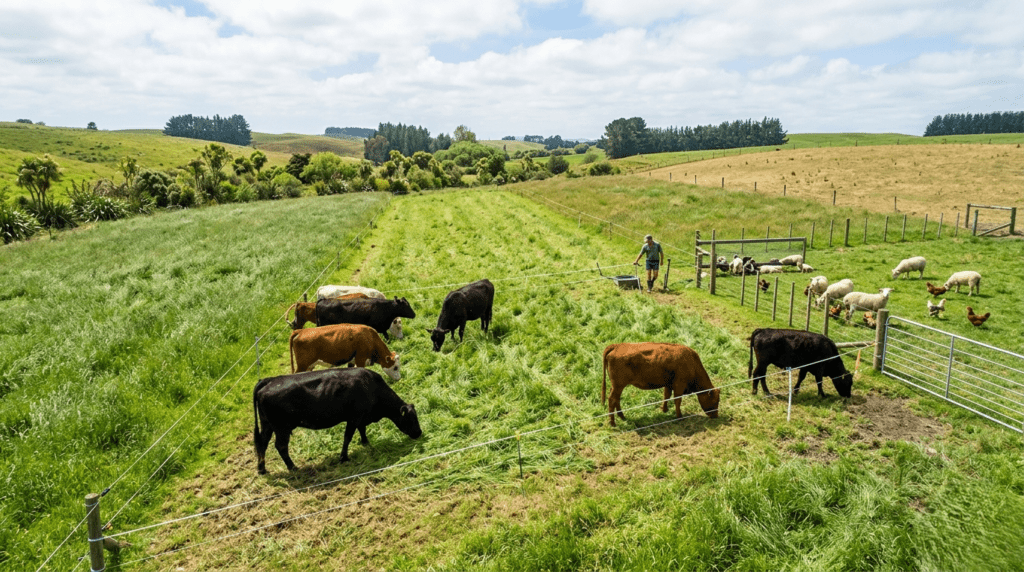
Imagine walking across a pasture where the ground is hard as concrete, the grass is nubby and yellowed, and the only things thriving are deep-rooted thistles. This is the “silent crisis” of continuous grazing—a cycle that depletes the land, starves the soil microbiome, and leaves livestock vulnerable. But there is a solution that mimics the ancient movements of wild herds. By implementing rotational grazing, you can transform a struggling field into a lush, carbon-sequestering powerhouse. This method isn’t just a farming technique; it is a biological reset button that aligns livestock management with the natural rhythms of the earth.
I. The Science of Soil Restoration: Moving Beyond the Surface
To truly master the art of land stewardship, one must understand that the most important “livestock” on a farm are the billions of microbes living beneath the soil surface. Conventional, continuous grazing—where animals have access to the entire acreage at once—is essentially a slow-motion ecological disaster.
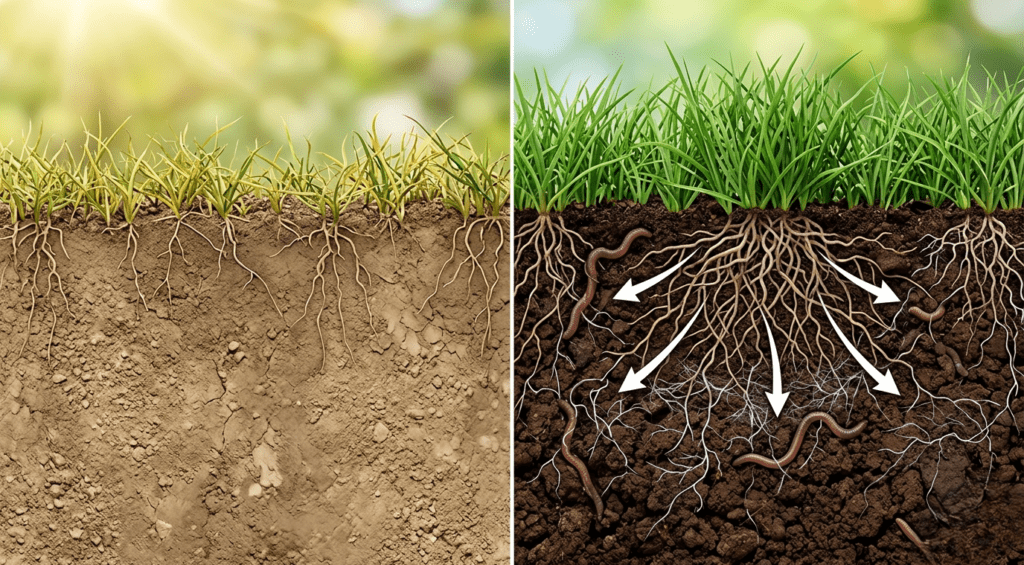
The Biology of the Bite: What Happens When a Plant is Grazed?
When a cow or sheep shears off the top of a blade of grass, the plant experiences a physiological shock. To survive and regrow, the plant must mobilize energy stored in its roots.
-
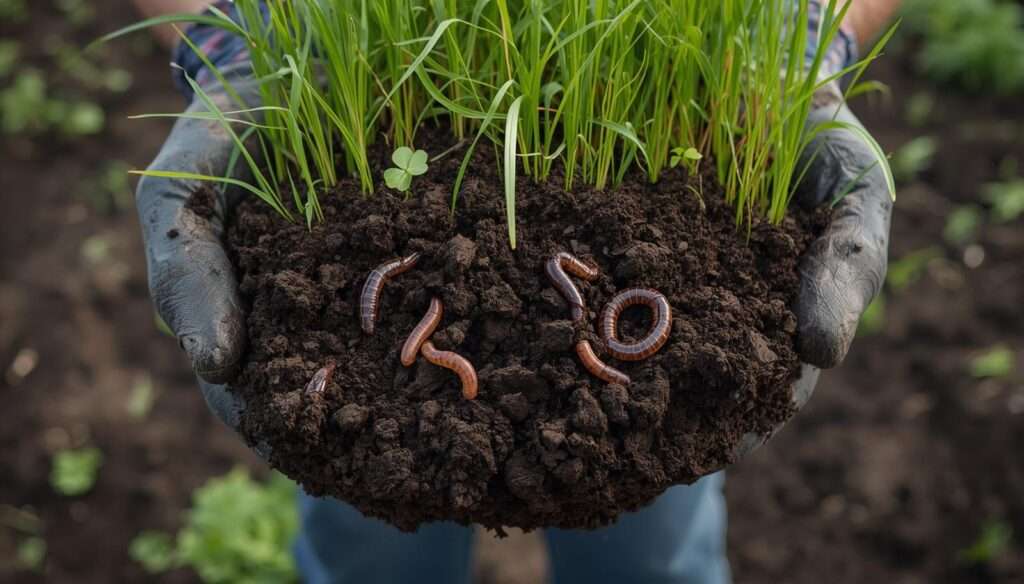
Root Sloughing: When a plant loses a significant portion of its leaf area, it “sloughs off” an equal portion of its root mass to maintain balance. These dying roots become organic matter, feeding earthworms and fungi.
-
Carbon Sequestration: Through photosynthesis, plants pull CO2 from the atmosphere and pump liquid carbon (exudates) into the soil to feed microbes. Rotational grazing maximizes this process by ensuring plants stay in a state of rapid, “teenage” growth rather than being bitten down to the crown.
The Power of the Rest Period
The magic of restoration happens not when the animals are present, but when they are gone. A plant that is bitten once and then allowed to rest for 30 to 60 days can fully recover its root system and leaf volume. In contrast, if an animal returns to that same plant three days later (as they do in continuous grazing), the plant is forced to draw from ever-diminishing root reserves. Eventually, the roots die, the soil compacts, and the field “burns out.”
II. Designing Your Paddock System: The Infrastructure of Success
Successful land management requires a shift from being a “livestock owner” to being a “grass farmer.” The transition begins with a well-thought-out design that facilitates movement and rest.
Carrying Capacity vs. Stocking Density
Many producers confuse these two terms, but the distinction is vital for E-E-A-T (Experience, Expertise, Authoritativeness, and Trustworthiness) in farming:
-
Carrying Capacity: The total number of animals your entire farm can support over a year without degrading the resource.
-
Stocking Density: The number of animals on a specific paddock at a specific moment.
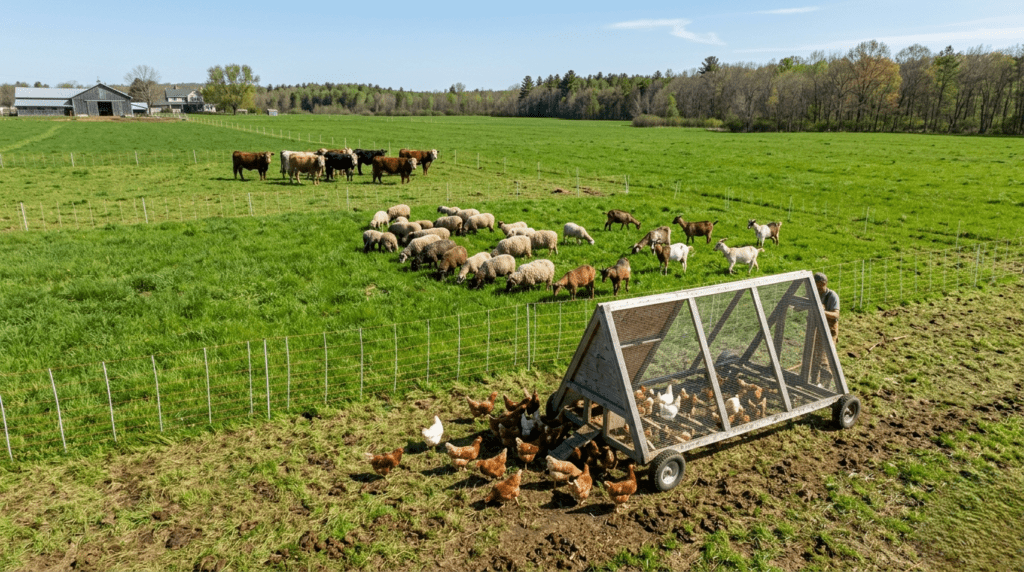
High stocking density for short periods followed by long rest periods is the “Golden Rule” of soil health. This ensures that manure and urine are distributed evenly across the field, acting as a natural, high-nitrogen fertilizer.
Permanent vs. Temporary Fencing
For those managing diverse landscapes in the US or globally, flexibility is key.
-
Perimeter Fencing: Should be permanent and robust (high-tensile wire or woven wire) to ensure biosecurity and predator control.
-
Interior Subdivisions: Use temporary “polywire” and step-in posts. This allows you to adjust the size of your paddocks based on the season. In the lush growth of spring, you may move fences every day; in the slower growth of late summer, you might give them larger blocks.
III. The “Rule of Thirds” in Forage Management
A common mistake beginners make is letting animals graze a paddock until it looks like a golf course. To restore soil health, you must adopt the Rule of Thirds:
-
Eat One-Third: This provides the animal with the highest-quality nutrition (the top of the plant).
-
Trample One-Third: This is not “waste.” The grass that animals trample into the ground acts as green mulch, protecting the soil from the sun’s heat and providing a feast for soil microbes.
-
Leave One-Third: This ensures the plant has enough “solar panels” (leaves) left to immediately begin photosynthesizing and rebuilding its root system.
IV. Advanced Strategy: The Multi-Species Successional Sequence
To reach “Skyscraper” levels of productivity, you must look beyond a single species. Different animals have different “mouth architectures” and digestive systems. By using them in sequence—known as the Leader-Follower Method—you can sanitize the land and maximize forage utilization.
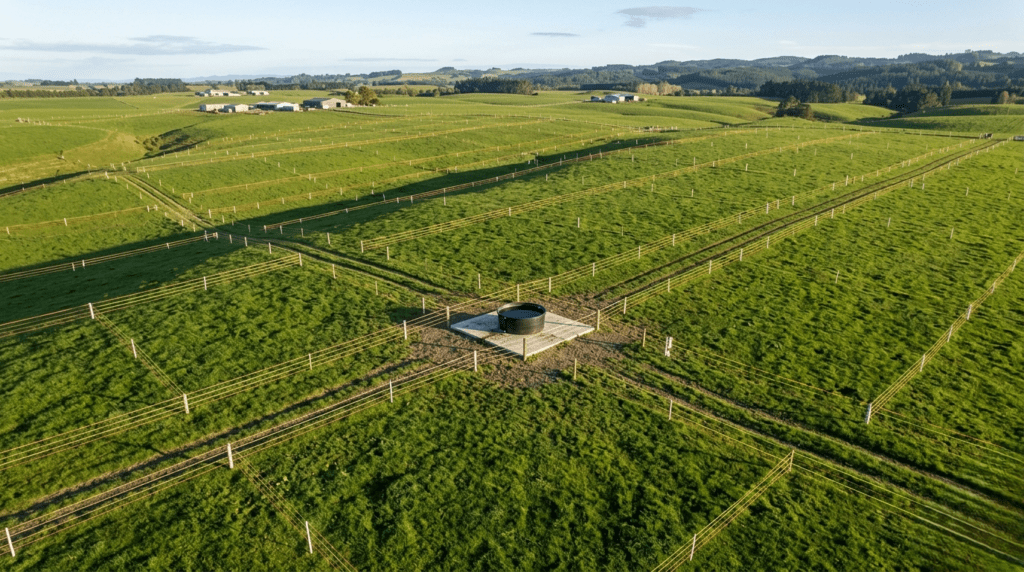
1. Cattle: The Mowers (The Leaders)
Cattle use their tongues to wrap around and pull up large clumps of grass. They are the “coarse” harvesters. They should enter a fresh paddock first to take the “cream” of the forage. Their heavy hoof impact also helps break up capped soil, allowing oxygen and water to reach the roots.
2. Sheep and Goats: The Weeders
Following the cattle, sheep and goats are much more selective. Sheep prefer broadleaf “weeds” (forbs) that cattle often ignore. Goats will target woody brush and briars. This diversity in grazing pressure prevents any one weed species from dominating the field.
3. Pigs: The Tilling Crew (Targeted Impact)
Pigs should be used strategically. Their rooting behavior can be destructive if left too long, but in a sequence, they can be used to “till” a specific area that needs reseeding or to clear out heavy forest undergrowth. Their manure is exceptionally rich, providing a massive nutrient boost to depleted patches.
4. Poultry: The Sanitizers (The Clean-up Crew)
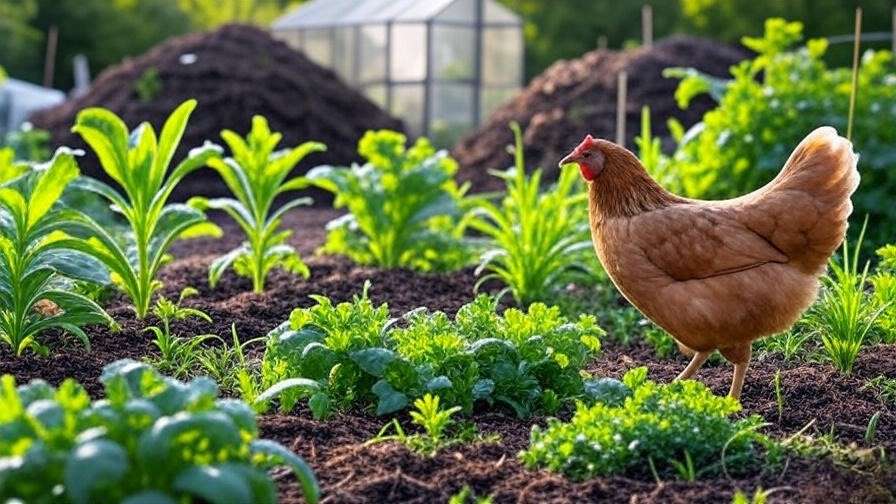
Chickens or turkeys are the ultimate biological control for parasites. Following the ruminants by 3 or 4 days, poultry will scratch through manure pats to find fly larvae and grasshoppers. This spreads the manure out (preventing “rank” spots of grass) and breaks the life cycle of internal parasites that affect cattle and sheep.
V. Implementation: A Step-by-Step Transition Guide
Moving to a rotational grazing model doesn’t have to happen overnight. Here is how to transition effectively:
Phase 1: Assessment and Mapping
Map your land using satellite imagery. Identify your “water points.” Water is the tether of any grazing system. If an animal has to walk more than 800 feet to find water, they will overgraze the area near the trough and under-utilize the corners of the field.
Phase 2: Identifying Sacrifice Zones
During periods of extreme mud or extreme drought, you need a “sacrifice lot” or “heavy-use area.” This is a small, reinforced area where you can hold animals and feed hay, protecting the rest of your pastures from being “pugged” (trampled into mud) during vulnerable times.
Phase 3: The First Split
Start simple. Divide your large field in half. Move the animals every two weeks. Even this basic change provides a 14-day rest period that the land didn’t have before. As your confidence and infrastructure grow, you can move toward daily or “mob” grazing.
VI. Overcoming Common Challenges: Navigating the Realities of the Field
Transitioning to rotational grazing is not without its hurdles. To maintain a skyscraper-level of land stewardship, an expert must be prepared for the variables that nature throws at the system.
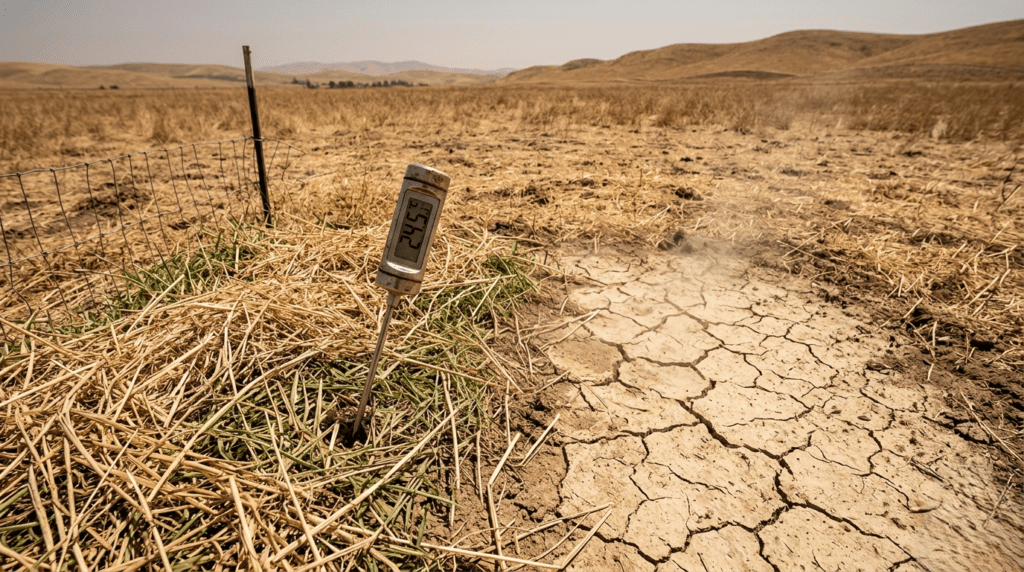
1. Managing Grazing During Drought and Extreme Heat
In the US Midwest or the arid regions of Australia, drought is the ultimate test of a grazing system. When grass stops growing, your rotation must change.
-
Slow Down the Rotation: It sounds counterintuitive, but during a drought, you should move animals less frequently or move them to a “sacrifice lot.” If you graze a dormant plant, you may kill it entirely.
-
Maintain Residual Heights: During heatwaves, soil temperature is critical. Bare soil can reach temperatures upward of 140°F (60°C), killing all biological life. Keeping a “thatch” of grass (the one-third you leave behind) acts as insulation, keeping the soil cool and retaining precious moisture.
2. Parasite Management without Chemical Intervention
One of the greatest benefits of a multi-species sequence is the reduction of the “parasite load.”
-
The 30-Day Break: Most internal parasites of sheep and cattle have a life cycle that requires them to climb up a blade of grass and be eaten by a host within 21 to 28 days. By rotating your animals and leaving a paddock empty for 35 to 40 days, the larvae die in the field without a host.
-
Cross-Species Immunity: Cattle parasites generally cannot survive in the gut of a sheep, and vice versa. By following cattle with sheep, the sheep act as “biological vacuum cleaners,” consuming and destroying cattle-specific parasites without getting sick themselves.
3. Winter Grazing and “Stockpiling”
Expert graziers in northern climates (like Canada or the Northern US) utilize stockpiling. This involves set-aside paddocks in late summer that are allowed to grow tall and “go to seed.” This standing hay remains above the snow, allowing animals to graze well into December or January, drastically reducing the cost of purchased winter feed.
VII. Economic Benefits: The Bottom Line of Soil Health
While the environmental perks are clear, the economic incentives are what make rotational grazing a sustainable business model.
-
Reduced Input Costs: By allowing animals to spread their own manure and harvest their own feed, you eliminate the need for synthetic N-P-K fertilizers and the diesel fuel required to run a tractor and manure spreader.
-
Improved Animal Health: Animals moved to fresh “clean” ground daily have lower stress levels and higher rates of gain. In the beef industry, “grass-finished” products often command a 20-30% premium in global markets.
-
Water Resilience: For every 1% increase in soil organic matter, an acre of land can hold an additional 20,000 gallons of water. This resilience means your “green season” lasts longer into the summer than your neighbor who practices continuous grazing.
VIII. Permaculture Principles: Integrating the Whole
Under the umbrella of permaculture principles, rotational grazing is the ultimate expression of Using and Valuing Diversity.
In a permaculture system, no element sits in isolation. The cow feeds the grass, the grass feeds the soil, the soil feeds the microbes, and the chickens sanitize the system. This “closed-loop” cycle is the hallmark of a mature, self-sustaining ecosystem. When you view your farm as a single organism rather than a collection of separate parts, the work becomes less about “fighting” nature and more about “steering” it.
IX. Expert FAQ: Addressing Specific Needs
Q: Can I implement rotational grazing on a small scale, such as 2 or 5 acres? A: Absolutely. On a small scale, this is often called “micro-grazing.” The principles remain the same. You may use electric “netting” for sheep or poultry and move them every 48 hours. The smaller the scale, the more impact each movement has on the soil.
Q: How do I know exactly when to move the animals? A: Use the “Graze-and-Look” method. Look at the grass height. If you started at 10 inches, move them when the average height is 4 inches. Never let them “scalp” the ground.
Q: Is it expensive to start? A: The initial investment in polywire and a solar-powered fencer is usually recouped in the first year through savings on hay and veterinary bills. Start with temporary gear to find what works before investing in permanent interior fences.
X. Conclusion: From Grazier to Land Steward
The transition to rotational grazing represents a fundamental shift in mindset. You are no longer just a producer of meat or milk; you are a steward of a complex, living ecosystem. By respecting the “Rule of Thirds,” utilizing the leader-follower method, and allowing the land the rest it deserves, you are participating in the grand restoration of our planet’s soil.
As you look out across your fields, remember that the most productive tool you own isn’t your tractor—it’s the fence. Each time you “shift the fence,” you are giving the earth a chance to breathe, recover, and thrive. Start small, observe closely, and let the soil tell you its story.