There is a distinct moment of dread that every indoor grower experiences: opening the utility bill after the first month of expanding an indoor setup. If you are scaling up your indoor garden, you are likely worried about managing this massive overhead. Running Grow Lights Without Exploding Your garden is the ultimate goal for any serious horticulturist, but it often feels like an impossible balancing act between maximizing yields and minimizing the monthly electric costs.
Energy costs are undeniably the number one recurring expense in indoor horticulture. Inefficient lighting doesn’t just drain money directly from the wall; it also generates excess ambient heat, which creates a secondary expense—forcing you to run power-hungry air conditioning and exhaust fans just to keep your room within a safe temperature range. But the truth is, massive electricity bills are not a mandatory tax on high indoor yields.
Author’s Note: The strategies outlined in this guide bridge the gap between technical agronomy and practical horticulture. Drawing on extensive experience in both laboratory soil analysis (including measuring bulk density and analyzing Cation Exchange Capacity) and hands-on organic methods like brewing compost teas, I’ve found that true efficiency requires treating your grow room as a holistic system. Optimizing your lighting is just as critical as optimizing your soil.
This guide will break down the exact mathematics, hardware upgrades, and biological techniques required to drastically cut your energy consumption without sacrificing a single ounce of plant health or harvest weight.
The Real Cost of Indoor Growing: Understanding the Math
Before you can reduce your electrical costs, you must understand exactly how the indoor gardening industry measures light and how your local U.S. utility company measures power. Many growers fall into the trap of buying lights based on marketing hype rather than mathematical efficiency.
Watts vs. PAR and PPFD: Why Wattage Isn’t Everything
For decades, growers equated a light’s power with its wattage. A 1000-watt High-Pressure Sodium (HPS) bulb was considered the gold standard. However, watts only measure the energy consumed from your wall outlet, not the usable light produced for your plants.
To grow efficiently, you need to focus on metrics that matter to plant biology:
-
PAR (Photosynthetically Active Radiation): This is the spectrum of light (between 400 and 700 nanometers) that plants actually use for photosynthesis.
-
PPFD (Photosynthetic Photon Flux Density): This measures how many of those usable PAR photons actually hit a specific area of your plant canopy every second (measured in micromoles per square meter per second, or μmol/m²/s).
Efficient lighting means getting the highest possible PPFD out of the lowest possible wattage. A modern, high-efficiency fixture might draw only 300 watts from the wall but deliver the same usable PPFD to your tomato canopy as an old 600-watt HID bulb. Paying for watts that don’t convert into PAR is the fastest way to drain your wallet.
How to Calculate Your Exact Grow Light Electricity Cost
To stop guessing and start managing your overhead, you need to calculate your baseline. The U.S. national average for electricity is roughly $0.16 per kilowatt-hour (kWh), though this varies wildly from about $0.10 in states like Washington to over $0.30 in California. Check your recent utility bill for your exact rate.
Here is the formula to calculate your daily cost: ((Total Wattage × Hours Run per Day) / 1000) × Your Cost per kWh = Daily Cost
Let’s look at a practical example: Suppose you are running a 600-watt light for 18 hours a day during the vegetative stage, and your electricity rate is $0.16/kWh.
-
600 watts × 18 hours = 10,800 watt-hours per day.
-
10,800 / 1000 = 10.8 kWh per day.
-
10.8 kWh × $0.16 = $1.72 per day.
That is $51.60 a month for just one light, not including fans, pumps, or AC units. If you are running multiple fixtures, the costs multiply exponentially.
Choosing the Right Technology: Making the Upgrade
If you are still running legacy lighting systems, no amount of scheduling tricks will save your power bill. Upgrading your hardware is the most impactful step you can take toward total energy efficiency.
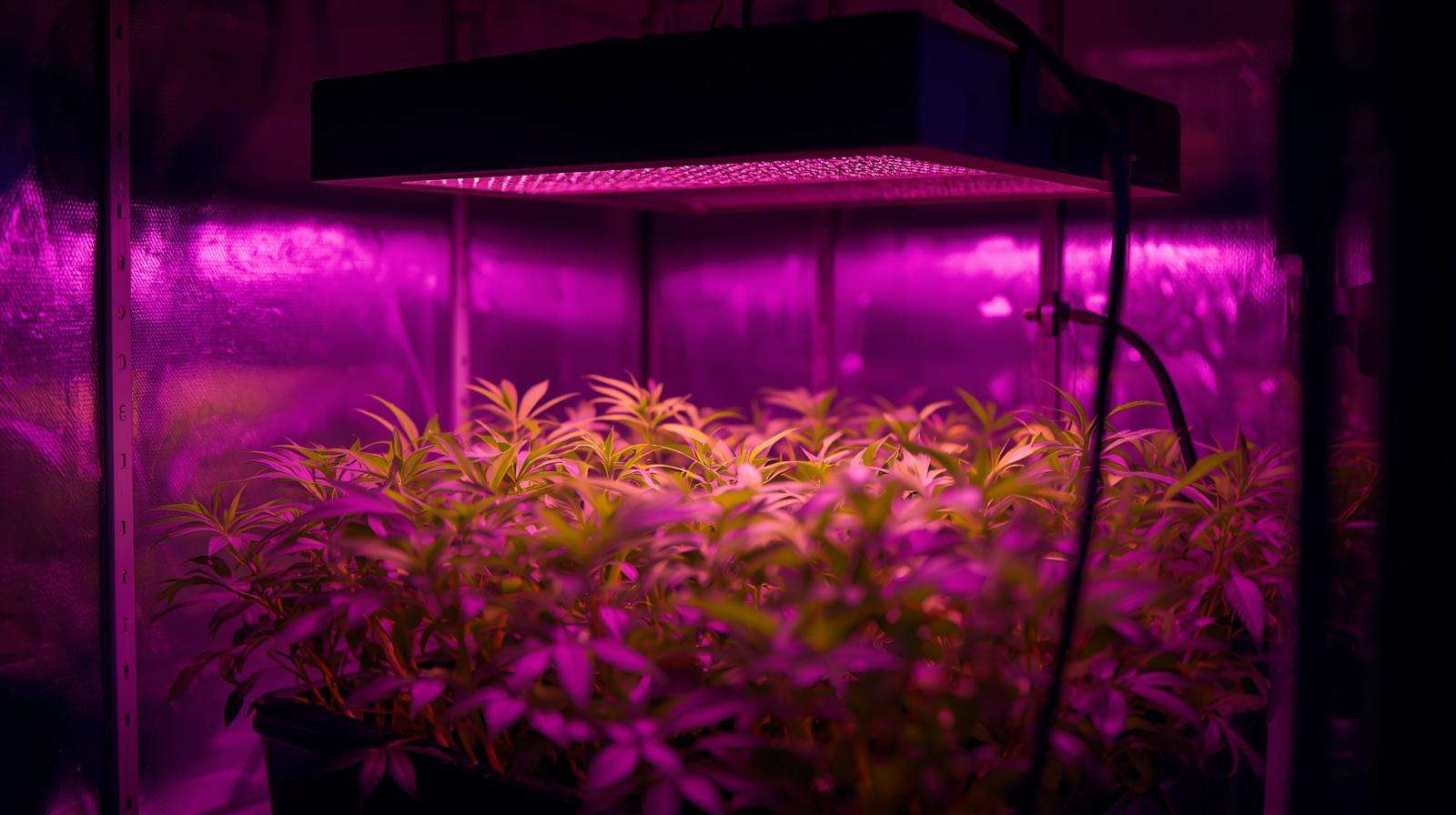
Why Full-Spectrum LEDs are the Undisputed Champions of Efficiency
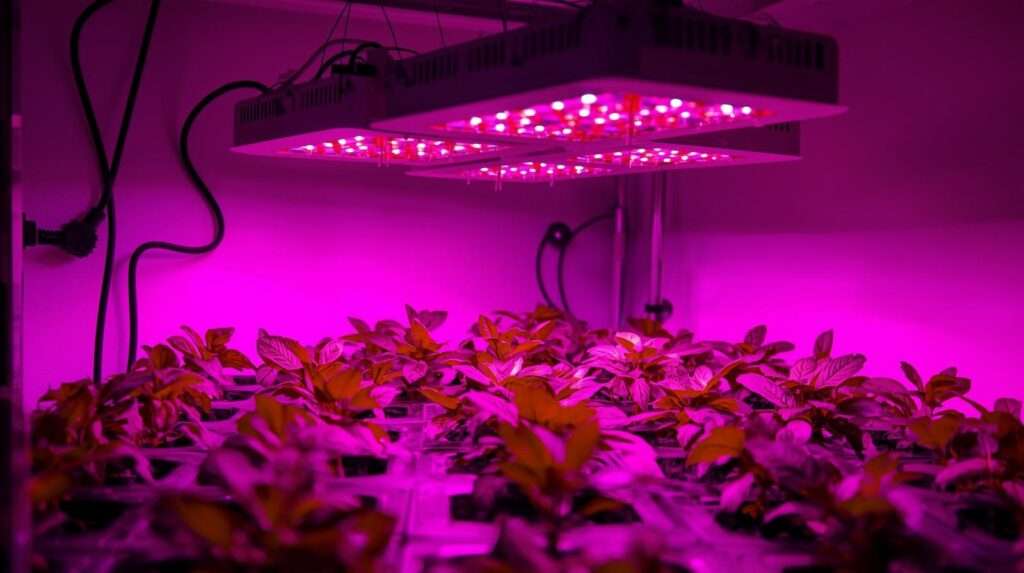
Older technologies like HPS, Metal Halide (MH), and fluorescent tubes (T5s) have grown countless indoor crops, but they are thermal dinosaurs. Modern, full-spectrum Light Emitting Diodes (LEDs) are the only logical choice for the frugal, serious grower.
While LEDs require a higher upfront investment, their long-term Return on Investment (ROI) is unmatched:
-
Superior Efficacy: High-quality LEDs have an efficacy of 2.5 to 3.0+ μmol/J (micromoles per joule). This means they convert electricity into usable plant light far more efficiently than an HPS bulb, which typically hovers around 1.3 to 1.7 μmol/J.
-
Targeted Spectrums: Full-spectrum LEDs mimic the sun, providing the exact wavelengths plants need without wasting energy producing heavy, unusable green or yellow bands.
-
Lifespan: A premium LED board can easily last 50,000 to 70,000 hours before degrading in intensity. Traditional bulbs need replacing every 2 to 3 harvests to maintain peak PPFD.
The Hidden Costs of Heat (HVAC and Cooling)
The most insidious part of an exploding power bill is the “double-whammy” effect of inefficient lights. An HPS bulb runs incredibly hot—often pushing the surface temperature of the bulb past 700°F (370°C).
When you run a hot fixture, you pay the utility company twice:
-
You pay to run the high-wattage light.
-
You pay to run power-hungry inline exhaust fans, oscillating fans, and often dedicated air conditioning units just to keep the grow room below the critical 85°F (29°C) threshold.
Modern LED quantum boards utilize passive cooling through aluminum heat sinks. They radiate significantly less heat into the environment, meaning you can often eliminate dedicated AC units and dial back your exhaust fan speeds, immediately shaving hundreds of kilowatt-hours off your monthly bill.
Optimizing Light Cycles for Maximum Growth & Minimum Cost
Once your hardware is optimized, the next phase of efficiency is operational. You can drastically reduce your power consumption by timing your lights to align perfectly with plant biology and electrical grid pricing.
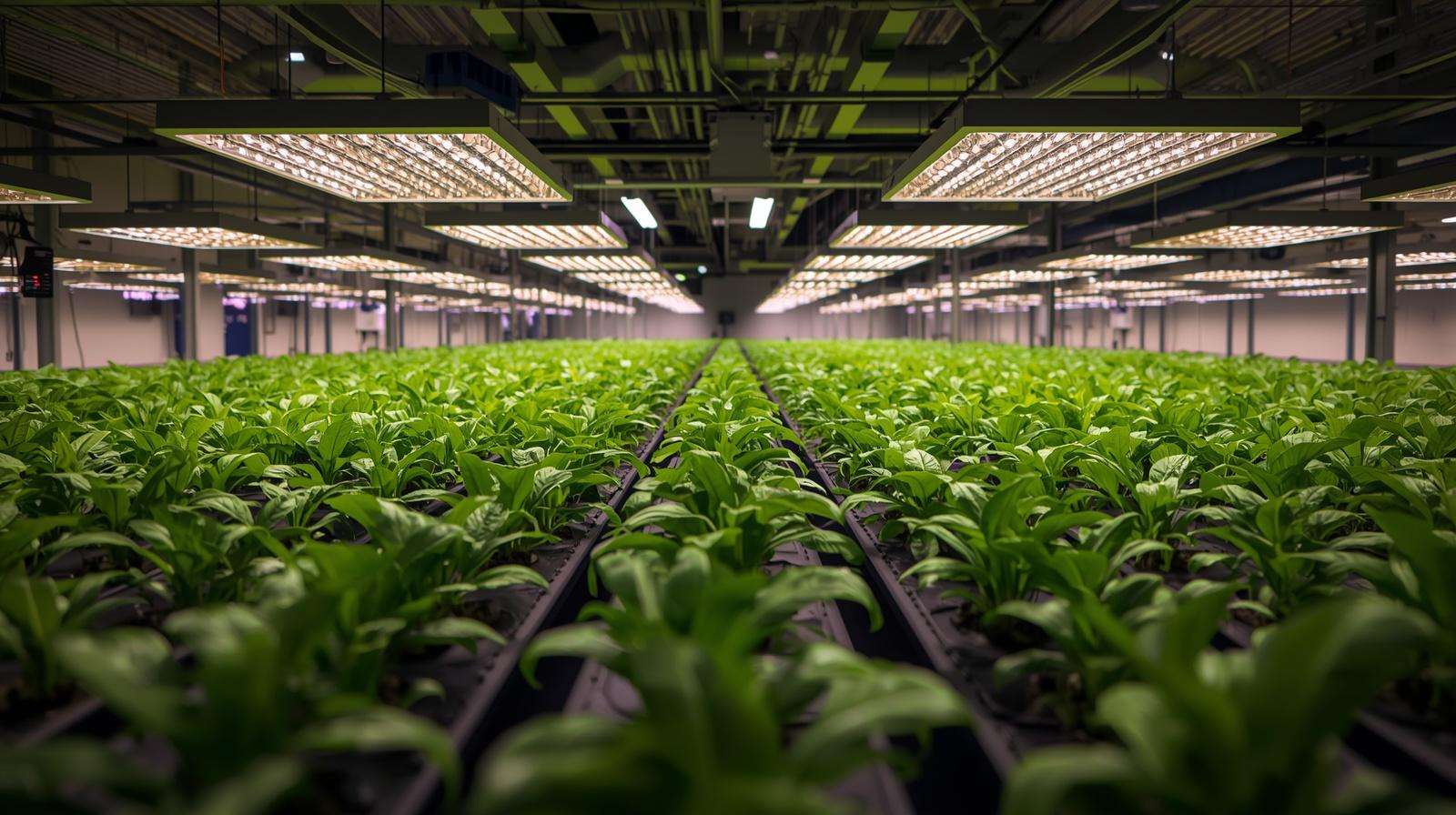
Mastering the DLI (Daily Light Integral): Give Plants Only What They Need for Running Grow Lights Without Exploding Your garden
Many growers blast their plants with maximum intensity for 18 to 24 hours a day, assuming more light always equals faster growth. This is biologically incorrect and financially ruinous.
You need to understand Daily Light Integral (DLI). Think of DLI as a rain gauge, but for photons. It measures the total amount of usable light a plant receives over an entire 24-hour period. Every plant species has an optimal DLI. For instance, leafy greens might max out at a DLI of 15-17, while fruiting plants like heavy-yielding indoor tomatoes can utilize a DLI of 30 or more.
Crucially, once a plant hits its maximum DLI, its chloroplasts become saturated. Any additional light provided after this point cannot be processed for photosynthesis. If your plants reach their optimal DLI after 14 hours, leaving the lights on for another 4 hours is literally burning money.
Tailoring Schedules to Plant Stages (Vegetative vs. Flowering) for Running Grow Lights Without Exploding Your garden
Different stages of growth require vastly different energy inputs. If you are not adjusting your photoperiods (the ratio of light to dark), you are missing major savings.
-
Seedlings and Clones: These young plants have fragile root systems and cannot process high amounts of light. They require low-intensity light (often a PPFD of just 100-300). Using massive, high-wattage fixtures during this stage is a massive waste. Use smaller, dedicated propagation lights or heavily dim your main LEDs.
-
Vegetative Stage: The standard vegetative cycle is 18 hours of light and 6 hours of darkness (18/6). While some growers push 24/0, plants benefit biologically from a dark period to perform respiration and root development. Cutting from 24 to 18 hours immediately saves 25% on your lighting costs without sacrificing growth.
-
Flowering Stage: For photoperiod plants (like certain varieties of tomatoes or peppers, and many medicinal crops), dropping the light cycle to 12 hours on and 12 hours off (12/12) is required to trigger the fruiting phase. This biological requirement instantly cuts your daily lighting expenditure by 33% compared to the 18/6 vegetative cycle.
The “Night Shift” Strategy: Off-Peak Electricity Rates for Running Grow Lights Without Exploding Your garden
Many U.S. utility companies operate on Time-of-Use (TOU) pricing. This means electricity is significantly more expensive during peak hours (usually late afternoon and early evening when everyone gets home from work and turns on appliances) and much cheaper overnight.
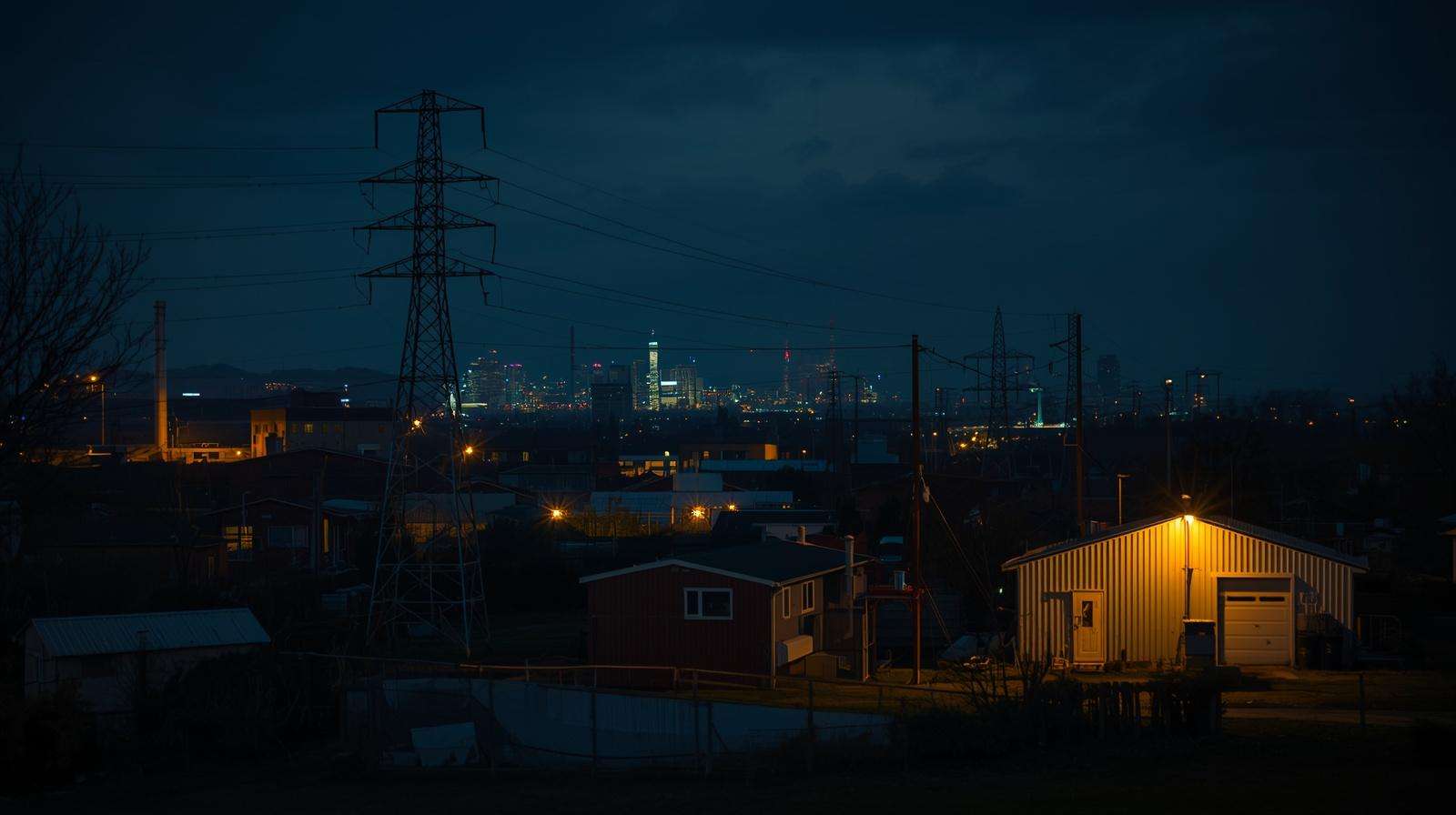
This strategy provides a massive twofold benefit:
-
You pay the lowest possible rate for the electricity powering your lights.
-
You utilize the heat generated by your grow lights to warm the room during the coldest hours of the actual night, potentially saving you from having to run a separate space heater.
Maximizing Light Efficiency: Don’t Waste a Single Photon for Running Grow Lights Without Exploding Your garden
Efficiency isn’t just about what comes out of the fixture; it’s about making sure every single photon reaches a productive leaf. You can optimize your physical environment for pennies, ensuring you get the absolute most out of the wattage you are paying for.
The Power of Reflective Surfaces
A staggering amount of light emitted from a fixture never hits the plant canopy; it strikes the walls or the floor and is absorbed as heat. Capturing those escaping photons and bouncing them back toward the plants increases your usable light footprint without drawing a single extra watt from the wall.
Ensure your grow space is highly reflective.
-
Grow Tents: Quality tents come lined with highly reflective Mylar, which bounces up to 95% of light back to the canopy.
-
Dedicated Rooms: If you are growing in a larger room, line the walls with Panda Film (black on one side, white on the other) or paint the walls with a flat, titanium white paint. Flat white is superior to glossy paint, as gloss creates hot spots rather than a diffuse, even reflection.
Dialing in the Perfect Hanging Height for Running Grow Lights Without Exploding Your garden
Understanding the Inverse Square Law is crucial for indoor growers. The law states that as light travels away from its source, its intensity decreases exponentially. If you double the distance of your light from the canopy, you quarter its intensity.
Hanging your lights too high means you are paying for intense light that dissipates before reaching the leaves. Hanging them too low risks light burn and heat stress.
-
Find the Sweet Spot: Most manufacturers provide PPFD maps for different hanging heights. Use these as a guide. For modern LEDs, 18 to 24 inches above the canopy is often optimal during the vegetative stage, and 12 to 18 inches during flowering.
-
Invest in a PAR Meter: While expensive, a PAR meter (or a highly rated smartphone app like Photone, with proper diffusers) allows you to measure exactly what light is hitting the canopy. This ensures you can lower the light to the exact point of maximum efficiency without causing stress.
Canopy Management and Pruning for Running Grow Lights Without Exploding Your garden
Light that penetrates the canopy and hits bare soil or the floor is wasted energy. Your goal is to create a dense, even canopy of leaves to catch every photon.
Techniques like Low Stress Training (LST) and the Screen of Green (SCROG) method involve bending and securing branches horizontally. Instead of one tall main cola blocking the light from lower branches, you create a flat, horizontal table of buds or fruit. This ensures an even distribution of PPFD across all prime fruiting sites, maximizing your yield per watt.
Furthermore, pruning the lower third of the plant (often called “lollipopping”) removes small, shaded growth that will never receive adequate light. This forces the plant to direct all its energy into the top canopy, directly under the lights.
Holistic System Efficiency: How Soil and Climate Affect Light Uptake
A true masterclass in indoor growing recognizes that the grow room is an interconnected system. You can have the most efficient LEDs in the world, but if the plant’s environment is out of balance, it won’t be able to utilize that light energy.
The Soil-Light Connection: Maximizing Photosynthetic Efficiency
Light energy is essentially the engine, but water and nutrients are the fuel. If a plant lacks the biological resources to process the light, the electricity used to generate it is wasted.
Maintaining optimal soil health is paramount. When dealing with organic setups, ensuring proper bulk density allows for robust root penetration and oxygen exchange. If the soil is compacted, roots cannot access the necessary water to keep stomata open for photosynthesis. Furthermore, managing the Cation Exchange Capacity (CEC) ensures that vital nutrients like magnesium (the central atom in the chlorophyll molecule) are readily available.
A thriving rhizosphere, perhaps supported by regular applications of aerated compost teas, ensures the plant is biologically primed to convert every photon it receives into vigorous growth. A struggling root system, conversely, ignores the light you are paying for.
Dialing in VPD (Vapor Pressure Deficit)
Temperature and humidity are deeply connected to light efficiency through a metric called Vapor Pressure Deficit (VPD). VPD dictates how easily a plant can transpire (breathe).
If the air in your grow room is too hot and dry (high VPD), the plant will close its stomata to conserve water. When stomata close, photosynthesis stops entirely. Your lights will still be running, consuming expensive electricity, but your plants will have shut down production. Maintaining a proper VPD range ensures your plants are continuously utilizing the light you provide.
5 Quick Expert Tips for the Frugal Grower
Looking for immediate wins? Implement these quick strategies to shave dollars off your bill today:
-
Invest in Smart Plugs or Digital Timers: Never rely on memory. Automating your light cycles down to the minute prevents costly mistakes, like accidentally leaving lights on for 24 hours.
-
Use Dimmable Drivers: If you buy a 600-watt LED fixture, you rarely need to run it at 100% capacity right away. Dimming the light to 40% for seedlings and 70% for mid-veg saves massive amounts of power while still meeting the plants’ DLI needs.
-
Keep Your Diodes Clean: Dust is an enemy of light transmission. A layer of dust on your LED boards or bulbs blocks valuable photons. A quick wipe-down with a soft, dry cloth increases light output for free.
-
Isolate Your Propagation: Don’t fire up a massive flowering array just to keep a tray of clones alive. Use a small, low-wattage T5 or cheap LED strip light in a separate, smaller space for propagation.
-
Supplement with Natural Sunlight: If your grow space has access to large, south-facing windows (in the Northern Hemisphere), utilize that free natural light for the early vegetative stages before moving plants into the high-energy, controlled environment of the grow room.
Frequently Asked Questions (FAQs)
Do LED grow lights use a lot of electricity? Compared to standard household bulbs, yes. However, compared to older grow light technologies like HPS or Metal Halide, LEDs are incredibly efficient. A modern LED can produce the same usable light footprint as older tech while drawing roughly half the wattage from the wall.
Can I leave my grow lights on 24/7 to grow faster? While some plants can survive 24/0 lighting during the vegetative stage, it is rarely the most efficient approach. Plants require dark periods for critical biological functions, including root development and respiration. Running lights 24/7 quickly exceeds the plant’s Daily Light Integral (DLI) capacity, meaning the extra hours of electricity yield diminishing returns or zero benefit at all.
What is the cheapest grow light to run? The cheapest lights to run are small, low-wattage LED strips or T5 fluorescents, but these are only suitable for seedlings and clones. For full-cycle growing (including flowering/fruiting), a modern, full-spectrum LED quantum board with high efficacy (2.5+ μmol/J) is the most cost-effective option over its lifespan, due to low energy draw and low heat output.
How much does it cost to run a 600w LED grow light per month? This depends on your local electricity rates and your light cycle. Assuming the U.S. average of $0.16/kWh, running a true 600-watt draw LED for 18 hours a day (vegetative stage) will cost approximately $51.84 per month. Running it for 12 hours a day (flowering stage) will cost approximately $34.56 per month.
Conclusion
Running grow lights without exploding your power bill is an achievable reality for any dedicated indoor grower. It requires a shift away from the old mindset of simply blasting plants with high-wattage heat lamps.
By upgrading to highly efficient full-spectrum LEDs, calculating your exact Daily Light Integral, utilizing Time-of-Use electricity rates, and maintaining a biologically active soil web, you transform your grow room into a precision environment. You stop paying for wasted heat, wasted photons, and wasted hours.