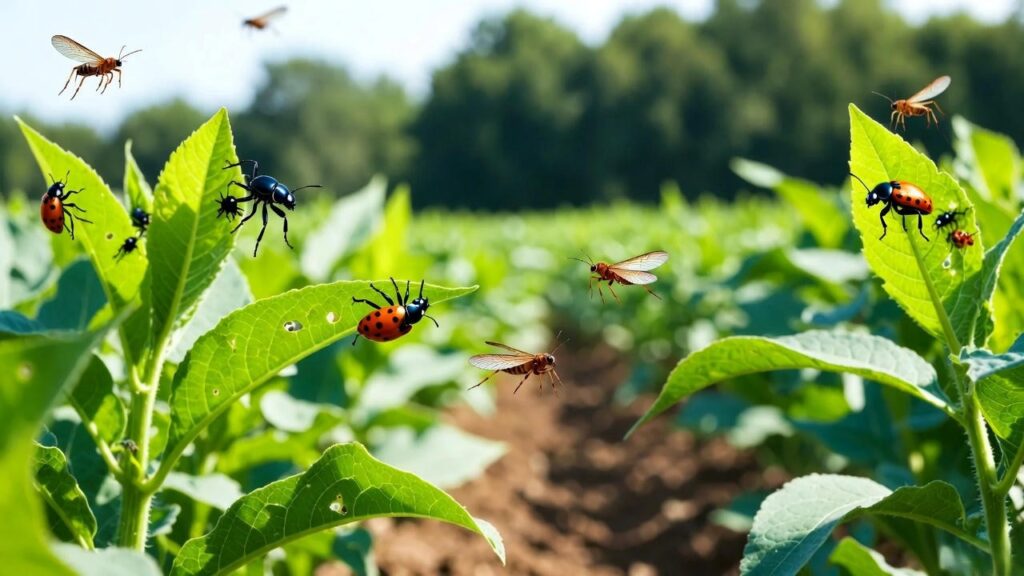
Imagine walking into your carefully tended garden or field, only to discover your young broccoli seedlings peppered with tiny, irregular holes, their leaves looking like they’ve been blasted with shotgun pellets. Your plants are stunted, struggling to grow, and yields are threatened—all because of an invasion by small black beetles, commonly known as flea beetles. These tiny pests can devastate crops overnight, but there’s good news: you don’t need harsh chemicals to fight back. In this comprehensive guide, we’ll dive deep into proven, natural pest control methods for small black beetles, helping you protect your crops sustainably and effectively.
As an agricultural specialist with years of experience advising farmers and gardeners on organic and regenerative practices, I’ve seen firsthand how flea beetles—those shiny, jumping small black beetles—wreak havoc on brassicas, eggplants, potatoes, and more. Drawing from university extension research (such as from the University of Minnesota and UC IPM), USDA guidelines, and real-world organic farming successes, this article equips you with actionable, eco-friendly strategies. Whether you’re a home gardener or commercial grower, these methods prioritize soil health, biodiversity, and long-term pest management over quick-fix synthetics.

By implementing integrated natural approaches, you can reduce small black beetle populations by 70-90% in many cases, based on field trials, while enhancing your farm’s resilience.
Understanding Small Black Beetles: Identification and Common Types
Accurate identification is the foundation of effective pest management. Misidentifying small black beetles could lead to unnecessary treatments or overlooking beneficial insects.
Why Identification Matters
Proper ID ensures you target pests without harming pollinators or predators. Entomologists from extensions like UMN emphasize early observation to distinguish pests from allies, preventing broader ecosystem disruption.
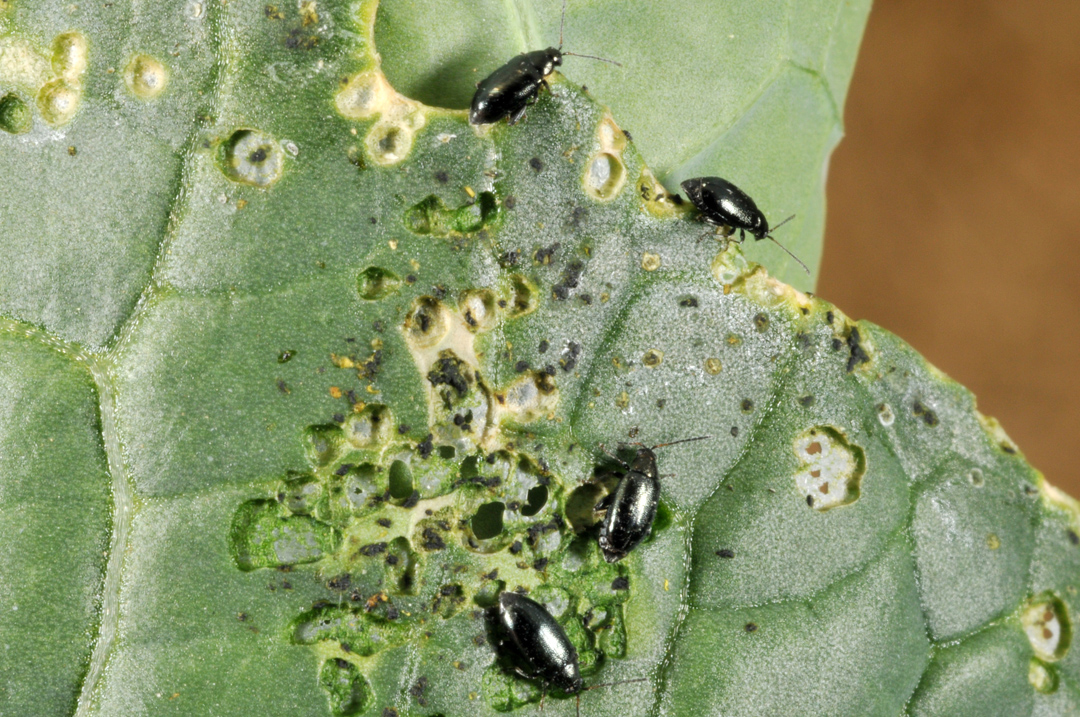
(Images: Adult flea beetles on damaged leaves, showing typical small black appearance and shothole feeding patterns. Sources: University of Maryland Extension, Purdue University Extension, UMN Extension.)
Key Characteristics of Small Black Beetles in Crops
These pests are typically 1/16 to 1/8 inch long, with shiny black or metallic bodies and enlarged hind legs for jumping (hence “flea” beetles). When disturbed, they leap away rapidly. Look for them on undersides of leaves in spring and early summer.
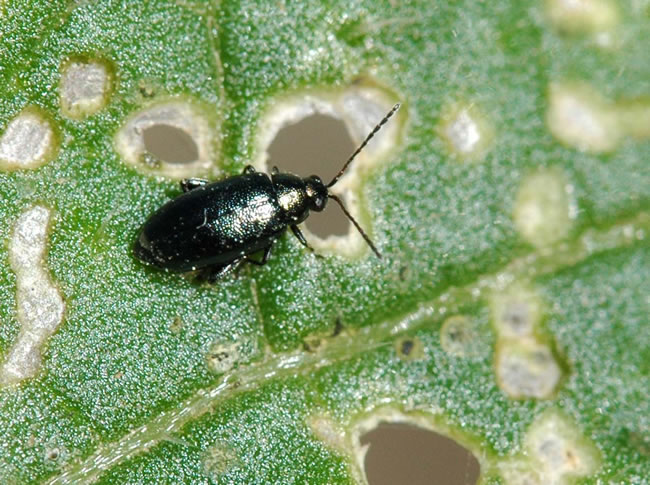
(Close-up identification images of shiny black flea beetles. Sources: UC IPM, UMN Extension.)
Common Culprits: Flea Beetles and Similar Pests
The most problematic are crucifer flea beetles (Phyllotreta cruciferae), striped flea beetles, and palestriped varieties. Differentiate from beneficial ground beetles (larger, slower, predatory on pests). Use a hand lens for confirmation—pests have jumping legs and uniform shiny black coloration.
Visual Identification Tips:
- Size: Tiny (pinhead to sesame seed)
- Color: Shiny black, sometimes striped
- Behavior: Jump vigorously when approached
- Damage: Small, round “shothole” pits in leaves
| Pest Beetle | Beneficial Beetle |
|---|---|
| Small (1-3mm), jumps high | Larger (10mm+), walks slowly |
| Shiny black, feeds on crops | Matte, predatory on larvae/slugs |
| Enlarged hind legs | Normal legs, ground-dwelling |
Expert tip from Montana State University: Scout cool mornings when beetles are sluggish for easier spotting.
The Impact of Small Black Beetles on Your Crops
Unchecked small black beetles can cause significant losses, especially in organic systems.
Types of Damage Caused
Adults chew characteristic “shothole” pits, reducing photosynthesis and stunting growth. Larvae feed on roots, weakening plants. In severe cases, seedlings die; mature plants transmit diseases like Stewart’s wilt.

Vulnerable Crops and Seasons
High-risk: Broccoli, cabbage, kale, eggplant, potatoes, radishes. Peak activity: Spring emergence from overwintering, early summer second generation.
Long-Term Consequences
Repeated chemical use degrades soil microbes; natural methods build resilience.
Real-world example: A Midwest organic farm lost 30% of arugula until switching to integrated natural controls.
Symptoms Checklist:
- Tiny holes increasing to ragged leaves
- Wilting seedlings despite watering
- Beetles jumping from foliage
Benefits of Choosing Natural Pest Control Methods
Natural approaches align with sustainable agriculture principles.
Environmental and Health Advantages
No chemical runoff polluting waterways; protects bees and beneficials. EPA highlights pesticide risks to human health—natural methods produce safer food.
Cost-Effectiveness and Sustainability
Initial setup (e.g., row covers) saves money long-term vs. repeated sprays. Supports regenerative practices like those in USDA Organic standards.
Alignment with Organic Farming Standards
Fully compliant; enhances biodiversity.
Pros and Cons Comparison:
| Natural Methods | Synthetic Pesticides |
|---|---|
| Builds soil health | Quick kill but resistance builds |
| Safe for pollinators | Harms beneficials |
| Long-term savings | Ongoing costs |
Insight from organic consultant: “Natural IPM turns pests into teachers for better farming.”
Proven Natural Pest Control Methods for Small Black Beetles
This core section provides detailed, step-by-step strategies— the heart of skyscraper content.
Cultural Practices
Rotate crops to non-hosts (e.g., brassicas to legumes) for 2-3 years. Delay planting until warmer soil slows beetles.
Step-by-Step Rotation Plan:
- Map previous brassica fields.
- Plant corn, beans, or cover crops next.
- Monitor edges for migration.
Intercrop with non-hosts to confuse beetles.
Physical Barriers and Traps
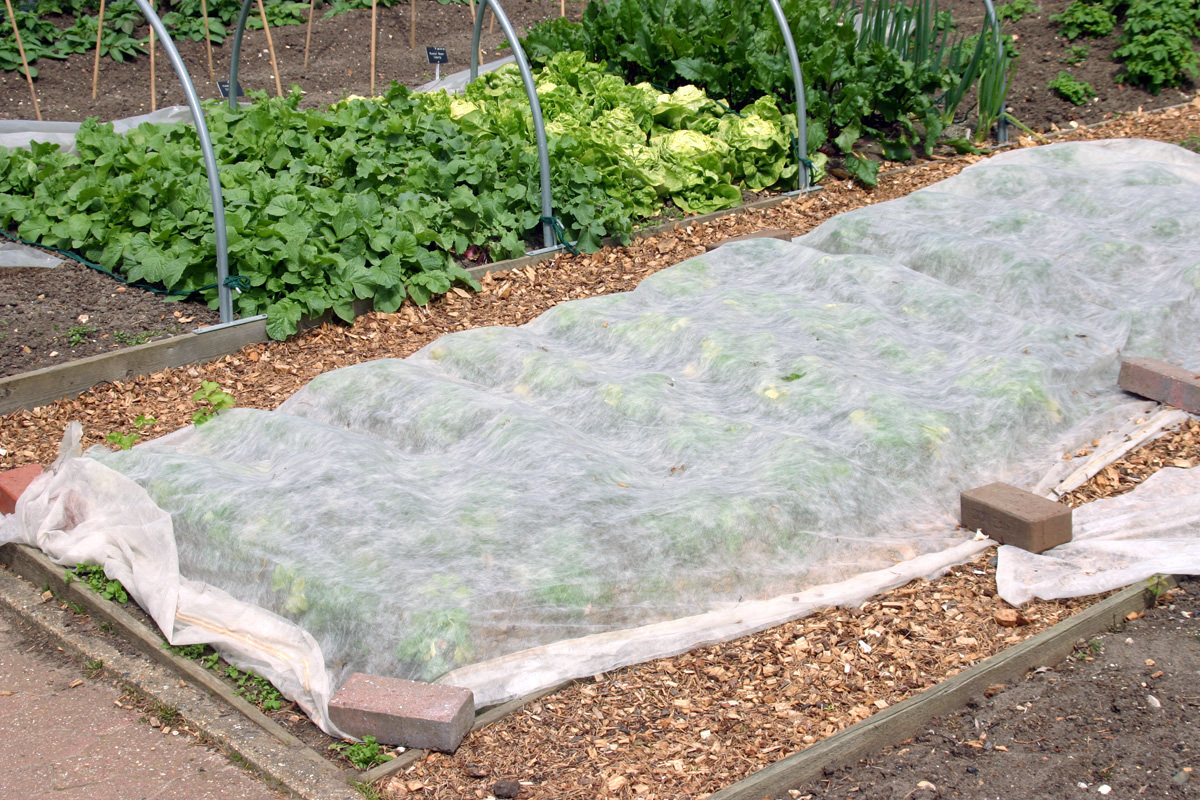
Floating row covers exclude adults effectively.
Integrated Pest Management (IPM) Approach
Combine methods: Scout weekly, use thresholds (e.g., 5 beetles/plant on seedlings), monitor with sticky cards.
ATTRA Sustainable Agriculture resources recommend starting with cultural, adding biological as needed.
Preventive Strategies to Keep Small Black Beetles at Bay
Prevention beats reaction.
Soil Health and Habitat Management
Compost builds vigorous plants resistant to damage. Cover crop with clover disrupts cycles.
Control weeds (especially brassica volunteers).
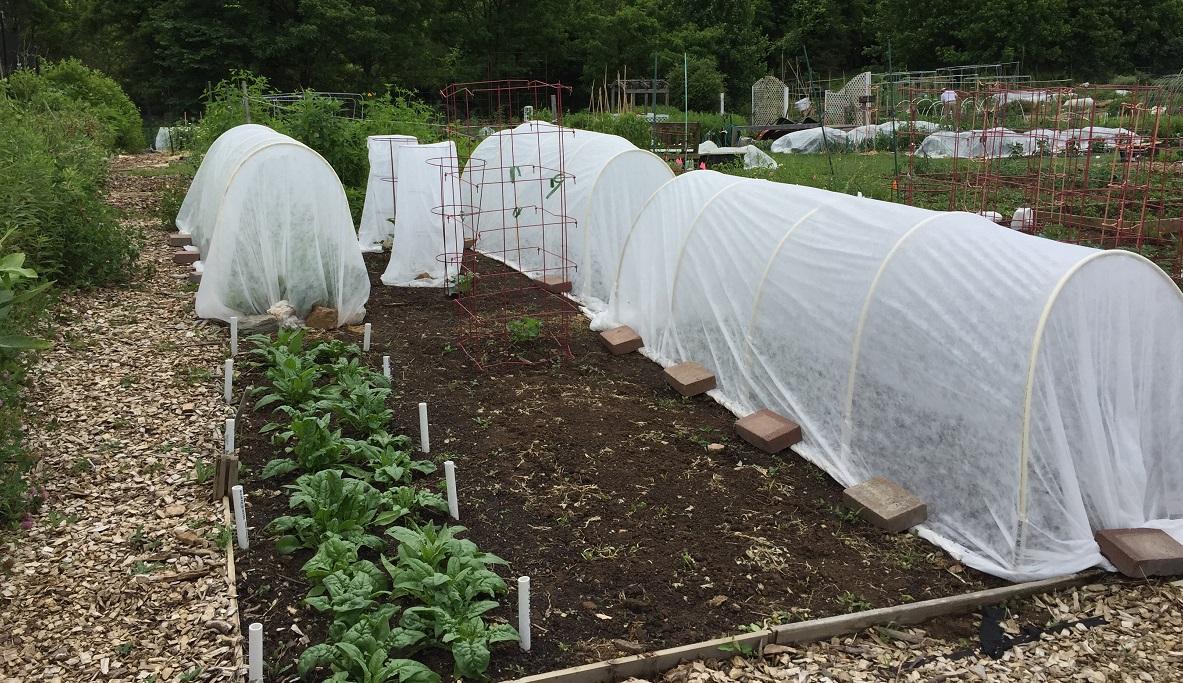
(Row covers in use. Sources: Wisconsin Horticulture, University of Maryland Extension.)
Install at transplanting; remove for pollination if needed.
Yellow sticky traps attract and capture jumpers.

(Sticky trap examples.)
Mulch with straw disrupts overwintering.
Barrier Types Table:
| Method | Pros | Cons | Best For |
|---|---|---|---|
| Row Covers | 90% exclusion | Heat buildup | Seedlings |
| Sticky Traps | Monitoring + control | Labor to check | Small gardens |
| Mulch | Weed suppression too | Attracts slugs if wet | All scales |
UMN Extension recommendation: Apply covers immediately post-transplant.
Biological Controls
Release beneficial nematodes (Steinernema or Heterorhabditis) to target larvae in soil.
Case study: California organic farm reduced populations 60% with nematodes (ATTRA reports).
Introduce ladybugs or lacewings for adult predation.
Botanical and Organic Sprays
Neem oil disrupts feeding.

Common Mistakes to Avoid
- Relying on a single method: Always combine for resilience.
- Late application: Barriers must go on at transplanting.
- Ignoring monitoring: Scout weekly to catch early surges.
- Overlooking sanitation: Leaving crop residue invites overwintering.
Before-and-After Comparison Table:
| Strategy Implemented | Initial Damage Level | Post-Implementation | Source |
|---|---|---|---|
| Row covers + trap crops | 40-50% seedling loss | <10% loss | Midwest grower |
| Nematodes + clay | High adult/larval pressure | 75% reduction | California farm |
| Rotation + mulch | Moderate overwintering | 60% fewer adults | Montana State trial |
:strip_icc()/BHG-gardening-pests-neem-oil-for-plants-Hero-351e9a537e704fdfad83a6e55b7e9d3b.jpg)
(Neem application.)
Trap crops: Radishes or mustard draw beetles away.
Companion Examples:
- Marigolds with broccoli
- Radishes as border trap
Planting calendar: Sow traps 2 weeks early.
Seasonal Maintenance Tips
Fall cleanup destroys overwinter sites. Till lightly in spring.
Seasonal Checklist:
- Fall: Remove debris
- Winter: Plan rotations
- Spring: Early scouting
- Summer: Monitor second generation
Farmer testimonial: “Trap crops + rotation cut my losses 80%.”
Diatomaceous earth (food-grade) dehydrates beetles.
:max_bytes(150000):strip_icc()/GettyImages-1251355283-4c587e0aae2b4c97972dbfd044b91e22.jpg)
(DE dusting.)
DIY Neem Spray Recipe:
- Mix 2 tsp neem oil + 1 tsp soap in 1 quart water.
- Shake well.
- Spray evenings, every 7-10 days.
- Test on one plant first.
Garlic/pepper sprays repel; kaolin clay (Surround) barriers.
Safety: Reapply after rain; avoid blooming periods.
Companion Planting Techniques
Plant marigolds, nasturtiums, or catnip to repel.
:strip_icc()/BHG-Marigold-Companion-Plants-170816-156-47036b1e2ac54a39a08551c07b6307d0.jpg)
Real-World Examples and Case Studies
Real-world applications demonstrate the effectiveness of these natural methods, backed by farmer experiences and research.
Success Stories from Farmers
One small-scale organic grower in the Midwest shared how combining row covers with trap cropping transformed their operation. Initially facing 40-50% seedling loss in kale and broccoli from small black beetles, they planted radish borders two weeks early. Beetles concentrated on the radishes, which were then vacuumed or destroyed. Row covers protected main crops until established. Result: Losses dropped to under 10%, with no chemical inputs (adapted from grower reports via ATTRA Sustainable Agriculture network).
Another example comes from a commercial eggplant farm in California. Using beneficial nematodes applied in spring, followed by kaolin clay sprays, they achieved 75% reduction in flea beetle damage over three seasons, per farm records shared in UC IPM case studies.

(Marigold companions.)
Lessons from Research and Trials
Montana State University trials compared organic management strategies: Cultural rotation + mulch reduced overwintering adults by 60%; adding sticky traps boosted control to 85%. University of Minnesota Extension studies confirm delayed planting (waiting until soil temperatures exceed 60°F) misaligns with peak beetle emergence, cutting infestations significantly.
A Cornell University organic trial integrated companion planting (nasturtiums and marigolds) with neem applications, yielding comparable control to synthetic pyrethroids but with enhanced soil biology.
Frequently Asked Questions (FAQs)
Are All Small Black Beetles Harmful to Crops?
No. While flea beetles (jumping, shiny small black beetles) are pests, larger ground beetles (Carabidae family) are beneficial predators that eat pest larvae, slugs, and weed seeds. Always confirm jumping behavior and size before acting.
How Quickly Do Natural Pest Control Methods Work?
Physical barriers like row covers provide immediate protection. Botanical sprays (neem, garlic) show effects in 3-7 days. Biological controls (nematodes) take 1-2 weeks for larval kill. Cultural practices yield results over seasons. Patience and combination are key.
Can Natural Methods Control Small Black Beetles in Large-Scale Farming?
Yes. Commercial organic operations successfully use trap crops on field edges, drone-monitored sticky traps, and nematode broadcasts. USDA-supported research shows scalability with proper planning.
Are Homemade Sprays as Effective as Commercial Organic Products?
Often yes, when properly formulated. DIY neem or garlic sprays match efficacy of store-bought versions if concentrations are accurate. However, commercial products like Surround (kaolin) offer consistent particle size for better coverage.
What If Natural Methods Aren’t Enough?
Monitor thresholds closely. If damage exceeds 20-30% on seedlings despite interventions, consider approved organic rescue treatments like spinosad (Entrust) as a last resort. Consult local extension services for site-specific advice.
When Is the Best Time to Start Preventive Measures?
Begin in fall with cleanup and cover cropping. Plan rotations over winter. Scout and apply barriers in early spring before beetle emergence.
Do Row Covers Affect Pollination or Plant Growth?
Lightweight fabrics allow light, air, and moisture while blocking beetles. Remove during flowering for insect-pollinated crops (e.g., eggplant) or hand-pollinate under covers. No significant growth impact in trials.
Are There Any Plants That Naturally Repel Small Black Beetles?
Yes—strong-scented companions like catnip, sage, mint, and wormwood show repellent effects in field observations. Interplant liberally.
How Do I Know If Beneficial Insects Are Working?
Look for predator signs: ladybug larvae on leaves, reduced beetle numbers without new damage. Sticky traps will show fewer captures over time.
Is Diatomaceous Earth Safe for Pets and Wildlife?
Food-grade DE is non-toxic when dry but can irritate lungs if inhaled. Apply carefully, avoiding windy days and blooming plants.
Conclusion
Small black beetles, particularly flea beetles, pose a serious but manageable threat to your crops. By understanding their identification, damage patterns, and life cycle, and implementing a layered approach of cultural practices, physical barriers, biological controls, botanical treatments, and prevention, you can achieve effective control without synthetic chemicals.
The most successful growers treat pest management as an integrated system—monitoring regularly, combining methods, and prioritizing prevention. These natural strategies not only suppress small black beetles but also improve soil health, biodiversity, and long-term farm resilience.