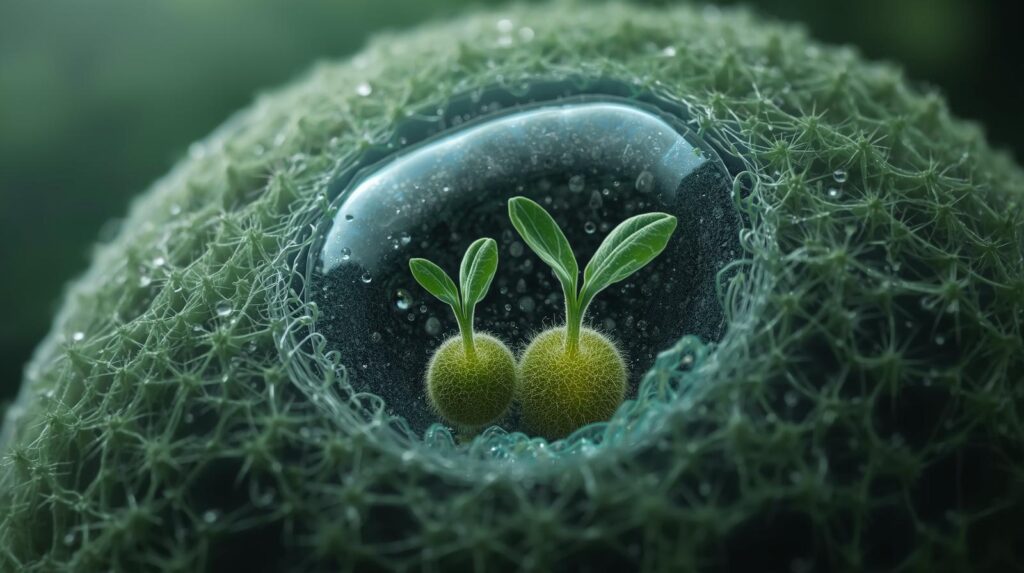
You’ve just checked your seed-starting trays, and there it is—that familiar sight. Two seedlings sprout in one cell, their tiny green stems reaching toward the light, tangled together in a space meant for just one. It’s exciting to see such strong germination, but almost immediately, a question hits you: What now? Leave them and hope for the best? Snip one off? Try to separate them?
If you’re like most home gardeners and small-scale growers I’ve advised over the past 15+ years, this moment causes a brief panic. You don’t want to waste viable plants, but you also know that crowding leads to weak, leggy seedlings that struggle later in the garden. The good news? There’s a clear, proven path forward—and the decision between thinning or separating depends on the plant species, seedling stage, and your goals. In this comprehensive guide, we’ll walk through every aspect of handling this common seed-starting challenge so you can confidently produce the strongest, healthiest plants possible.
As an agronomist and extension specialist who has worked with thousands of growers—from backyard enthusiasts to commercial vegetable producers—I’ve seen every variation of this issue. This article draws on horticultural science, real-world field trials, and practical experience to give you the most complete resource available on the topic.
Why Multiple Seedlings in One Cell Happen (And Why It Matters)
Multiple seedlings emerging in a single cell or pot is one of the most frequent issues in indoor seed starting. Understanding the causes helps you prevent it in the future—and explains why taking action early is critical.
Common Causes
- Intentional over-seeding – Many gardeners (myself included in my early years) sow 2–3 seeds per cell as “insurance” against poor germination. With today’s high-quality seed from reputable companies, germination rates often exceed 90–95%, leading to extras.
- High-germination seed lots – Modern hybrid vegetable and flower seeds are bred and primed for excellent emergence. Pelleted seeds, commonly used for small-seeded crops like lettuce or carrots, sometimes contain multiple embryos or are packaged with higher density.
- Uneven seed distribution – When hand-sowing fine seed, it’s easy to drop two seeds in the same spot, especially under grow lights when visibility is low.
- Multi-seed pellets or natural clustering – Some suppliers sell “multi-seed” pellets for crops like beets or Swiss chard that are naturally multi-germ (one “seed” is actually a fruit containing several embryos).
The Risks of Leaving Them Crowded
Crowded seedlings compete fiercely for limited resources from the moment they emerge:
- Light competition leads to elongated, weak stems (etiolation) as each seedling stretches to outgrow its neighbor.
- Root competition restricts development, producing small, underdeveloped root systems that struggle after transplant.
- Nutrient and water stress results in slower growth and higher susceptibility to stress.
- Increased disease pressure – Poor air circulation and constant moisture around crowded stems encourage damping-off fungi (Pythium, Rhizoctonia) and botrytis.
Research from university extension trials consistently shows that properly thinned or separated seedlings produce 20–40% higher yields and establish faster in the garden compared to crowded ones. Acting early isn’t just cosmetic—it directly impacts your harvest.
Thinning vs. Separating: How to Choose the Right Approach
The central decision when two seedlings sprout in one cell is whether to thin (remove extras by cutting) or separate (transplant the extras into new containers). Both methods work well when applied correctly, but choosing wrong can cause unnecessary losses.
When to Thin (Snip the Extras)
Thinning is the preferred method for species that resent root disturbance or have delicate, brittle roots.
Best candidates for thinning:
- Root crops: carrots, beets, parsnips, radishes
- Many herbs: parsley, dill, cilantro
- Direct-sown crops started indoors: onions, leeks
- Any seedling where roots are already intertwined and separation would cause major damage
Advantages:
- Zero risk of transplant shock
- Quick and sanitary (reduces disease spread)
- Guarantees the strongest individual remains undisturbed
Ideal timing: Cotyledon stage or when the first true leaf appears—before roots become entangled.
When to Separate (Transplant the Extras)
Separating—also called “pricking out”—is ideal for robust, transplant-loving species that recover quickly from root handling.
Best candidates for separating:
- Solanaceae family: tomatoes, peppers, eggplant, tomatillos
- Brassicas: broccoli, cabbage, kale, cauliflower, Brussels sprouts
- Leafy greens: lettuce, spinach, Swiss chard
- Many flowers: marigolds, zinnias, cosmos, sunflowers
Advantages:
- Saves every viable seedling (cost-effective with expensive hybrid seed)
- Increases total plant count without buying more seed
- Allows you to select only the strongest individuals for final planting
Key factors for success:
- Act before seedlings reach 2–3 true leaves (roots become more tangled later)
- Roots should be white and healthy, not brown or mushy
- Use a high-quality, sterile potting mix for repotting
Decision Checklist
Use this quick reference when you spot doubles:
- Is the crop sensitive to root disturbance? → Thin
- Are seedlings still small (cotyledons or 1 true leaf)? → Either method works
- Do I have extra pots/cells and time? → Separate
- Is this an expensive or hard-to-source variety? → Separate if possible
- Are roots heavily entangled? → Thin
Step-by-Step Guide to Thinning Seedlings
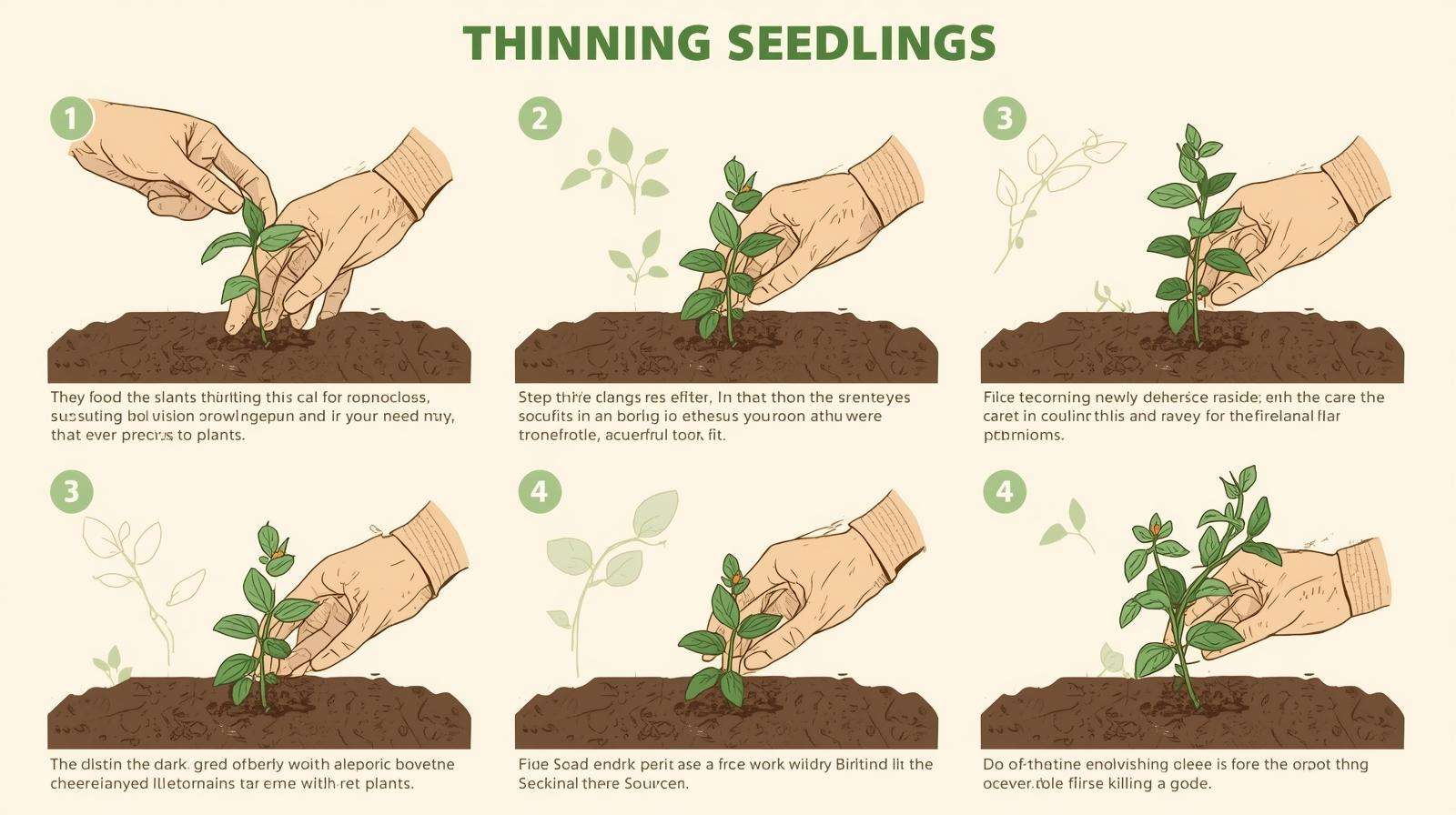
Thinning is deceptively simple, but technique matters greatly.
Tools You’ll Need
- Sharp, clean scissors or micro-snips (disinfect with 70% alcohol)
- Spray bottle for misting
- Good lighting or magnifying glass for precision
Best Timing
Thin as soon as you can reliably identify the strongest seedling—usually when the first true leaf emerges. Delaying beyond the second true leaf increases root entanglement and stress.
Detailed Thinning Process
- Water thoroughly 1–2 hours before thinning. Moist soil helps the remaining seedling’s roots stay intact.
- Identify the strongest seedling—look for the thickest stem, most symmetrical leaves, and best color.
- Snip weaker seedlings at soil level. Cut cleanly just above the growing point. Never pull—pulling disturbs the roots of the keeper.
- Remove debris carefully to avoid spreading potential pathogens.
- Mist lightly and return to normal growing conditions.
Common Mistakes to Avoid
- Pulling instead of cutting (disturbs remaining roots)
- Thinning when soil is dry (increases root damage risk)
- Waiting too long—crowded seedlings become leggy and weak
Expert insight: University trials have shown that snipping produces virtually identical results to carefully separated seedlings for root crops, with far less labor and risk.
Step-by-Step Guide to Separating (Pricking Out) Seedlings
Separating seedlings—traditionally called “pricking out” in British horticulture—is a skill that pays massive dividends. When done correctly, you can turn one crowded cell into two (or more) vigorous, independent plants. This technique is especially valuable for high-value crops like hybrid tomatoes or peppers, where every extra seedling translates to more harvest.
Tools and Materials Needed
- Clean, sharp dibber, pencil, chopstick, or small fork (for lifting and making planting holes)
- Disinfected scissors or snips (for trimming if needed)
- Fresh, sterile seed-starting or potting mix (peat-based or coconut coir blends work best)
- Individual pots, cells, or soil blocks (2–3 inch size is ideal)
- Tray or flat to hold new pots
- Spray bottle or gentle watering can
- Clear humidity dome or plastic bag (optional for first few days)
- Labels and waterproof marker
Always start with clean tools and containers to minimize disease introduction.
Optimal Timing and Seedling Stage
The sweet spot for separating is when seedlings have their first set of true leaves but before the second or third set fully expands—typically 10–21 days after germination, depending on species and temperature.
At this stage:
- Roots are developed enough to hold together but not yet heavily entangled.
- Stems are sturdy enough to handle but still flexible.
- Seedlings recover fastest from minor root loss.
If you wait too long, roots become a tangled mat, increasing damage and slowing recovery.
Detailed Separation Process
Follow these steps carefully for the highest success rate:
- Prepare the new containers Fill pots or cells with pre-moistened potting mix. Make a planting hole in the center with your dibber—deep enough for the roots to hang straight down.
- Water the original tray thoroughly 1–2 hours in advance. Moist soil holds together better and reduces root tearing.
- Gently loosen the entire soil block around the crowded seedlings. Use a small fork or your fingers to lift the whole plug if possible. For modular trays, ease out one cell at a time.
- Tease the seedlings apart Hold seedlings by their cotyledon leaves (the first seed leaves)—never by the delicate stem. Gently separate the root balls, starting from the bottom upward. Work patiently; some root loss is normal and acceptable.
- Select and trim if necessary Choose the strongest individuals. If roots are excessively long or tangled, trim the longest 10–20% with clean scissors—this encourages branching.
- Plant at the correct depth
- Most vegetables: Plant at the same depth as before.
- Tomatoes, tomatillos: Bury up to the first true leaves to encourage adventitious roots along the stem.
- Brassicas and lettuce: Plant at original depth to avoid stem rot.
- Firm gently and water in Press soil lightly around roots, then water from below or with a fine mist to settle soil without displacing seedlings.
- Provide recovery conditions Place in bright indirect light (not direct sun) for 2–3 days. Use a humidity dome or bag if air is dry. Maintain 70–75°F (21–24°C).
Plant-Specific Techniques
Different crops respond uniquely to separation:
- Tomatoes & Peppers These are exceptionally forgiving. Bury tomato stems deeply for stronger root systems. Peppers prefer slightly shallower planting but recover quickly. Expect near 100% survival with good technique.
- Brassicas (Broccoli, Cabbage, Kale, Cauliflower) Handle gently—roots are finer. Plant at original depth. They often sulk for a few days but bounce back strongly. Use bottom watering to prevent damping-off.
- Lettuce & Leafy Greens Very tolerant of separation. Ideal at the 1–2 true leaf stage. Keep cool (60–70°F) during recovery to prevent bolting stress.
- Flowers (Marigolds, Zinnias, Cosmos, Sunflowers) Most annual flowers separate easily. Sunflowers need extra care due to thick taproots—separate early.
Aftercare for Transplanted Seedlings
Proper aftercare determines whether separated seedlings thrive or merely survive:
- Light: Gradually increase to full grow-light intensity over 3–4 days.
- Water: Keep soil consistently moist but not waterlogged. Bottom watering reduces fungal risk.
- Fertilizer: Wait 7–10 days, then begin half-strength liquid fertilizer (e.g., 20-20-20 at ¼–½ label rate).
- Air circulation: Gentle fan movement prevents fungal issues and strengthens stems.
- Hardening off: Begin 10–14 days before outdoor transplant (see our full hardening-off guide).
Studies from Cornell and Michigan State extensions show that well-separated seedlings often outperform single-sown ones due to larger root systems developed in individual pots.
Plant-by-Plant Recommendations
Here’s a comprehensive reference for 25+ common crops. Use this table to make quick decisions when you discover doubles.
| Crop | Recommended Action | Best Stage | Special Notes |
|---|---|---|---|
| Tomatoes | Separate | 1–2 true leaves | Bury stem deeply for extra roots |
| Peppers/Eggplant | Separate | 1–2 true leaves | Slightly shallower planting; very resilient |
| Broccoli | Separate | 1–2 true leaves | Keep cool during recovery |
| Cabbage/Kale | Separate | 1–2 true leaves | High success rate |
| Cauliflower | Separate | Cotyledons to 1 true leaf | More sensitive to heat stress |
| Lettuce | Separate | 1–2 true leaves | Excellent recovery; keep cool |
| Spinach | Separate or Thin | Cotyledons | Can bolt if stressed |
| Swiss Chard | Separate | 1 true leaf | Multi-germ seeds often produce clusters |
| Carrots | Thin | Cotyledons | Never separate—taproot damage |
| Beets | Thin | Cotyledons | Multi-germ; thin to strongest |
| Radishes | Thin | Cotyledons | Fast-growing; delay reduces quality |
| Parsley/Dill/Cilantro | Thin | First true leaf | Resent root disturbance |
| Onions/Leeks | Thin or Separate | Pencil-thick stems | Can separate carefully if needed |
| Marigolds | Separate | 1–2 true leaves | Very easy |
| Zinnias | Separate | 1–2 true leaves | Robust recovery |
| Cosmos | Separate | 1 true leaf | Tolerate rough handling |
| Sunflowers | Separate (early) | Cotyledons | Thick taproot—act very early |
| Basil | Separate | 1–2 true leaves | Pinch tip after recovery for bushiness |
| Cucumbers/Squash | Thin | Cotyledons | Extremely sensitive to root disturbance |
| Beans/Peas | Thin | N/A (usually direct sown) | Avoid indoor starting if possible |
Troubleshooting Common Problems
Even with the best techniques, issues can arise when managing crowded seedlings. Here’s how to diagnose and fix the most common setbacks I’ve encountered in my work with growers.
Seedlings Wilt After Separation
Wilting is the #1 complaint after pricking out. It’s usually temporary transplant shock, not permanent damage.
Causes:
- Root loss or desiccation during handling
- Sudden change in humidity or light intensity
- Dry potting mix in new containers
Solutions:
- Provide shade and high humidity (dome or bag) for 3–5 days.
- Water from below and mist leaves gently.
- Most seedlings perk up within 48 hours. Tomatoes and brassicas are especially resilient.
When to worry: If wilting persists beyond 5–7 days or leaves turn yellow/brown, the seedling may not recover—cull it to focus energy on healthy ones.
Root Damage Signs and Recovery
Minor root pruning is beneficial (it encourages branching), but excessive damage shows quickly.
Signs:
- Stunted growth after initial recovery
- Yellowing lower leaves
- Wilting even when soil is moist
Recovery tips:
- Reduce fertilizer until new growth appears.
- Maintain consistent moisture and warmth.
- Healthy species (e.g., tomatoes, lettuce) often catch up within 2–3 weeks.
Disease Outbreaks in Crowded Trays
Crowding creates perfect conditions for fungal pathogens.
Common issues:
- Damping-off (seedlings collapse at soil line)
- Botrytis (gray mold on stems/leaves)
Prevention and cure:
- Always thin or separate at first signs of crowding.
- Improve air circulation with a small fan.
- Use sterile mix and clean tools.
- If disease appears, remove affected seedlings immediately and treat survivors with a biological fungicide (e.g., Bacillus subtilis-based products).
Leggy Seedlings from Delayed Action
Delayed thinning or separation forces seedlings to stretch for light.
Fixes:
- Lower grow lights to 2–4 inches above plants.
- Brush seedlings gently daily to strengthen stems (mimics wind).
- Once separated, provide maximum light and slight cool temperatures (60–65°F nights) to encourage stocky growth.
Pro Tips for Preventing the Problem Next Time
An ounce of prevention is worth a pound of pricked-out seedlings. Here are field-tested strategies to minimize doubles from the start.
- Sow precisely: Use tweezers, a salt shaker with fine holes, or a vacuum seeder for tiny seeds. For larger seeds, place one per cell by hand.
- Follow recommended seeding rates:
- 1 seed per cell: Tomatoes, peppers, broccoli, lettuce, flowers
- 2–3 seeds per cell (then thin): Carrots, beets, radishes, onions
- Test germination first: Pre-sprout a sample batch on moist paper towel. If germination exceeds 85–90%, sow sparingly.
- Use larger cells or soil blocks: 2-inch or larger cells give more room for error and easier separation if needed.
- Buy single-seed pellets when available for multi-germ crops like beets.
- Label and track varieties: Keep records of germination rates by seed lot to adjust future sowing.
Implementing these habits routinely reduces crowding incidents by 80–90% in my experience with commercial and home growers.
Frequently Asked Questions
What if three or more seedlings sprout in one cell? Follow the same rules: Thin root crops to the single strongest. For transplant-tolerant species, separate all viable ones if you have space, or keep the two strongest and cull the rest.
Can I separate seedlings that are already tangled or leggy? Yes, but success drops. Act as soon as possible. Leggy seedlings can still be saved—bury tomato stems deeper and provide strong light after separation.
Is it ever okay to leave two plants in one cell? Rarely. Only consider for compact varieties in large cells (e.g., leaf lettuce for baby greens) where you plan to harvest early. For fruiting or heading crops, always reduce to one.
When is it too late to thin or separate? Thinning can be done up to 3–4 true leaves, though earlier is better. Separation becomes risky after 3–4 true leaves as root entanglement increases dramatically. Beyond that, it’s usually better to cull extras.
Will separated seedlings catch up in growth to single-sown ones? Almost always. Well-managed pricked-out seedlings often surpass direct-sown singles because they develop larger root systems in individual pots before garden transplant.
Discovering two seedlings sprout in one cell doesn’t have to be a setback—it’s an opportunity to apply smart horticultural decisions that lead to stronger, more productive plants. Whether you choose to thin for simplicity and zero risk or separate to maximize your seed investment, acting early and deliberately is the key to success.
By following the guidelines, plant-specific recommendations, and troubleshooting advice in this guide, you’ll turn a common seed-starting challenge into a routine step toward your best garden yet. Your future harvests will reflect the care you take at this critical stage.
Ready to put this into practice? Check your trays today, make confident decisions, and watch your seedlings thrive.
Happy growing!