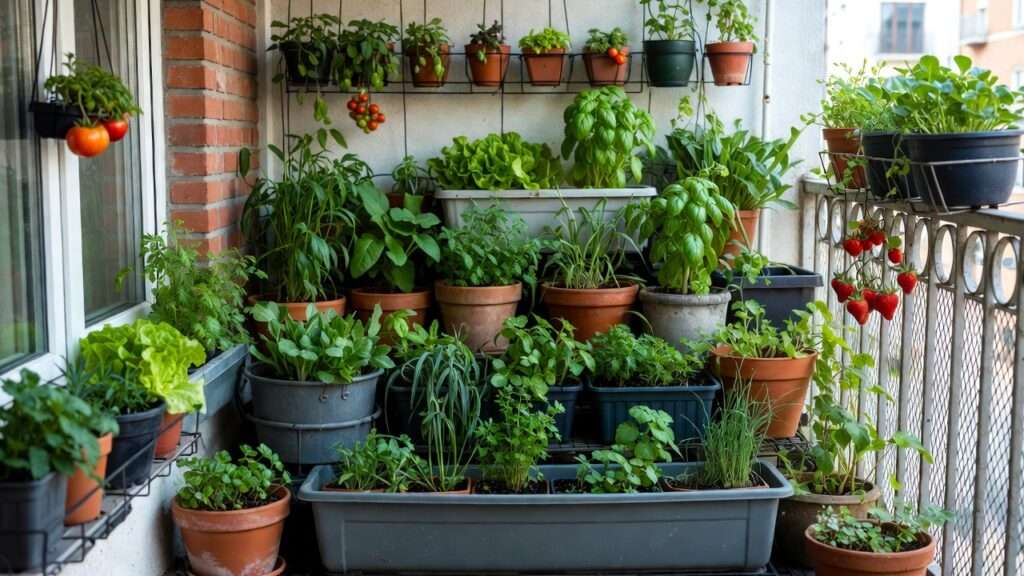
Imagine stepping out onto your modest balcony or patio in the heart of the city, plucking ripe cherry tomatoes, fragrant basil, and crisp lettuce straight from your own thriving green oasis—all while contributing to biodiversity, cutting down on grocery bills, and creating a peaceful retreat amid urban hustle. For millions living in apartments, condos, or small homes without yards, this isn’t a fantasy—it’s achievable through very small-space permaculture for balconies and patios.
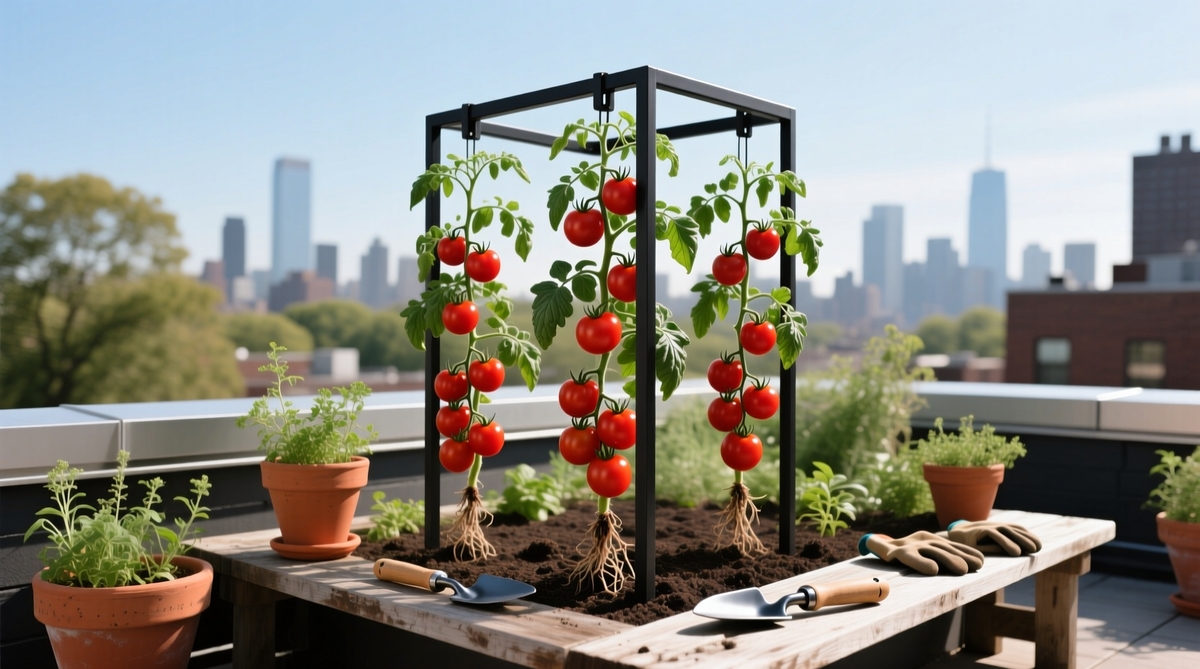
As cities grow denser and concerns about food security, climate resilience, and sustainability intensify, more urban dwellers are turning to balcony and patio gardening. Traditional container gardening works, but permaculture takes it further by designing regenerative, low-maintenance systems that mimic natural ecosystems. This approach emphasizes observing your space, stacking functions (where one element serves multiple purposes), producing no waste, and maximizing yields in limited areas—often under 10 square meters.
In this in-depth guide, we’ll explore how to apply core permaculture principles to transform even the tiniest balcony or patio into a productive, resilient food-growing system. Whether you’re a complete beginner or have some gardening experience, you’ll learn practical steps to grow abundant organic food sustainably, support pollinators, build living soil, and create closed-loop cycles—all while respecting structural limits and rental rules. By the end, you’ll have the tools to start your own micro food forest and enjoy fresh harvests year-round.
Understanding Permaculture in Very Small Spaces
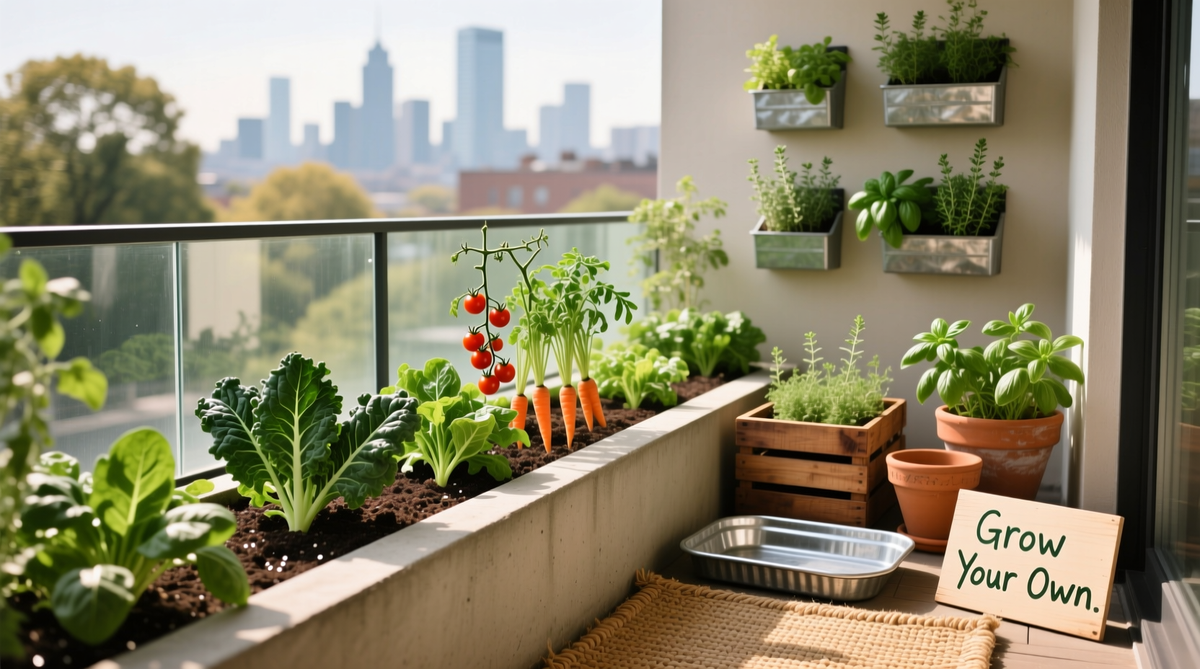
Permaculture, coined by Bill Mollison and David Holmgren, stands for “permanent agriculture” and “permanent culture.” Unlike conventional gardening, which often relies on external inputs like synthetic fertilizers and frequent tilling, permaculture focuses on integration, observation, and self-sufficiency. In very small spaces, this means creating mini-ecosystems where plants, soil life, water, and even beneficial insects work together harmoniously.
The key differences from standard container gardening include:
- Emphasis on polycultures and companion planting rather than monocrops.
- Building living soil with compost, mulch, and microbial life instead of sterile potting mixes.
- Designing for long-term resilience, including drought tolerance and pest resistance through biodiversity.
Challenges in balconies and patios are real: limited floor space, wind exposure (especially on higher floors), reflected heat from walls and glass, strict weight restrictions, poor drainage, and potential shade from overhangs or neighboring buildings. Yet opportunities abound—vertical space is abundant, microclimates can be harnessed (e.g., sunny south-facing walls for heat-loving crops), experimentation is low-risk, and no digging is needed.
With thoughtful design, even a 2×3 meter balcony can yield herbs, greens, fruits, and more, while enhancing mental well-being through connection to nature.
Step 1: Observe and Assess Your Space
The first permaculture principle—”Observe and interact”—is crucial in tiny spaces where small mistakes amplify quickly.
Spend at least a week (ideally a full season) tracking:
- Sunlight patterns: Note hours of direct sun and direction. Use free apps like Sun Seeker or a simple manual log. Most food crops need 6+ hours; tomatoes and peppers thrive with 8+.
- Wind strength and direction: High winds dry soil fast and damage tall plants—use windbreaks like trellised vines.
- Weight capacity: Consult your building’s engineer, lease, or management. Typical modern balconies handle 40–100 pounds per square foot (195–488 kg/m²), but always stay conservative. Distribute weight evenly; avoid concentrating heavy pots in one spot.
- Microclimates: Hot, reflective walls create “heat islands” ideal for Mediterranean herbs; shaded corners suit lettuce or spinach.
- Water access and rainfall: Position rain-catching trays or barrels if allowed.
- Access and zones: Place frequently harvested items (herbs, greens) closest to your door (Zone 1 in permaculture terms).
Create a simple sketch or zone map: Zone 0 (indoors for seedlings), Zone 1 (high-use balcony area), Zone 2 (less frequent edges). Seasonal observation reveals changes—winter sun shifts or summer heat spikes—for better planning.
Step 2: Design Principles Adapted for Tiny Spaces
Apply permaculture’s 12 principles selectively to micro-spaces:
- Catch and store energy: Maximize solar gain with reflective surfaces or positioning; collect rainwater in small trays or diverted downspouts.
- Obtain a yield: Prioritize high-value, compact edibles that provide frequent harvests.
- Use and value renewable resources and services: Opt for upcycled containers (e.g., food-grade buckets), homemade compost tea.
- Produce no waste: Close loops with on-site composting.
- Use edges and value the marginal: Railings, walls, corners, and undersides become prime real estate.
- Integrate rather than segregate: Build plant guilds where species support each other (e.g., pest-repelling flowers with veggies).
In practice, use zoning: Keep high-maintenance or daily-harvest plants near the door. Stack functions—one pot might grow strawberries (yield), provide ground cover (mulch), attract pollinators, and look beautiful.
Layout ideas:
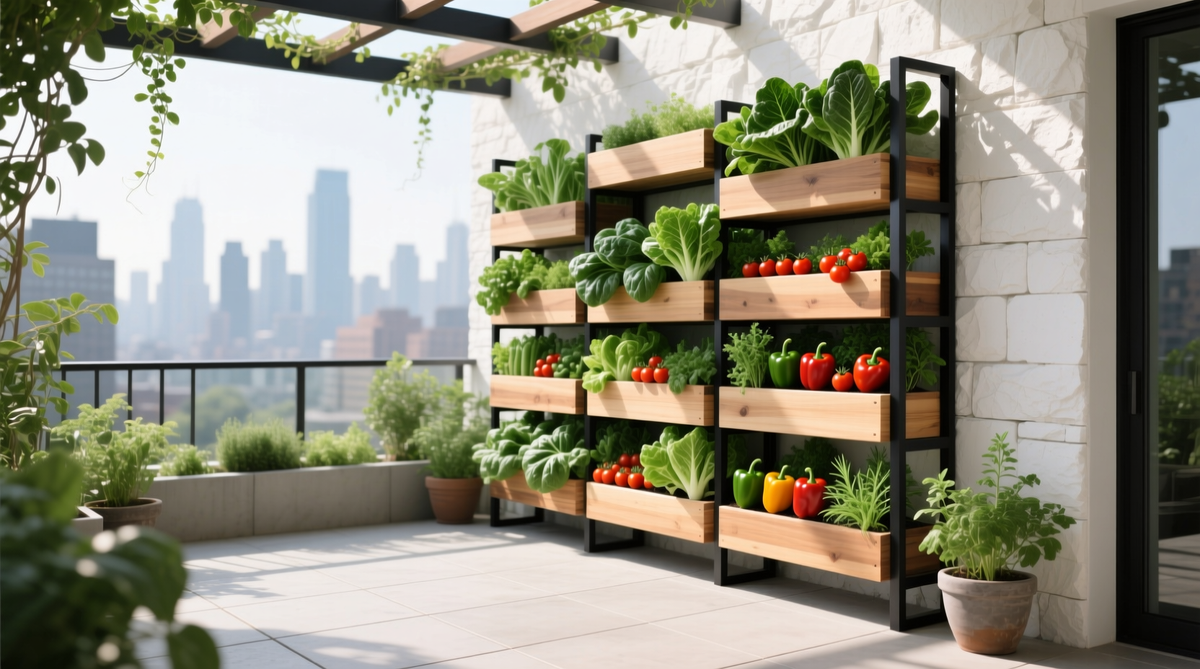
- Vertical towers or stacked shelves for greens.
- Railing planters and hanging baskets for trailing plants.
- Trellises against walls for climbers.
- Tiered systems to create levels and shade lower plants.
These designs turn constraints into advantages, creating abundant, beautiful systems.
Step 3: Choosing Containers, Soil, and Infrastructure
Containers must balance size, weight, durability, and plant needs.
- Lightweight options: Fabric pots (excellent aeration, root pruning), self-watering planters, recycled plastic buckets (drill drainage holes), or grow bags. Avoid heavy ceramic unless weight allows.
- Size matters: Larger pots (10–20+ gallons for fruiting plants) retain moisture better and support bigger yields, but calculate total weight (wet soil ≈ 1 lb per pint).
- Weight-safe practices: Use saucers to catch drips; place pots on pot feet or inverted trays for airflow and even distribution. Stay 10–20% below limits.
Soil is the foundation—avoid cheap, sterile mixes. Build living soil:
- Base: 50% high-quality compost or worm castings + 30% coco coir or peat-free alternative + 20% perlite/vermiculite for drainage.
- Amend with mycorrhizal fungi, rock dust for minerals, and organic slow-release nutrients.
- Maintain fertility: Top-dress with compost, mulch with straw or leaves to suppress weeds and retain moisture.
Water systems:
- Ollas (unglazed clay pots buried for passive watering).
- Drip irrigation kits (timer + emitters for efficiency).
- Greywater diversion if permitted (diluted shower water).
Structures:
- Sturdy trellises, wall pockets, hanging rails, espalier wires for fruit trees.
Step 4: Plant Selection and Guilds for Maximum Yield
The heart of any productive micro-permaculture system lies in smart plant choices and intentional combinations. In very small spaces, every plant must earn its place by delivering high yields, requiring minimal care, tolerating container life, and ideally supporting neighboring plants.
High-yield, compact, balcony-friendly plants
- Herbs — These are the MVPs of small-space gardening. They grow quickly, can be harvested repeatedly, and many are perennial or self-seeding.
- Basil (especially Genovese and Thai varieties)
- Mint (grow in its own pot to contain spreading)
- Oregano, thyme, rosemary, sage (Mediterranean perennials that love heat and poor soil)
- Cilantro/coriander (succession plant every 2–3 weeks)
- Parsley, chives, dill
- Leafy greens — Cut-and-come-again varieties provide near-continuous harvests.
- Lettuce (loose-leaf types like ‘Black Seeded Simpson’)
- Spinach, Swiss chard, kale (dwarf ‘Dwarf Blue Curled’ kale)
- Arugula, mizuna, mustard greens
- Microgreens (radish, pea shoots, sunflower) for ultra-fast production
- Fruiting vegetables — Choose compact, determinate, or dwarf varieties bred for containers.
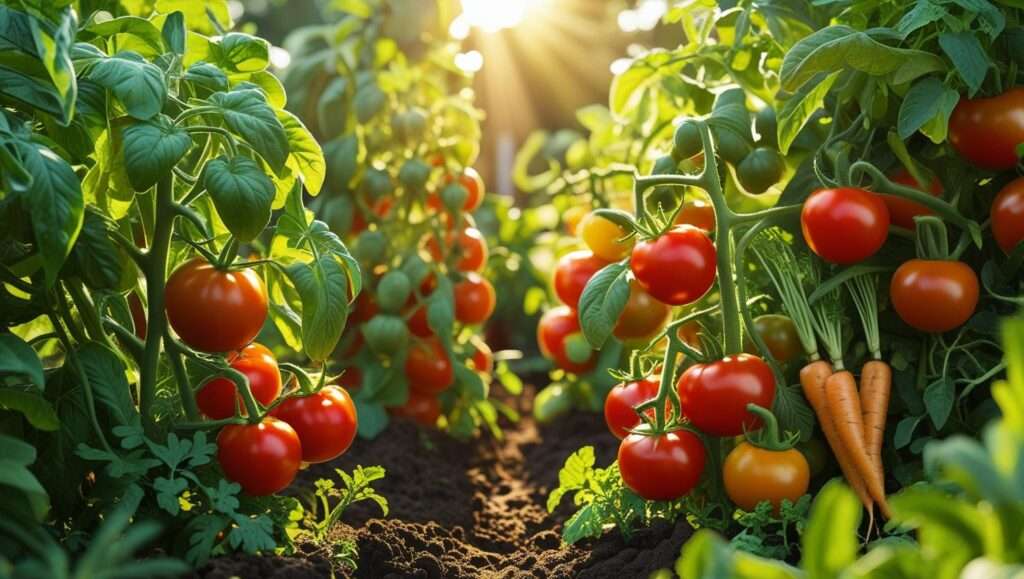
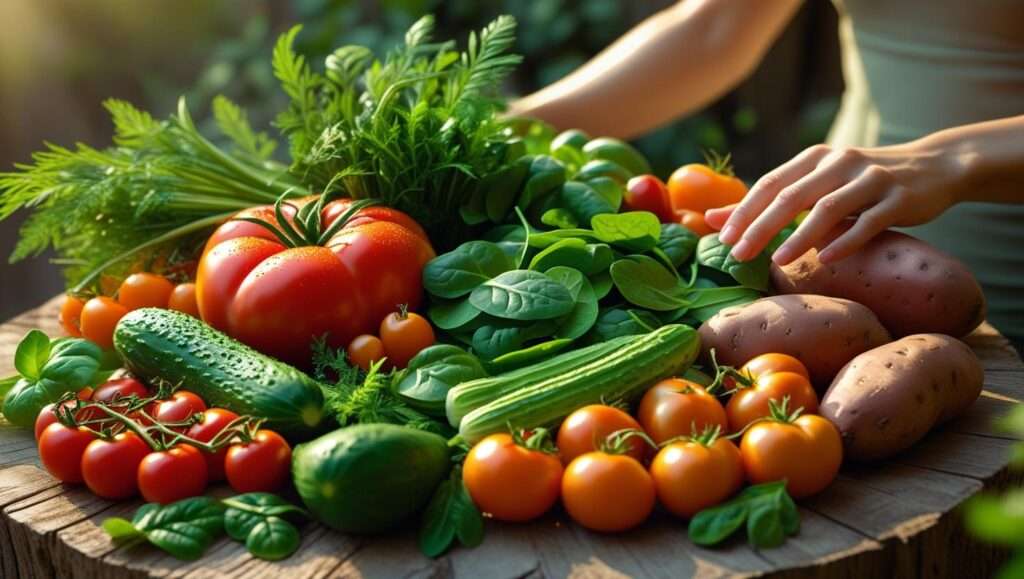
- Cherry tomatoes (‘Sweet 100’, ‘Tiny Tim’, ‘Patio Choice Yellow’)
- Peppers (bell or hot varieties in 5–10 gallon pots)
- Bush beans (‘Provider’, ‘Contender’)
- Dwarf eggplants (‘Fairy Tale’, ‘Patio Baby’)
- Compact cucumbers (‘Bush Pickle’, ‘Spacemaster’)
- Climbers and vertical crops — Essential for stacking production upward.
- Pole beans or runner beans on trellises
- Cucumbers and small melons trained vertically
- Climbing strawberries or everbearing varieties in hanging baskets
- Peas (dwarf or semi-dwarf types)
- Perennial food plants — Invest once for years of returns.
- Strawberries (alpine or everbearing types)
- Dwarf citrus (Meyer lemon, calamondin, kumquat) if you have a sunny, protected spot
- Blueberries (in acidic pots with pine-needle mulch)
- Perennial herbs (rosemary, oregano, thyme)
- Support & beneficial plants — These protect, attract pollinators, and improve soil.
- Nasturtium (edible flowers/leaves, traps aphids)
- Marigolds (repel nematodes and whiteflies)
- Alyssum, calendula, borage (pollinator magnets)
- Garlic or chives (fungal and insect deterrent)
Creating mini-guilds in containers
A guild is a group of plants that mutually benefit one another. In tiny spaces, create “stacked” or “layered” guilds in single large pots or adjacent containers.
Example 1: Tomato Guild (in a 15–20 gallon pot)
- Center: Dwarf or determinate cherry tomato
- Base/understory: Basil (aromatic pest confusion + culinary pairing)
- Edge/trailing: Nasturtium or low-growing marigold
- Optional: Garlic chives around rim for fungal protection
Example 2: Strawberry–Lettuce Guild
- Strawberries as main crop (everbearing for extended harvest)
- Lettuce or spinach tucked underneath for shade tolerance and space efficiency
- Edge flowers (alyssum or trailing nasturtium) for pollinators
Example 3: Pepper–Bean–Herb Guild
- Center: Compact pepper plant
- Climber: Bush or half-runner beans to fix nitrogen
- Edge: Oregano or thyme to deter pests
Succession and intercropping strategies
- Plant fast crops (radish, lettuce) between slower ones (tomatoes, peppers).
- Sow new seeds every 2–3 weeks for continuous supply.
- Use “nurse crops” — quick greens that shade soil until main crop matures.
Seasonal and climate considerations
- Warm season (summer): Tomatoes, peppers, basil, beans, cucumbers.
- Cool season (fall/winter/spring): Kale, spinach, lettuce, peas, overwintered herbs.
- Protect tender perennials with frost cloth or move pots indoors near bright windows during extreme cold.
With these selections and combinations, even a 1–2 m² balcony can produce several kilograms of fresh food annually while fostering biodiversity.
Step 5: Maintenance, Composting, and Pest Management
Permaculture shines in low-input maintenance. The goal is to work smarter, not harder.
Daily/weekly care
- Water deeply but infrequently (check soil moisture 5 cm down).
- Mulch every pot with 2–5 cm of straw, shredded leaves, or coir to retain moisture and feed soil life.
- Prune for airflow and light penetration, especially in dense vertical systems.
- Harvest regularly to encourage more production.
Composting in micro-spaces
- Bokashi: Anaerobic fermentation in a small sealed bucket; digests kitchen scraps (including meat/dairy) quickly.
- Vermicomposting: Red wiggler worms in a 10–20 L bin under a bench or in a corner; produces rich castings and tea.
- Compost tea: Brew aerated compost tea weekly to feed plants and soil microbes.
- Leaf mold tray: Collect fallen leaves (or ask neighbors) for slow, fungal-rich compost.
Natural pest and disease management
- Prevention first: Healthy soil, good airflow, diverse planting.
- Hand-pick pests early (aphids, caterpillars).
- Companion plants: Already included in guilds.
- Sprays: Neem oil, insecticidal soap, garlic-chili spray (homemade).
- Beneficial insects: Release ladybugs or lacewings if infestations occur.
- Common issues: Powdery mildew (improve airflow, milk spray), blossom-end rot (consistent watering + calcium).
Regular observation lets you catch problems before they escalate.
Step 6: Advanced Techniques and Scaling Up
Once basics are established, experiment with:
- Micro-aquaponics: Small fish tank + grow bed (only if weight and regulations allow).
- Seed saving: Collect from open-pollinated varieties to reduce costs long-term.
- Propagation: Take cuttings (herbs, strawberries), divide perennials.
- Indoor extension: Move pots inside or start seedlings on sunny windowsills during off-seasons.
- Community sharing: Swap surplus seedlings, produce, or knowledge with neighbors.
These steps turn a simple balcony into a resilient, evolving system.
Real-Life Case Studies and Examples
Seeing real-world examples helps bridge the gap between theory and practice. Here are a few inspiring, well-documented balcony and patio permaculture transformations that show what’s possible in very small urban spaces.
Case 1: The Fifth-Floor Nairobi Food Oasis A renter in Nairobi, Kenya, transformed a 4 m² concrete balcony into a highly productive micro food forest over three years. Starting with observation of intense equatorial sun and seasonal dry spells, they installed lightweight fabric pots and vertical trellises made from salvaged wire mesh. Key plants included:
- Climbing beans and passionfruit on the railings
- Swiss chard, kale, and amaranth in stacked tiers
- Dwarf pawpaw and multiple herbs (rosemary, mint, lemongrass)
- Companion flowers (marigolds, zinnias) for pollinators
They used bokashi composting for kitchen scraps and captured roof runoff in small trays. Annual yield: enough greens and herbs to cover 60–70% of household vegetable needs, plus surplus shared with neighbors. The system also noticeably reduced balcony temperature during heatwaves.
Case 2: Montana Year-Round Balcony Evolution In Bozeman, Montana (cold winters, short growing season), a permaculture enthusiast adapted their 6 m² south-facing balcony for four-season production.
- Summer: tomatoes, peppers, basil, bush beans in self-watering containers
- Fall/winter: cold-hardy greens (kale, spinach, mache), overwintered rosemary and thyme under row cover fabric
- Perennials: strawberries and dwarf blueberries in acidic pots
- Worm bin tucked under a bench for year-round castings
They used thermal mass (dark-colored pots and water-filled jugs) to moderate temperature swings. Result: fresh greens harvested even in January, with minimal supplemental lighting from a small grow light during the darkest months.
Case 3: Copenhagen Dual-Balcony Micro Food Forest A couple in Copenhagen combined two adjacent balconies (total ~8 m²) into an integrated system.
- One balcony focused on annuals and heavy feeders (tomatoes, cucumbers, zucchini in large fabric pots)
- The other on perennials and support plants (strawberries, herbs, dwarf fruit trees, pollinator meadow in wall pockets)
- Rainwater diversion from balcony overhangs fed ollas and drip lines
- Vertical espalier apple and pear trees trained flat against the wall
After five years, the system produces fruit, vegetables, herbs, and edible flowers nearly year-round, supports dozens of bee and butterfly species, and serves as a demonstration space for local urban gardening workshops.
These examples show that success comes from starting small, observing carefully, iterating over seasons, and focusing on stacking functions rather than maximizing single-crop output.
Conclusion
Very small-space permaculture for balconies and patios proves that you don’t need acres—or even a backyard—to grow meaningful amounts of food, regenerate soil life, support pollinators, and live more sustainably. By observing your unique microclimate, applying adapted permaculture principles, choosing the right plants and containers, building living soil, closing nutrient loops, and maintaining with minimal effort, even the tiniest urban outdoor area can become a productive, beautiful, regenerative ecosystem.
Start today: Spend a week observing your space, sketch a simple layout, plant one or two high-yield guilds (a tomato-basil-nasturtium pot is an excellent beginner project), and build from there. Each small success compounds—your balcony will grow more abundant, resilient, and joyful with every season.
You’re not just gardening; you’re designing a tiny piece of a healthier, more self-reliant future—one pot at a time.
Frequently Asked Questions (FAQs)
How much food can I realistically grow on a small balcony or patio? It depends on size, sunlight, and design, but realistic yields include: 5–15 kg of greens and herbs annually on a 2–4 m² space, plus several kilograms of fruiting crops (tomatoes, beans, strawberries). With good vertical use and succession planting, many urban permaculturists cover 30–70% of their fresh vegetable needs.
Is it safe weight-wise for my balcony? Always verify your building’s load capacity first (ask management or an engineer). Stay well below limits—most people safely manage 150–300 kg total distributed load on average balconies by using lightweight fabric pots, avoiding over-saturation, and spreading weight evenly.
What are the best beginner plants for very small spaces? Start with: cherry tomatoes (‘Tiny Tim’ or ‘Patio Choice’), basil, lettuce mix, strawberries, bush beans, and herbs like mint, oregano, and chives. These are forgiving, productive, and easy to source.
How do I water when I’m away for a week? Use ollas, self-watering pots, or a simple gravity-fed drip system with a timer. Group plants by water needs, mulch heavily, and place saucers under pots to reduce evaporation.
Can I do permaculture on a shady balcony? Yes—focus on shade-tolerant crops: lettuce, spinach, kale, Swiss chard, mint, parsley, chives, ferns (for aesthetics), and native woodland plants. Vertical placement near railings can catch more light.
Do I need special permission from my landlord? Usually not for lightweight, non-permanent setups, but check your lease for restrictions on hanging items, water features, or structural attachments. Emphasize removable, non-damaging systems.
How do I keep bugs from taking over? Prevention beats cure: diverse planting, healthy soil, good airflow, companion plants (nasturtium, marigold), and regular inspection. Hand-pick or use neem/soap sprays only when needed.
Can I grow fruit trees on a balcony? Yes—dwarf citrus (Meyer lemon, calamondin), dwarf blueberries, columnar apples, or espaliered fruit trees work well in 15–25 gallon pots with proper sun and winter protection.