-
Partial Shade: Areas receiving 3 to 6 hours of direct sun per day, ideally during the cooler morning hours before the intense afternoon heat sets in.
-
Dappled Shade: Sunlight filtered through an overhead tree canopy, creating shifting pockets of light and shadow throughout the day.
-
Full or Deep Shade: Areas receiving less than 3 hours of direct sunlight daily, typically found along north-facing walls, under dense evergreen trees, or beneath covered porches.
Quick Recommendation & Editor’s Pick Matrix
| Award Category | Recommended Product | Key Feature | Best For |
| Best Overall Perennial | Proven Winners ‘Dressed Up’ Coral Bells (Heuchera) | Ruffled obsidian foliage with delicate bloom spires | Border edges, year-round structure, and hummingbirds |
| Best Classic Bloom & Foliage | Mixed Color Hosta Perennial Collection | Broad variegated leaves topped by lavender flower stalks | Indestructible ground cover and low-maintenance beds |
| Best Long-Season Annual | Trailing Torenia (Wishbone Flower) & Wax Begonia Combo | Non-stop trumpet-shaped blooms from spring to frost | Shaded hanging baskets, window boxes, and containers |
| Best for Deep & Dappled Shade | Emerald Goddess Garden Store Live Toad Lily (Tricyrtis hirta) | Exotic, orchid-like speckled purple blossoms | Late-summer to fall color along shaded walkways |
2. Buyer’s Guide: How to Choose the Best Shade Flowers for Your Space
Selecting plants for low-light spaces requires looking beyond vibrant blooms to understand the unique environment created by shade structures and canopy covers. A successful shade garden balances soil health, moisture retention, and plant hardiness to create a self-sustaining ecosystem.
Hardiness Zones & Microclimates
Before selecting plants, cross-reference your site with the USDA Plant Hardiness Zone Map (covering Zones 3 through 9 across most North American regions). Shade environments alter ambient temperatures:
-
Thermal Insulation: Shaded areas under deep structures stay cooler during summer peaks, delaying bloom times slightly compared to full-sun beds.
-
Winter Protection: Overhead canopies can protect delicate foliage from early frost damage, keeping the surrounding ground slightly warmer in late autumn.
Soil Health & Moisture Dynamics
Plants growing under established trees face severe root competition for nutrients and moisture.
-
Organic Matter: Mix 2 to 4 inches of well-rotted leaf mold, aged compost, or pine bark into the topsoil to increase soil porosity and organic content.
-
Drainage: Shaded soils evaporate water much slower than sunny beds. Soil must drain freely to prevent root rot in plants like Heuchera and Brunnera.
-
Hydration Management: Rain shadows created by roof eaves or dense leaf canopies can prevent natural rainfall from reaching the soil, requiring consistent drip irrigation or targeted hand-watering.
Live Plants vs. Bulbs vs. Seeds
-
Potted Live Plants: Offer established root systems for maximum survival in competitive soil environments. Recommended for perennials like Hostas and Coral Bells.
-
Bareroots & Bulbs: Cost-effective choice for bulk plantings (e.g., Astilbe or Trillium). They take 1 to 2 seasons to establish full density.
-
Seeds: Best suited for fast-growing annuals like Torenia (Wishbone Flower) or Impatiens, allowing you to fill large container volumes economically.
Designing with Foliage Contrast and Bloom Schedules
Because shade flowers often have delicate or intermittent bloom windows, structure your beds around foliage texture first:
-
Anchor Layer: Use broad, bold leaves (Hostas, Brunnera) as visual anchors.
-
Textural Layer: Intersperse fine, feathery foliage (Astilbe, Ferns) to add movement and contrast.
-
Accent Layer: Place arching spires (Actaea, Tricyrtis) toward the back or along pathways to create vertical interest.
3. Product Comparison Summary
The following summary table highlights top-rated shade options across key practical metrics. For clean mobile viewing, this matrix focuses on light requirements, growth habit, and overall user ratings.
| Product Name | Light & Height | Key Benefit | User Rating |
| Proven Winners ‘Dressed Up’ Coral Bells |
Part to Full Shade
• Height: 12–18″ |
Season-long dark foliage with delicate bloom spires | 4.8 / 5 |
| Emerald Goddess Live Toad Lily |
Dappled to Full Shade
• Height: 24–36″ |
Exotic orchid-like blossoms from late summer to fall | 4.6 / 5 |
| Mixed Color Hosta Perennial Collection |
Part to Deep Shade
• Height: 10–28″ |
Indestructible variegated leaves; excellent ground cover | 4.5 / 5 |
| Pink Spike Bugbane (Actaea racemosa) |
Full to Dappled Shade
• Height: 4–6 ft |
Imposing vertical height with sweet-smelling flower wands | 4.7 / 5 |
| Trailing Torenia (Wishbone Flower) Seeds |
Part to Full Shade
• Height: 6–10″ |
Continuous trumpet blooms ideal for hanging baskets | 4.4 / 5 |
| Brunnera macrophylla ‘Jack Frost’ |
Part to Full Shade
• Height: 12–15″ |
Silver heart leaves that illuminate dark garden corners | 4.7 / 5 |
| Astilbe chinensis ‘Fanal’ (False Spirea) |
Part to Medium Shade
• Height: 20–24″ |
Feathery cardinal-red plumes thriving in damp soils | 4.6 / 5 |
4. Deep-Dive Product Reviews & Analyses
Proven Winners ‘Dressed Up’ Coral Bells (Heuchera)
The ‘Dressed Up’ series from Proven Winners represents a high-water mark in breeding for decorative shade perennials. Featuring heavily ruffled, dark obsidian-to-plum leaves, this plant maintains its structural form from early spring through severe winter freezes in mild zones. During late spring and early summer, slender dark stems rise above the mounded foliage, holding delicate cream-colored, bell-shaped flowers that attract hummingbirds.

-
Price: $36.90 (Varies by container size and vendor)
-
Key Features & Benefits:
-
Exceptional cold hardiness across USDA Zones 4 through 9.
-
Heavily ruffled leaf margins add dramatic shadow depth and texture to garden edges.
-
Natural resistance to deer and rabbits due to dense leaf tissue.
-
-
Pros & Cons:
-
Pros: Year-round foliage color; low water needs once established; retains color in deep shade.
-
Cons: Root crowns can heave in heavy winter freeze-thaw cycles if not mulched properly.
-
-
Amazon Customer Ratings & Reviews: 4.8 out of 5 stars. Verified buyers frequently highlight the exceptional root development upon arrival and the plant’s ability to hold up against summer heat without leaf scorching.
-
Why It’s a Good Choice: It solves the common problem of dull garden borders by delivering continuous leaf color long after spring blooms fade.
-
Ideal Use Case: Excellent choice for front-of-border plantings, walkway edging, or elevated patio containers in partial shade.
Emerald Goddess Garden Store Live Toad Lily (Tricyrtis hirta)
Toad Lilies are among the most unique flowering perennials for woodland gardens. Native to shaded stream banks and rocky cliffs, Tricyrtis hirta produces arching, leafy stems lined with star-shaped, orchid-like flowers. The blooms feature pale white to lavender petals heavily speckled with deep purple spots, providing unexpected color during late summer and fall when most shade perennials have finished blooming.

-
Price: $32.99
-
Key Features & Benefits:
-
Late-season bloom period bridges the color gap between late August and mid-October.
-
Thrives in dappled to full shade without losing structural stem strength.
-
Unique floral form creates a high-end, collector-plant look along garden paths.
-
-
Pros & Cons:
-
Pros: Unmatched floral detail up close; highly attractive to late-season pollinators.
-
Cons: Susceptible to leaf browning if allowed to dry out during peak summer heat.
-
-
Amazon Customer Ratings & Reviews: 4.6 out of 5 stars. Reviewers appreciate the healthy live plant delivery and note that while slow to start in spring, it expands rapidly by late summer.
-
Why It’s a Good Choice: Offers a rare orchid-like visual aesthetic in low-light environments without requiring delicate greenhouse conditions.
-
Ideal Use Case: Perfect for naturalized woodland beds, courtyard gardens, or raised stone planters where the intricate flowers can be observed up close.
Premium Mixed Color Hosta Live Plant / Seed Collection
Hostas remain the gold standard for reliable, heavy-duty shade foliage. This collection brings together variegated varieties featuring heart-shaped leaves with cream, gold, lime, and deep forest-green patterns. In midsummer, tall flower scapes emerge above the foliage canopy, displaying pale lavender and white trumpet flowers that light up dark garden beds.

-
Price: $23.99
-
Key Features & Benefits:
-
Extreme hardiness across USDA Zones 3 through 9, enduring harsh northern winters.
-
Dense leaf canopy suppresses competitive weeds once established.
-
Versatile sizing options ranging from compact edging hostas to large specimen mounds.
-
-
Pros & Cons:
-
Pros: Nearly indestructible once rooted; thrives in full, dense shade.
-
Cons: Leaves are attractive to slugs, snails, and deer if untreated.
-
-
Amazon Customer Ratings & Reviews: 4.5 out of 5 stars. With hundreds of positive reviews, buyers praise this set for providing quick ground coverage and transforming difficult soil patches under tree lines.
-
Why It’s a Good Choice: It provides maximum foliage volume and dependable summer flower stalks for minimal investment and maintenance.
-
Ideal Use Case: Ideal for foundation plantings on north-facing walls, erosion control on shaded slopes, or low-maintenance rental properties.
Pink Spike Bugbane / Black Cohosh (Actaea racemosa)
Actaea racemosa (formerly Cimicifuga) is a towering native perennial engineered for the back rows of shaded beds. It sprouts dark purplish-bronze foliage topped by graceful, 4- to 6-foot-tall floral spires in late summer. These bottlebrush-like spires carry sweet-scented white and pale-pink flowers that sway gently in light breezes, bringing structural motion to dim garden corners.

-
Price: $69.99
-
Key Features & Benefits:
-
Reaches heights up to 6 feet, providing vertical architecture in full shade.
-
Deeply cut purple foliage adds rich color contrast next to green hostas and ferns.
-
Fragrant blooms attract beneficial pollinators, including native bees and butterflies.
-
-
Pros & Cons:
-
Pros: Rare height option for deep shade; deer-resistant foliage.
-
Cons: Requires a wider footprint (2 to 3 feet spread) and consistent soil moisture.
-
-
Amazon Customer Ratings & Reviews: 4.7 out of 5 stars. Customers praise its architectural presence and note that its sweet perfume fills shaded patio spaces during August evenings.
-
Why It’s a Good Choice: Solves the challenge of finding dramatic, tall backdrop plants that thrive without direct sunlight.
-
Ideal Use Case: Best planted along back property fences, woodland edges, or behind lower-growing hostas and ferns.
Trailing Torenia (Wishbone Flower) Shade Annual Seeds
Torenia, commonly known as the Wishbone Flower, is an exceptional annual engineered for continuous summer color in low-light environments. The plant produces compact, mounding-to-trailing stems covered in trumpet-shaped flowers with velvety petals in shades of indigo, magenta, rose, and white, often featuring yellow throat markings. Unlike standard Impatiens, Torenia exhibits superior heat and humidity tolerance without succumbing to downy mildew.

-
Price: $7.92
-
Key Features & Benefits:
-
Non-stop blooming performance from late spring until the first autumn frost.
-
Trailing growth habit creates lush cascades over container rims and hanging baskets.
-
Strong resistance to heat, humidity, and common fungal leaf diseases.
-
-
Pros & Cons:
-
Pros: Fast-growing; economical way to fill multiple container planters; highly attractive to hummingbirds.
-
Cons: As an annual, it requires re-sowing or replanting every spring.
-
-
Amazon Customer Ratings & Reviews: 4.4 out of 5 stars. Reviewers highlight its high germination rate and praise its ability to keep blooming continuously through sticky mid-summer humidity.
-
Why It’s a Good Choice: Delivers the highest density of bright floral blooms per dollar spent for shaded balconies and covered porches.
-
Ideal Use Case: Hanging baskets, shaded window boxes, and mixed patio container rims where trailing habit is desired.
Brunnera macrophylla ‘Jack Frost’ (Siberian Bugloss)
Brunnera macrophylla ‘Jack Frost’ is celebrated for its striking, heart-shaped foliage covered in a shimmering silver veil with contrasting dark green veins and margins. In early spring, sprays of tiny, baby-blue flowers reminiscent of forget-me-nots rise above the foliage mound. The silver leaf surface reflects subtle ambient light, visually brightening up shadowy corners under dense tree canopies.

-
Price:
-
Key Features & Benefits:
-
Highly reflective silver leaf patterns illuminate dark garden zones.
-
Rough, hairy leaf texture provides built-in resistance against deer and rabbits.
-
Exceptionally cold-hardy down to USDA Zone 3.
-
-
Pros & Cons:
-
Pros: Outstanding spring bloom combined with season-long decorative foliage; long-lived perennial.
-
Cons: Leaves can scorch if exposed to harsh afternoon direct sunlight.
-
-
Amazon Customer Ratings & Reviews: 4.7 out of 5 stars. Buyers frequently comment on the strong plant vigor upon arrival and praise its ability to light up dark evergreen understories.
-
Why It’s a Good Choice: Combines delicate spring blue flowers with luminous all-season foliage that brightens dim landscapes.
-
Ideal Use Case: Woodland walkways, shaded rock gardens, and massed ground cover under deep shade canopies.
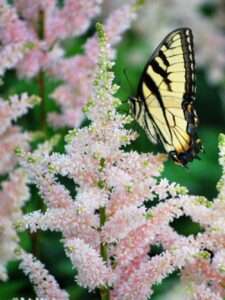
Astilbe chinensis ‘Fanal’ (False Spirea) Live Roots/Plants
‘Fanal’ is one of the most vibrant crimson-red varieties in the Astilbe family. It features feathery, plume-like floral spikes held high above glossy, bronze-green fern-like foliage during midsummer. Unlike soft pastel shade flowers, ‘Fanal’ brings high-contrast focal color into shadowy garden beds while thriving in rich, damp soils.
-
Price:
-
Key Features & Benefits:
-
Dense, feathery flower plumes provide striking vertical texture.
-
Performs exceptionally well in damp, boggy soils where other roots rot.
-
Dried flower heads retain attractive structural form into autumn and winter.
-
-
Pros & Cons:
-
Pros: Intense cardinal-red color payoff; completely ignored by deer and rabbits.
-
Cons: Requires consistently moist soil; leaves dry out quickly in arid conditions.
-
-
Amazon Customer Ratings & Reviews: 4.6 out of 5 stars. Customers praise its rich color intensity and note its success along shaded pond borders and rain garden zones.
-
Why It’s a Good Choice: It solves the challenge of finding vivid, saturated red blooms that perform reliably without full sun.
-
Ideal Use Case: Rain gardens, shaded water-feature margins, and damp woodland borders.
5. Shade Garden Planting & Maintenance Playbook
To ensure your shade-loving flowers thrive year after year, implement these core cultural practices:
1. Soil Preparation & Aeration
-
Work a generous 2- to 4-inch layer of organic compost, leaf mold, or shredded bark into the top 6 inches of soil prior to planting.
-
Avoid heavy mechanical tilling around mature tree bases to prevent damaging major feeder roots; hand-dig individual planting pockets instead.
2. Watering Dynamics & Drip Systems
-
Soil under mature tree canopies dries out fast due to root competition. Water deeply early in the morning, focusing on the root zone rather than wet foliage to prevent fungal leaf spot.
-
Use drip irrigation hoses buried beneath 2 inches of organic mulch to deliver water directly to roots with minimal evaporation loss.
3. Nutrient Strategy
-
Apply a balanced, slow-release granular fertilizer (e.g., 10-10-10) in early spring as new growth emerges.
-
Avoid high-nitrogen fertilizers late in the growing season, which force tender foliage growth that can be damaged by autumn frosts.
4. Organic Pest Management
-
Protect tender spring shoots (Hostas, Brunnera) from slugs and snails using organic iron-phosphate bait pellets or copper tape barriers around containers.
6. Frequently Asked Questions
Can flowers grow in full shade with no direct sunlight?
Yes. Many perennials such as Hostas, Brunnera, Actaea, and Toad Lilies thrive on indirect scattered ambient light. While they do not receive direct sun rays, they absorb reflected overhead light to fuel growth and bloom production.
What is the longest-blooming shade flower?
For continuous floral displays from spring until frost, shade-tolerant annuals like Torenia (Wishbone Flower), Wax Begonias, and Tuberous Begonias perform best. Among perennials, Heuchera provides continuous foliage color year-round, while Astilbe and Toad Lilies offer long multi-week bloom windows.
How do I keep deer from eating my shade flowers?
Choose shade species with built-in natural defenses. Plants with textured, rough, or leathery leaves (Brunnera, Heuchera), toxic sap (Astilbe), or strong aromatic oils (Actaea racemosa) are naturally unpalatable to deer and rabbits.
What shade flowers work best in pots and hanging baskets?
Trailing Torenia, Tuberous Begonias, Coleus, and trailing Heuchera varieties are ideal for container cultivation. Ensure containers have bottom drainage holes and use a lightweight, peat-based potting mix formulated to hold moisture without compacting.
7. Final Verdict & Summary Recommendations
Transforming shaded garden spaces into vibrant landscape features comes down to choosing plants engineered for low-light survival:
-
For All-Around Excellence & Foliage Color: Proven Winners ‘Dressed Up’ Coral Bells (Heuchera) delivers unrivaled season-long beauty with zero fuss.
-
For Indestructible Ground Coverage: Mixed Color Hosta Collections provide dependable volume, weed suppression, and summer flower spikes across difficult soil patches.
-
For Maximum Container Blooms: Trailing Torenia Seeds offer the most economical, high-yield blooming performance for porch baskets and window boxes.
-
For Exotic Late-Season Color: Emerald Goddess Toad Lilies extend your garden’s visual interest well into autumn with intricate orchid-like blossoms.
Check current availability and seasonal plant pricing on Amazon to lock in your live plants and seeds for the upcoming planting season.