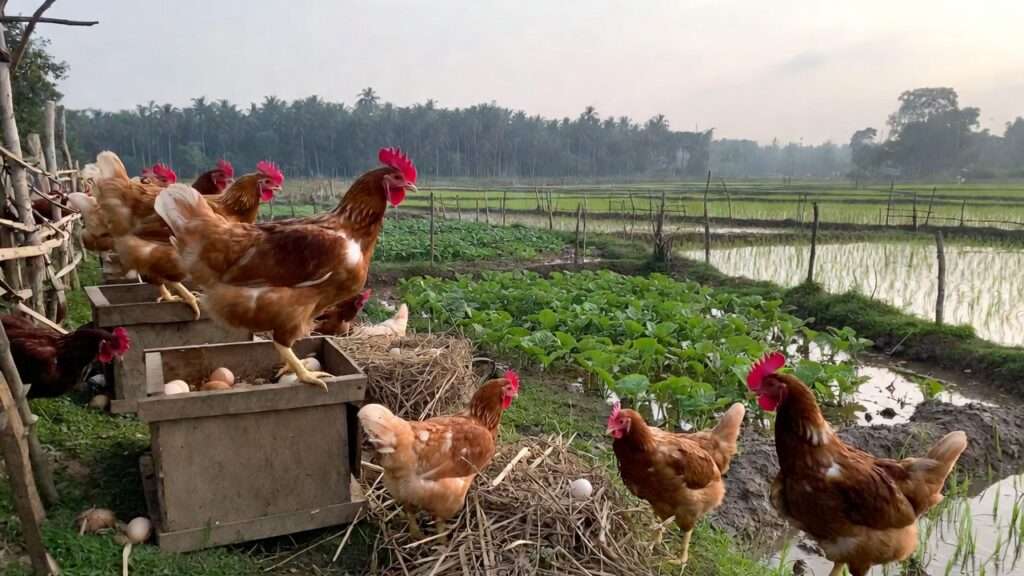
Imagine this: It’s early morning during the post-monsoon season. Your pullets—those young hens you’ve raised from chicks without any artificial lights or forced feeding—are scratching happily in the yard. Their combs are starting to flush red, and you’ve noticed them lingering near the nesting boxes. Yet, week after week passes with no eggs in sight. As a smallholder farmer or homesteader relying on natural methods, the wait can feel endless, especially when every egg counts for family nutrition, income from local sales, or integrating your flock into vegetable plots and rice paddies for better soil fertility.
When hens start laying eggs naturally, the timeline often surprises new keepers. Unlike commercial operations that push onset as early as 16 weeks with supplemental lighting and high-protein feeds, natural systems depend on genetics, seasonal daylight, balanced nutrition from forage and scraps, and low-stress environments. In tropical climates like Bangladesh, where daylight hours hover around 11–13 hours year-round with peaks during summer, hens mature more gradually but often produce hardier, longer-lasting layers with richer yolks from diverse foraging.
This comprehensive guide draws from university extension research (such as Wisconsin Livestock and UF/IFAS), regenerative agriculture principles, and practical experiences from small-scale systems in South Asia. We’ll cover realistic timelines by breed, clear physical and behavioral signs to watch for, factors that influence onset, preparation steps, and—crucially—how to time your hens’ maturity for seamless integration into crop rotation strategies. Whether you’re managing a backyard flock or scaling up regenerative practices, understanding natural egg production helps maximize productivity, improve soil health, reduce input costs, and build a more resilient farm ecosystem.
Quick reference table: Average natural onset ages for common breeds
- ISA Brown / Golden Comet: 16–20 weeks
- Rhode Island Red / Leghorn: 18–22 weeks
- Australorp / Sussex: 20–24 weeks
- Orpington / Brahma (heritage): 22–28 weeks
- Local desi / Sonali crosses (common in Bangladesh): 20–26 weeks
By the end, you’ll know exactly what to expect and how to turn waiting into strategic planning.
Understanding Natural Egg Laying in Backyard and Regenerative Systems
“Natural” laying means no artificial acceleration: no 14–16 hours of supplemental light in winter, no hormone boosters, and reliance on seasonal photoperiod, natural forage, kitchen scraps, and balanced homemade or commercial feeds. In backyard setups, hens follow their biological clock, influenced by ancestral instincts for survival in variable conditions.
This contrasts sharply with commercial hybrid systems, where breeds like ISA Browns might lay by 16 weeks under controlled conditions. In natural setups, the same birds often delay 2–6 weeks but develop stronger immunity, better feather quality, and more consistent long-term production (often 200–280 eggs/year without burnout).
In regenerative agriculture—especially relevant for Bangladesh’s smallholder farms—this natural approach aligns perfectly with holistic management. Poultry contributes to nutrient cycling, pest suppression, and soil aeration without synthetic inputs, supporting sustainable intensification amid climate variability and rising feed costs.
Typical Timeline: When Do Hens Start Laying Eggs Naturally?
Most backyard hens begin laying between 18–24 weeks (about 4–6 months) under truly natural conditions with 12+ hours of daylight, good nutrition (16–18% protein grower-to-layer transition), and minimal stress.
Variation comes from multiple factors:
- Breed genetics — The biggest driver. Hybrids mature faster; heritage breeds take longer for robust bodies.
- Seasonal daylight — In Barishal’s latitude (~22–23°N), daylight ranges from ~10.5 hours in December to ~13.5 in June. Longer summer/monsoon days trigger earlier onset naturally.
- Nutrition — Adequate protein, calcium, and forage access speed maturity.
- Health — Parasites, overcrowding, or heat stress can delay by weeks.
Timeline by Popular Breeds (Natural Onset Estimates)
Here’s a practical breakdown based on extension data and backyard reports, adjusted for natural (non-light-supplemented) conditions:
- Fast-maturing hybrids (popular for backyard productivity):
- ISA Brown / Golden Comet / Red Star: 16–20 weeks. These often hit point-of-lay earliest, producing 280–320 brown eggs/year naturally.
- Standard productive breeds:
- Rhode Island Red: 18–22 weeks (deep mahogany strains may lean toward 20–24). Reliable 250–300 brown eggs/year.
- Leghorn (White): 18–22 weeks. Excellent white egg layers (280+).
- Australorp: 20–22 weeks. Up to 300 large brown eggs.
- Heritage / dual-purpose (slower but hardy):
- Orpington / Buff Orpington: 22–28 weeks. Fluffy, calm birds; 200–250 tinted eggs.
- Brahma / Cochin: 24–28+ weeks. Large, cold-tolerant; moderate layers.
- Sussex: 20–24 weeks. Good foragers.
- Local-adapted breeds (Bangladesh-relevant):
- Sonali (improved desi hybrid): 20–24 weeks. Developed for rural systems; good scavenging and 150–200 eggs/year.
- Desi / Non-descript / Naked Neck: 22–26 weeks. Thrives on forage; 80–150 eggs/year but highly resilient to heat/parasites.
- Aseel influences: Often 24+ weeks; more dual-purpose.
Table: Breed Comparison (Natural Conditions)
| Breed | Average Natural Onset | First Egg Notes | Annual Egg Estimate (Natural) | Suitability for BD Backyard |
|---|---|---|---|---|
| ISA Brown | 16–20 weeks | Small initially, quick ramp-up | 280–320 brown | High productivity |
| Rhode Island Red | 18–22 weeks | Consistent medium-large | 250–300 brown | Versatile, hardy |
| Leghorn | 18–22 weeks | White eggs, high volume | 280+ white | Excellent forager |
| Orpington | 22–28 weeks | Larger eggs, broody tendency | 200–250 tinted | Calm, good in small spaces |
| Sonali / Desi crosses | 20–26 weeks | Variable, strong shells | 150–200 brown | Heat-tolerant, low-input |
Physical and Behavioral Signs Your Hens Are About to Lay
One of the most rewarding moments in backyard poultry keeping is noticing the first clear signals that your pullets are transitioning into full layers. These signs usually appear 1–4 weeks before the very first egg, giving you time to prepare nesting areas, boost calcium, and plan crop rotation timing.
Visible Physical Changes
The most reliable indicators are external and easy to spot with daily observation:
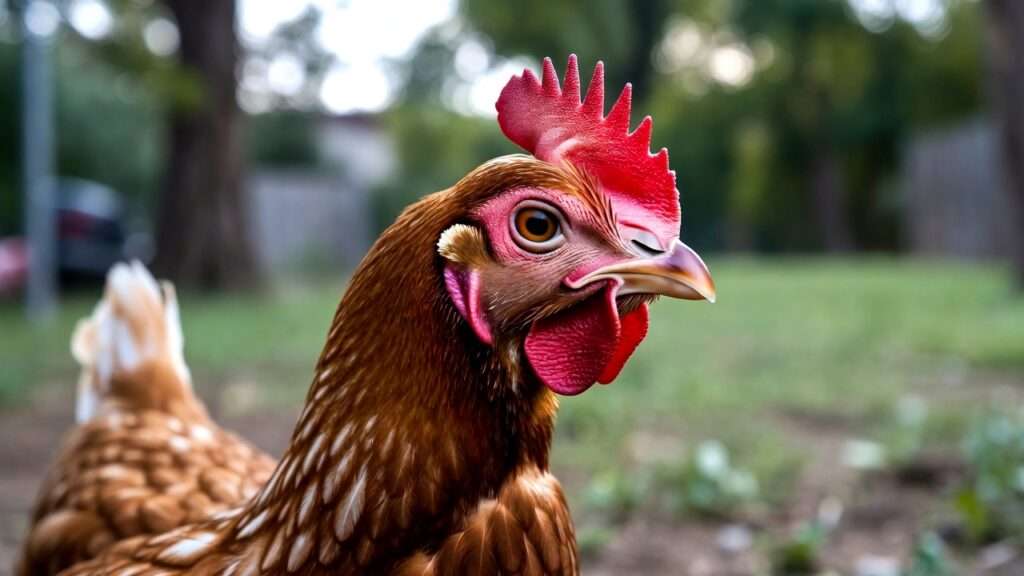
- Comb and wattle development A young pullet’s comb starts small, pale, and somewhat flat. As she approaches lay, it grows larger, thicker, and turns a vibrant cherry-red (or deep pink in some breeds). The wattles under the beak follow the same pattern—swelling and reddening noticeably. This change is driven by rising estrogen levels and is one of the earliest and most consistent signs (often visible by 16–20 weeks in faster breeds).
- Pelvic bone spacing Gently feel the two pubic (pelvic) bones just above the vent with your fingers. In non-laying pullets, these bones are close together—often only enough space for one finger. When a hen is close to laying, the gap widens to allow an egg to pass; you should be able to fit two fingers side-by-side (about 2–3 cm). This is a very accurate physical check and widely used by experienced farmers.
- Vent changes The vent becomes larger, softer, and more moist. The surrounding feathers may appear slightly damp or ruffled from increased gland activity.
- Overall body condition Many pullets “fill out” noticeably—the abdomen becomes rounder and softer as internal reproductive organs develop.
Behavioral Clues
Hens instinctively prepare for laying even before the physical changes peak:
- Squatting / submissive posture When you approach or reach to pet her, she will crouch low, spread her wings slightly, and remain still. This “ready-to-mate” or submissive squat is a strong pre-laying behavior in many breeds.
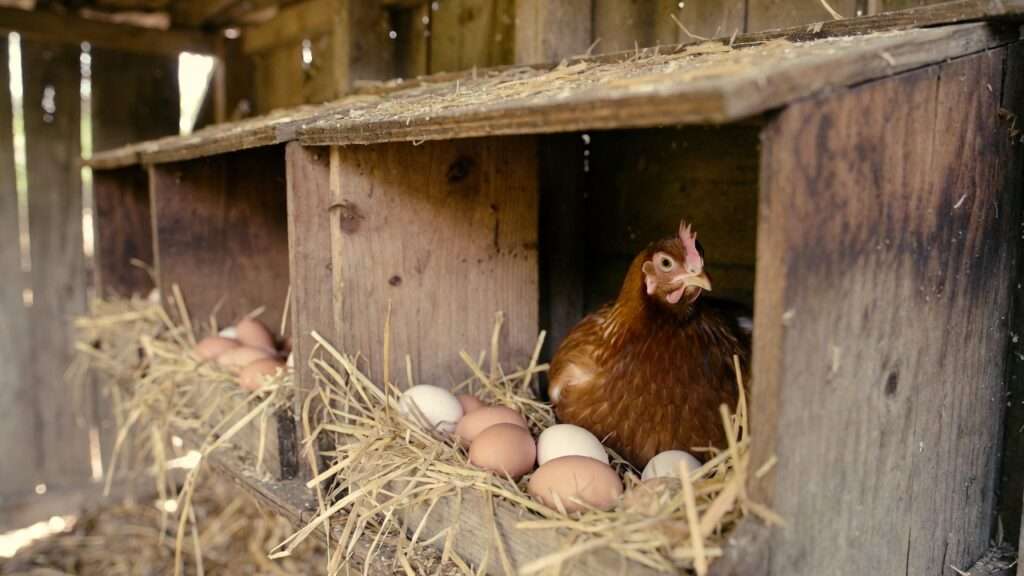
- Nesting behavior Pullets begin investigating dark, quiet corners, scratching straw or leaves into piles, or sitting in nesting boxes for long periods—even if no egg is laid yet. Some breeds become noticeably vocal (soft clucking or “egg song”).
- Increased foraging and appetite shifts Many hens eat more voraciously in the weeks leading up to lay as their bodies demand extra calcium, protein, and energy.
- Territorial or restless behavior Some pullets become protective of chosen nesting spots or pace more than usual.
First Eggs: What to Expect
The very first eggs are often surprises:
- Smaller than mature eggs (sometimes “pullet eggs” weighing 35–45 g instead of 55–65 g).
- Shells may be thin, rough, wrinkled, or even soft-shelled at first due to inconsistent calcium metabolism.
- Occasional double-yolkers are common in the first 1–3 weeks.
- Laying may be irregular (every 2–4 days) before settling into a daily or near-daily rhythm.
Practical tip: Collect eggs at least twice daily (morning and late afternoon) to prevent breakage, soiling, or egg-eating habits from developing. Provide crushed oyster shell or limestone grit free-choice starting at 18 weeks—even if no eggs yet—so calcium reserves build early.
Key Factors That Delay or Accelerate Natural Onset
While breed sets the baseline, several environmental and management factors can shift the natural laying timeline by 2–8 weeks in either direction.
Breed and Genetics
As shown in the earlier table, this is the dominant factor. Heritage breeds prioritize body size and hardiness over early production, while commercial hybrids have been selectively bred for accelerated maturity.
Daylight and Season
Photoperiod is the primary natural trigger. Hens need consistent or increasing daylight (ideally 12–14 hours) to stimulate the pituitary gland and ovarian development.
- In Barishal Division (latitude ~22–23°N), natural daylight:
- December solstice: ~10.8 hours
- June solstice: ~13.5 hours
- Equinoxes: ~12 hours
Most local and improved breeds will begin laying naturally during or just after the longer daylight period (late spring through monsoon), even without supplemental light. Chicks hatched in late autumn/winter often delay until the following spring/summer, which is why many Bangladeshi smallholders time hatches for February–April to align maturity with peak daylight and feed availability.
Nutrition and Feed
Layer maturity requires:
- Grower phase (8–18 weeks): 16–18% protein, balanced amino acids (methionine especially important).
- Pre-lay transition (18+ weeks): Gradual switch to 16–17% layer feed + free-choice calcium.
Forage access (grass, insects, kitchen scraps) dramatically speeds onset compared to grain-only diets. Deficiencies in protein, calcium, phosphorus, or vitamins A/D/E can delay laying by 4–6 weeks or cause poor shell quality later.
Health, Stress, and Environment
- Parasites (coccidiosis, worms, mites) → major delays. Regular deworming and clean litter prevent setbacks.
- Heat stress (common in Bangladesh summers) → suppresses reproduction. Shade, ventilation, and cool drinking water are essential.
- Overcrowding / predator stress → elevated cortisol delays maturity.
- Poor housing (wet, drafty, dark coops) → slows development.
Management Tips to Support Timely Natural Laying
- Provide 12–14 hours natural daylight exposure (free-range or large windows in coop).
- Offer diverse forage: Let hens scratch in vegetable residues, under fruit trees, or in cover-crop paddocks.
- Transition feed gradually at 16–18 weeks.
- Keep stocking density low (4–5 birds/m² in coop; 10 m²/bird outdoors).
- Vaccinate/deworm according to local veterinary advice (Newcastle, fowl pox, IBD common in BD).
Common Mistakes to Avoid in Natural Systems
Even experienced smallholders can unintentionally delay laying or reduce flock health and farm productivity by falling into these common traps. Avoiding them ensures your hens reach maturity on a realistic natural timeline and contribute effectively to regenerative crop systems.
- Expecting commercial-layer speeds Many new keepers read online forums or commercial guides and become frustrated when their hens don’t start at 16–18 weeks. Remember: natural onset at 18–28 weeks is normal and often results in longer productive life and fewer health issues. Patience prevents stress-induced delays.
- Adding supplemental lighting too early (or at all) In an effort to “speed things up,” some add bulbs to reach 14–16 hours of light. This forces unnatural cycles, increases feed consumption, shortens overall laying lifespan, and contradicts true regenerative principles. Stick to seasonal daylight—your hens will thank you with stronger immunity and better egg quality.
- Poor timing or excessive duration in crop rotations Moving layers into vegetable beds for too long (>10–14 days) or during wet soil conditions can lead to over-scratching, compaction, root damage, or excessive nitrogen burn on young plants. Always use short, controlled rotations and monitor soil and plant response.
- Neglecting calcium before the first egg Waiting until eggs appear to offer oyster shell often results in the first few clutches having thin, cracked, or soft shells. Start free-choice calcium at 16–18 weeks to build reserves.
- Overcrowding or high-stress environments Too many birds per square meter, predator pressure, or constant human disturbance raises cortisol levels, which can delay onset by weeks and reduce egg size/quality later.
- Relying solely on grain without forage diversity A grain-only diet slows maturity and produces paler yolks. Encourage natural foraging in cover crops, vegetable residues, and insect-rich areas for optimal nutrition and faster development.
Expert Insights and Real-World Case Studies
University extension services and regenerative agriculture practitioners consistently emphasize that natural timelines, while slower, produce more resilient systems. According to the University of Wisconsin Extension poultry resources, heritage and dual-purpose breeds in pasture-based systems often begin 4–8 weeks later than confined hybrids but maintain production longer with fewer health interventions. UF/IFAS (University of Florida) notes similar patterns in subtropical climates: birds raised with natural photoperiod and diverse forage show improved shell strength and yolk pigmentation due to higher carotenoid intake from insects and greens.
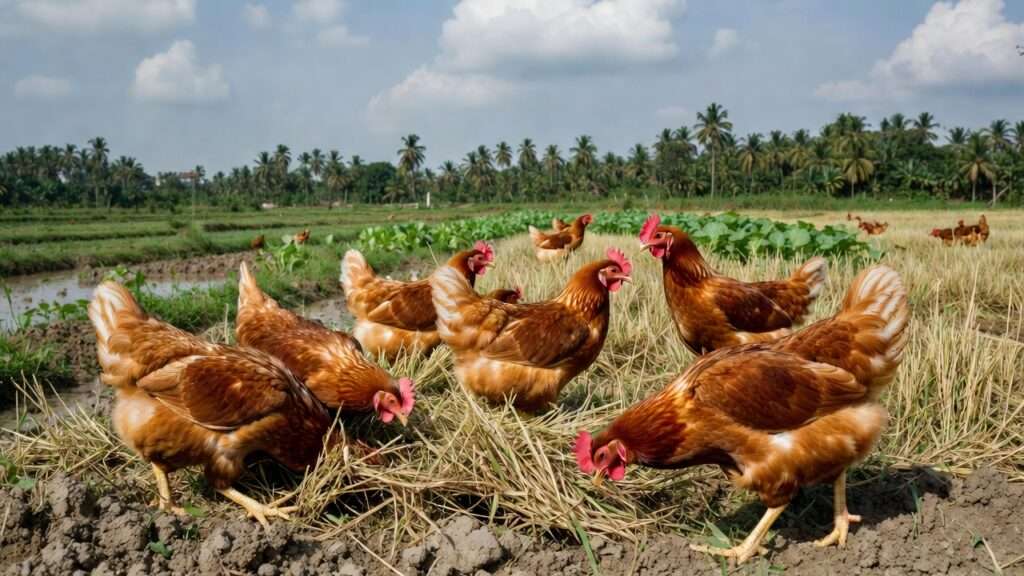
Local Bangladeshi example (hypothetical but based on common smallholder patterns): Amina Begum, a farmer in Bakerganj upazila, Barishal Division, hatched 25 Sonali pullets in March 2025. She followed low-input natural management—no extra lighting, balanced grower feed supplemented with rice bran, kitchen scraps, and daily foraging in harvested boro rice stubble. The first egg appeared at 22 weeks (early September), with full daily laying by week 25. She then rotated the flock through four 15 m × 15 m paddocks of post-monsoon vegetable plots (after brinjal and chilli harvest). Within one season, she reported:
- 20–25% higher spinach and radish yields in the following rabi crop
- Noticeably fewer armyworm and cutworm incidents
- Reduced need for purchased urea thanks to direct manure deposition
- Lower feed costs (hens obtained ≈30% of diet from pasture)
This mirrors experiences shared by many DLS (Department of Livestock Services) field officers and BRAC-supported poultry groups in southern Bangladesh, where integrating laying hens into crop cycles has become a key strategy for climate-resilient smallholder farming.
Conclusion
When hens start laying eggs naturally, expect the milestone between 18–28 weeks depending on breed, season, nutrition, and management. Watch for the telltale signs—bright red combs, widened pelvic bones, squatting, and nesting behavior—so you’re ready when the first small, possibly imperfect eggs arrive. With thoughtful preparation (nesting boxes, calcium, health checks), your flock will transition smoothly into production.
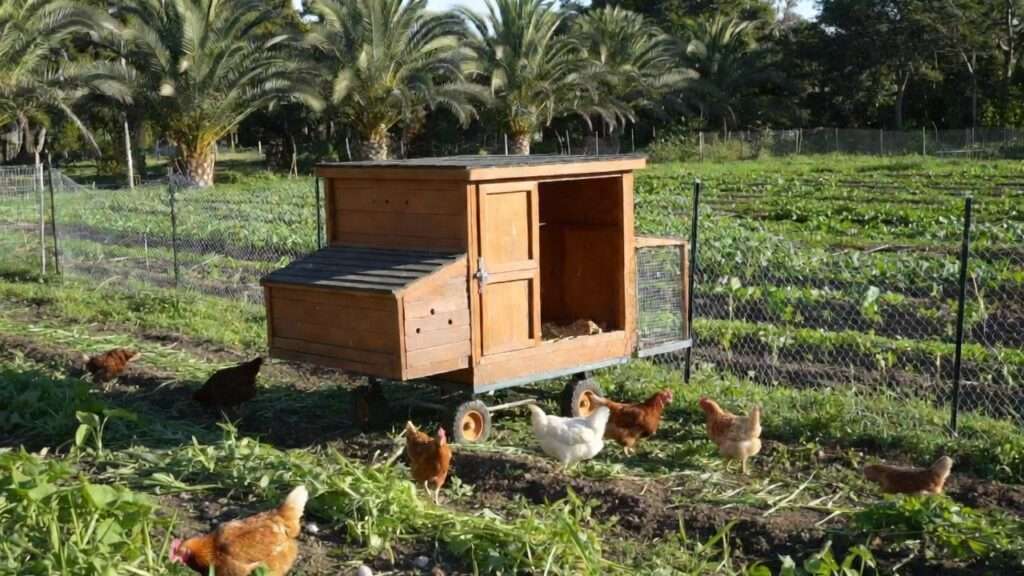
The real payoff comes when you strategically integrate those laying hens into crop rotation systems. By timing their movement to post-harvest fields, using mobile tractors or short paddock rotations, and allowing rest periods, you close the nutrient loop, control pests naturally, build soil organic matter, and reduce external inputs—all while enjoying consistent, nutrient-dense eggs from healthy, foraging hens.
Start tracking your current or next batch today. Mark the calendar at 18 weeks, observe daily, and experiment with small rotational moves once laying begins. The rewards—stronger farm resilience, better soil, lower costs, and the simple joy of the first natural egg—are well worth the wait.
Share your own flock’s timeline or rotation experiences in the comments—your insights help other farmers.
Frequently Asked Questions
When do hens start laying eggs naturally if raised without lights? Most backyard hens begin between 18–24 weeks (4–6 months) under truly natural conditions. Heritage breeds and local desi types often lean toward 22–28 weeks, while faster hybrids may start as early as 16–20 weeks.
What breed starts laying earliest naturally? ISA Brown, Golden Comet, and Red Star hybrids typically reach point-of-lay first (16–20 weeks) even without supplemental light, followed by Rhode Island Red and Leghorn at 18–22 weeks.
How does daylight in tropical climates like Bangladesh affect onset? In Barishal (≈22°N latitude), daylight varies from ~10.8 hours in December to ~13.5 hours in June. Most hens begin or accelerate laying during the longer daylight months (late spring through monsoon), making February–April hatches ideal for summer/fall maturity.
Can I speed up natural laying without artificial methods? Yes—indirectly. Ensure 16–18% protein during grower phase, provide diverse forage (insects, greens, scraps), minimize stress, control parasites, and maintain good ventilation and shade. These support the fastest possible natural timeline.
How do I integrate hens into crop rotation without damaging plants? Use short rotations (7–14 days max), mobile coops or chicken tractors for control, avoid wet soils, and follow with rest periods of 30–60 days. Start with post-harvest residue cleanup rather than active growing crops.
What if my hens are late layers (beyond 28 weeks)? Check for parasites, poor nutrition (especially protein/calcium), overcrowding, extreme heat, or very short winter daylight. If all management is sound, some heritage or highly stressed birds simply mature slowly—give them time and continue supportive care.
Do first eggs look different from mature ones? Yes—often smaller, with rougher or thinner shells, occasional double-yolks, or irregular shapes. Consistency improves within 2–6 weeks as the reproductive system matures.
Is it okay to mix ages in the same flock during rotations? Yes, but separate young pullets (pre-lay) from layers initially if possible. Once laying begins, mixed-age groups usually integrate well, though older hens may dominate nesting boxes.
How much can rotational hens reduce my feed bill? In well-managed systems with good forage access, hens can obtain 20–40% of their daily diet from pasture, insects, and crop residues—translating to noticeable savings on commercial feed, especially during peak growing seasons.
Are there any crops hens should never be rotated into? Avoid young seedlings of brassicas (cabbage, cauliflower), lettuce, or newly sprouted grains—they can be scratched out or eaten. Best for post-harvest cleanup, cover-crop termination, or under-tree systems.