It happens every year like clockwork: one evening your squash plants are the crown jewels of the garden—boasting dinner-plate-sized leaves and vibrant orange blossoms—and by the next afternoon, they are a wilted, pathetic heap of green mush. You check the soil for moisture, but it’s damp. You check for wilt disease, but the signs don’t quite fit. Then, you look at the base of the vine and see it—the tell-tale “sawdust” or frass leaking from a hole in the stem. You have been hit by the Squash Vine Borer (SVB). For many growers, this pest marks the end of the season, but by selecting specific squash varieties that tolerate vine borers, you can bypass this heartbreak entirely and ensure a bountiful harvest.
The secret to defeating this pervasive pest doesn’t lie in more intensive chemical sprays or waking up at 4:00 AM to hunt moths; it lies in the fundamental biology of the plants you choose to put in the ground. As an agricultural expert, I have seen countless farmers move away from the high-maintenance “Pepo” family (like standard zucchini) toward more resilient species that possess a natural, structural immunity. This guide will walk you through the botanical science of resistance and provide a curated list of varieties that will stand tall while others succumb.
1. Understanding the Enemy: The Life Cycle of the Squash Vine Borer
To beat the borer, you must understand the precision of its attack. The Squash Vine Borer (Melittia cucurbitae) is not a “bug” in the traditional sense, but a clear-wing moth that mimics a wasp. Unlike many garden pests that chew on leaves, the SVB moth is an oviposition specialist.
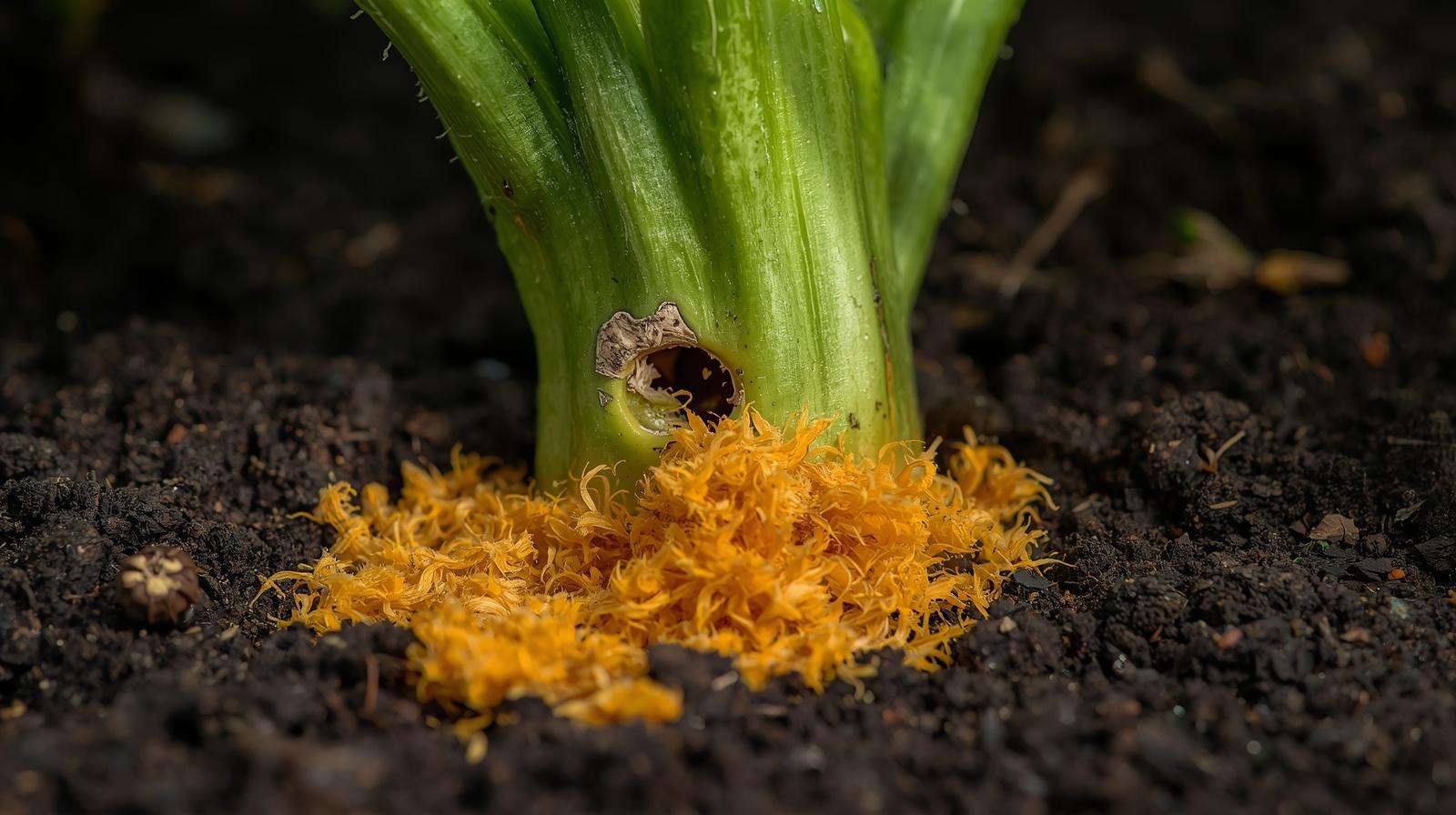
In late spring and early summer, the adult moth emerges from the soil and begins searching for the thick, succulent stems of cucurbits. She lays small, flat, brown eggs—usually one at a time—near the base of the plant. Within a week, the larvae hatch and immediately bore into the center of the vine. Once inside, they are virtually untouchable by external pesticides. They feed on the vascular tissue, effectively severing the plant’s “plumbing.” This is why a perfectly healthy-looking plant can wilt into nothingness in a matter of hours; the water simply can’t reach the leaves anymore.
2. The Secret to Resistance: Why Some Squash Survive
If you want to stop losing your crop, you have to stop planting what the borer loves. Most home gardeners plant Cucurbita pepo (Zucchini, Yellow Crookneck, Acorn Squash). These varieties have large, hollow, “straw-like” stems that provide a perfect, protected highway for larvae to feast and travel.
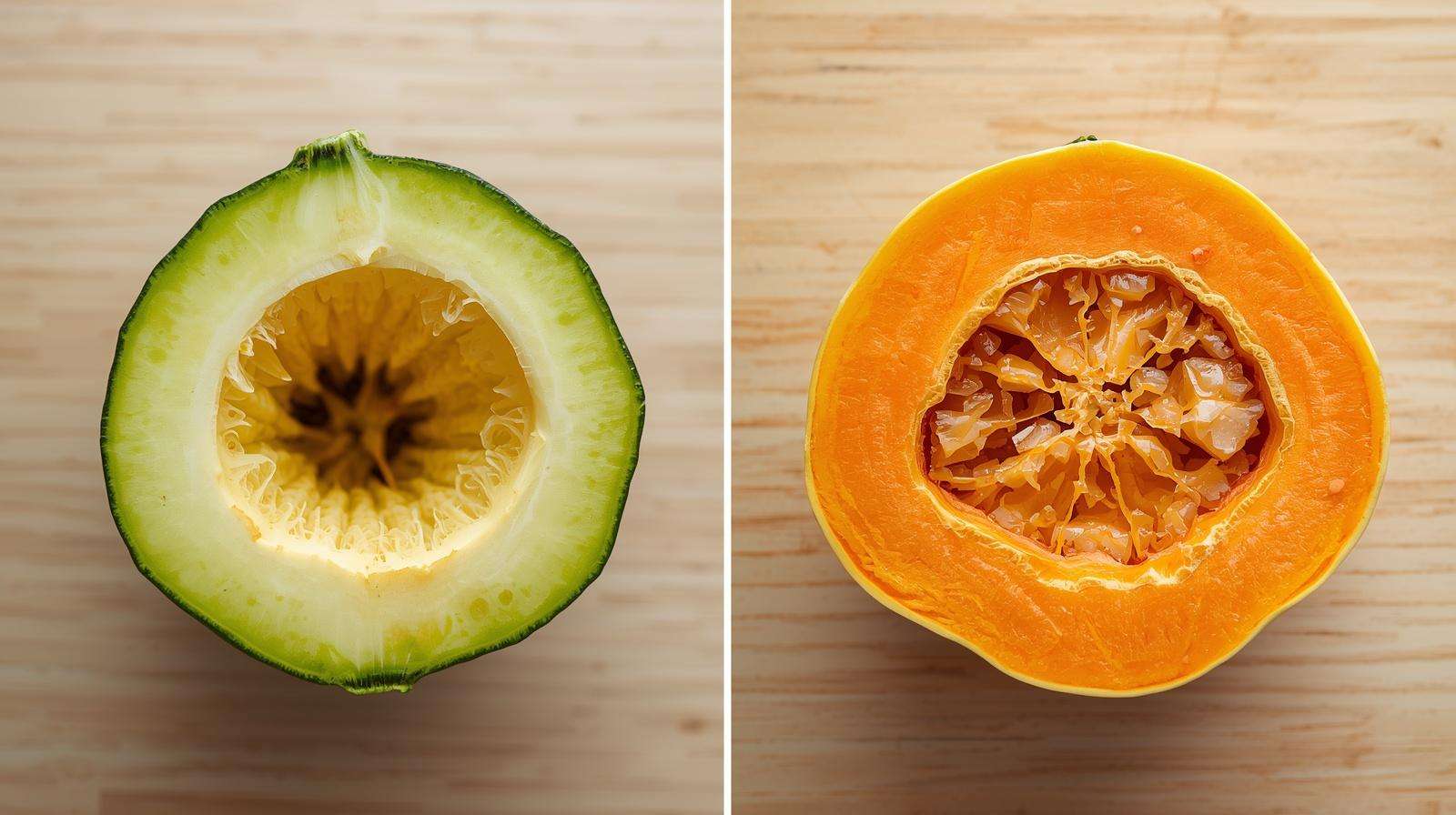
However, the world of squash is divided into different species, and this is where the expertise comes in. Varieties that belong to the Cucurbita moschata and Cucurbita mixta species have evolved physical and chemical defenses that make them the gold standard for borer-prone areas.
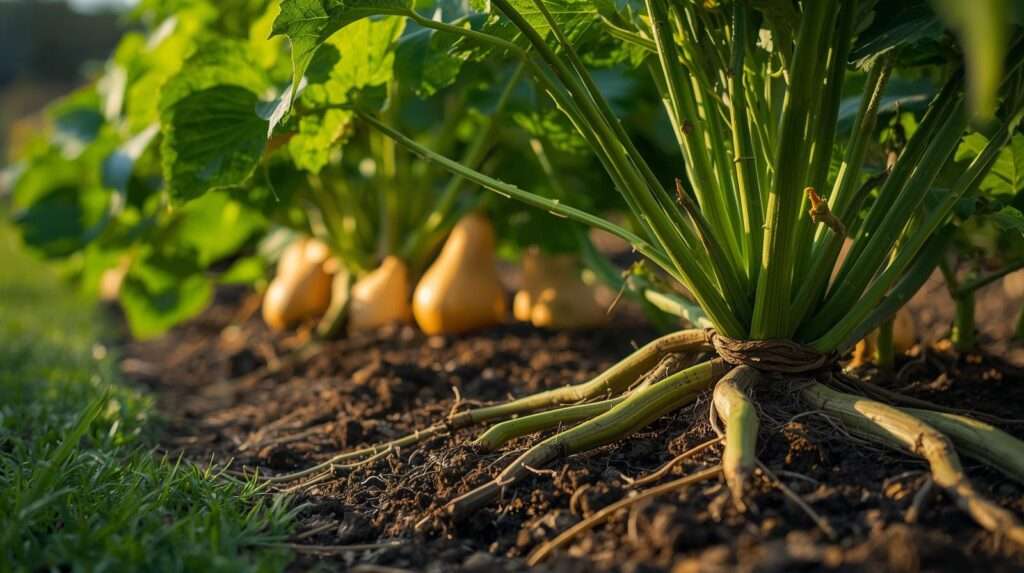
Solid Stems vs. Hollow Stems The primary reason C. moschata varieties (like Butternuts) survive is their stem density. Instead of a hollow center, their vines are woody and solid. When a larva tries to bore into a Butternut vine, it encounters a much tougher, more compact fiber that is difficult to navigate. Often, the larvae simply fail to establish themselves, or the plant’s robust vascular system is so dense that the damage from one or two larvae doesn’t “strangle” the entire plant.
Sap Chemistry and Texture Beyond the physical barrier, resistant varieties often have a different sap consistency. Some are stickier or contain higher levels of specific phytochemicals that are unpalatable to the larvae. Furthermore, many of these resistant varieties are naturally more vigorous, possessing the ability to outgrow the damage through a process called adventitious rooting.
3. Top Squash Varieties That Tolerate Vine Borers
When planning your agricultural layout, prioritize these “bulletproof” varieties. These are not just “tolerant”—in many cases, they are virtually immune to total crop failure.
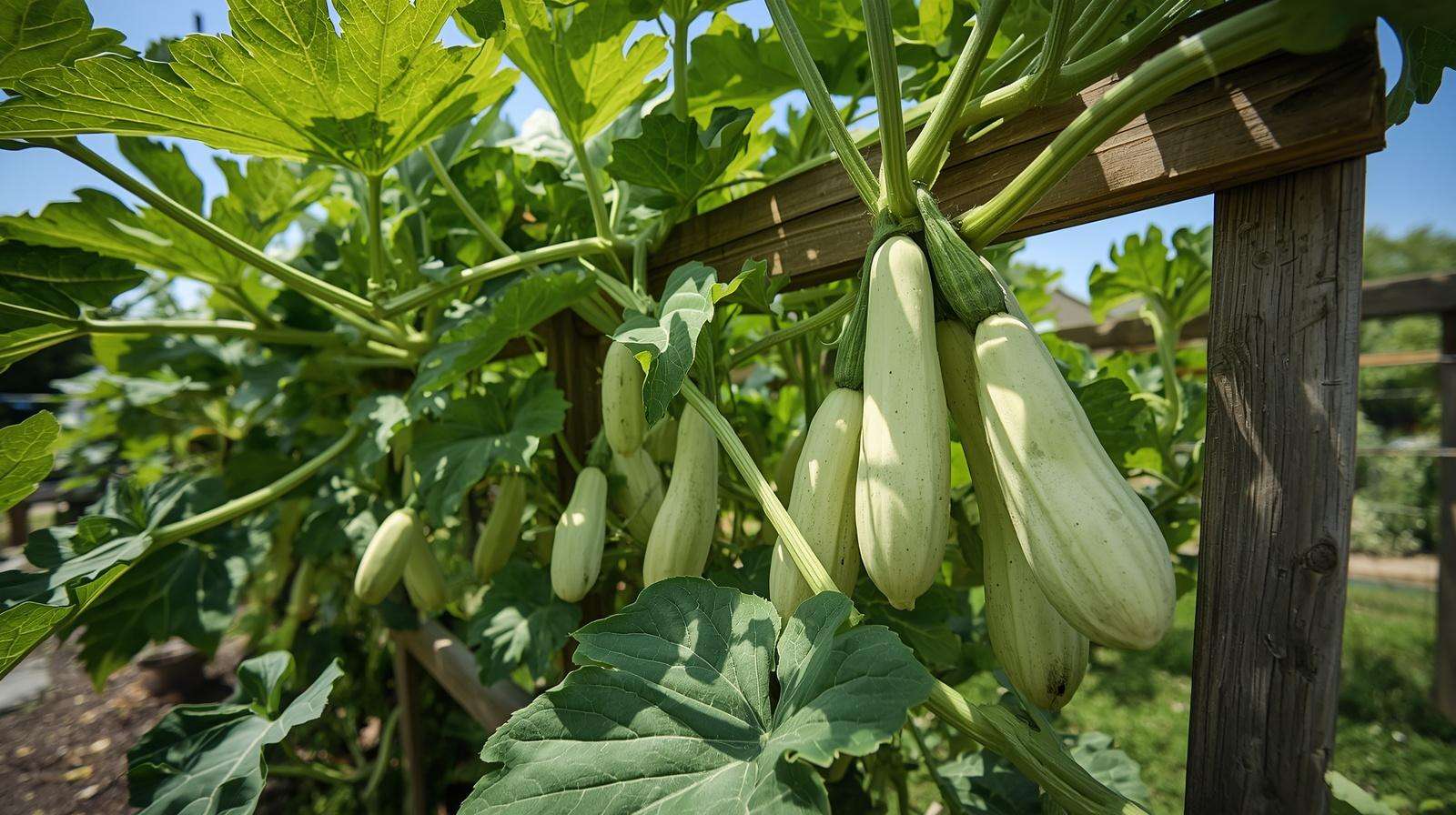
The Power of Cucurbita moschata
This species is the king of resistance. If you live in an area where SVB pressure is high, at least 70% of your squash crops should come from this category.
-
Waltham Butternut: The industry standard for a reason. Waltham produces a thick, woody stem that borers find extremely difficult to penetrate. It is also highly resistant to powdery mildew, making it a “low-input, high-output” crop.
-
Tromboncino (Zucchetta): This is the “secret weapon” for zucchini lovers. Tromboncino is a C. moschata that is harvested young and used exactly like summer squash. Unlike zucchini, it grows on a massive, vigorous vine that is solid and borer-resistant. If you can only grow one summer squash, make it this one.
-
Seminole Pumpkin: Originating from the Everglades, this variety is a beast of the south. It is incredibly heat-tolerant and has been known to climb trees to escape pests. Its vines are thin but very tough, and it roots at every node (more on that below).
The Resilient Cucurbita mixta
-
Green-Striped Cushaw: A staple in Southern Appalachian and Deep South gardens. The Cushaw has a unique “bulb” shape and a neck that is incredibly hardy. While it isn’t quite as “solid” as a butternut, its sheer vigor and specialized sap make it a survivor.
-
White Cushaw: Similar to the green-striped variety but often prized for its slightly sweeter flesh. It is an excellent choice for those wanting to make pumpkin pies without the risk of losing the plant to borers.
4. Strategic Planting: The “Vines Root Along the Ground” Technique
Even with a resistant variety, you can bolster your plant’s survival through specific cultural practices. One of the most effective professional techniques is encouraging adventitious rooting.
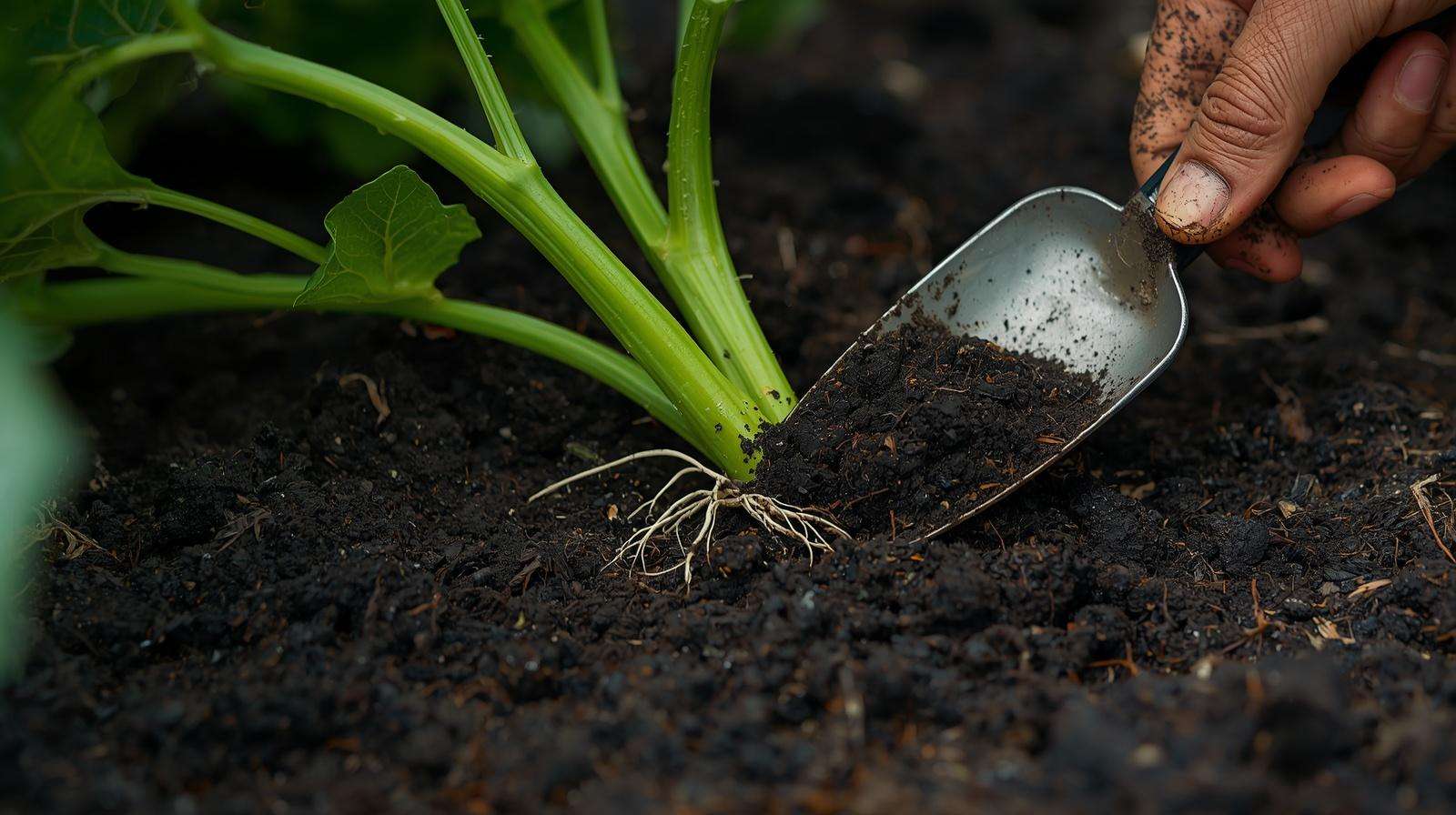
Most squash plants want to grow as a single vine originating from one central root ball. If a borer hits that main “trunk,” the whole plant dies. However, if you allow the vine to trail along the ground and periodically cover the “nodes” (the spots where leaves emerge) with a few shovelfuls of rich compost or soil, the plant will grow new roots at those points.
This creates a decentralized root system. If a borer manages to get into the main stem at the base of the plant, the vine will continue to thrive because it is drawing water and nutrients from five or six other root points further down the line.
5. Advanced Defensive Tactics: Trap Cropping and Timing
Even when planting squash varieties that tolerate vine borers, professional growers often use “decoy” strategies to ensure the survival of their primary crops. This is known as trap cropping.
The Blue Hubbard Decoy
The Blue Hubbard (C. maxima) is the “Achilles heel” of the Squash Vine Borer. For reasons still being studied by entomologists, the SVB moth finds the Blue Hubbard infinitely more attractive than almost any other squash. By planting a few Blue Hubbards on the perimeter of your garden two weeks before your main crop, you can lure the majority of the moths to oviposit there. Once the Hubbards are infested, you can remove and destroy them, effectively “vacuuming” the borer population out of your garden.
Strategic Timing and Row Covers
In many agricultural zones, the SVB moth only has one or two flight “windows” per year. By using lightweight, spun-bond row covers during the month of June (or whenever your local extension office notes peak flight), you can physically block the moth from reaching the stems. Just remember: you must uncover the plants once they begin flowering to allow for pollination, or you must hand-pollinate the blossoms yourself.
6. Cultural Practices to Enhance Resistance
Expertise in agriculture isn’t just about what you plant, but how you manage the soil and the plant’s physical structure.
Stem Mounding and “Surgical” Protection
At the beginning of the season, many experts recommend wrapping the first 6–12 inches of the main stem with aluminum foil or nylon stockings. This creates a physical barrier that prevents the moth from reaching the succulent “sweet spot” at the base of the vine. Additionally, mounding soil around the stem base can hide the entry points and provide extra stability.
Soil Health and Biological Controls
Healthy plants have higher “turgor pressure”—internal water pressure—which can sometimes physically crush or flush out young larvae before they can establish a tunnel. Furthermore, the use of Bacillus thuringiensis (BT), a natural bacteria, can be highly effective. Some advanced growers use a syringe to inject liquid BT directly into the hollow stems of vulnerable varieties, though this is rarely necessary if you have selected solid-stemmed varieties like the Butternut.
7. Botanical Comparison Table: Squash Species vs. SVB Resistance
To help you make the best decision for your upcoming planting season, use this comparison table to identify which species align with your pest pressure levels.
| Species | Common Varieties | Stem Type | SVB Resistance | Best Use |
| C. moschata | Waltham Butternut, Tromboncino, Seminole | Solid / Woody | Very High | Winter storage, Summer squash sub |
| C. mixta | Green-Striped Cushaw, White Cushaw | Dense / Fibrous | High | Pies, Baking, Southern climates |
| C. maxima | Blue Hubbard, Turk’s Turban, Banana | Large / Hollow | Low (Trap Crop) | Decoy plant, high-flavor storage |
| C. pepo | Zucchini, Acorn, Pumpkin, Crookneck | Hollow / Fleshy | Very Low | Traditional summer use (High Risk) |
8. Expert Troubleshooting: Saving an Infested Plant
If you catch a borer early, you don’t necessarily have to pull the plant. If you see frass (that orange, sawdust-like mush), the borer is inside.
-
The Slit Method: Use a clean, sharp razor to slit the stem lengthwise where the hole is located.
-
Extraction: Locate the white, grub-like larva and remove it.
-
Healing: Close the “wound” and immediately bury that section of the stem under two inches of moist, rich soil. If the plant is vigorous enough, it will grow new roots from the slit area and heal the vascular damage.
9. Regional Guidelines: Choosing the Right Variety for Your Zone
-
The Deep South (Zones 8-10): Focus heavily on the Seminole Pumpkin and Cushaws. These varieties not only tolerate the borer but thrive in the oppressive humidity and heat that often accompanies pest season.
-
The Midwest and Northeast (Zones 4-7): The Waltham Butternut is your best bet for a reliable winter harvest. For summer squash, Tromboncino is essential, as it can handle the shorter, intense borer season of the North.
10. Frequently Asked Questions (FAQ)
Can I grow Zucchini if I have Vine Borers?
Yes, but it is high-risk. If you insist on standard zucchini, you must use row covers or be prepared for daily egg-scrapping on the stems. The better alternative is Tromboncino, which tastes remarkably similar when harvested young but has the solid-stemmed resistance of a butternut.
Do Vine Borers stay in the soil over winter?
Yes. They pupate in the soil about 1–6 inches deep. This is why crop rotation is vital. Never plant squash in the same spot two years in a row, as the moths will emerge directly underneath your new seedlings.
Is there a “Borer-Proof” Yellow Squash?
While no plant is 100% “proof,” the Tatume (a Mexican heirloom) and Tromboncino are the closest you will get. They are far more resistant than standard yellow crooknecks.
11. Conclusion: Reclaiming Your Garden from the Borer
The “overnight wilt” doesn’t have to be the end of your gardening story. By shifting your focus from chemical warfare to botanical strategy, you can enjoy a massive squash harvest even in the most infested regions.
Success in the garden is often about working with biology rather than against it. Selecting squash varieties that tolerate vine borers—such as the solid-stemmed Butternuts and the vigorous Cushaws—allows you to spend less time worrying about pests and more time enjoying the fruits of your labor. This season, try at least one “Solid Stem” variety. You might find that the most delicious squash are the ones that actually survive to see the harvest.
Don’t let your hard work go to waste. Update your seed list today with these resistant varieties and secure your harvest.