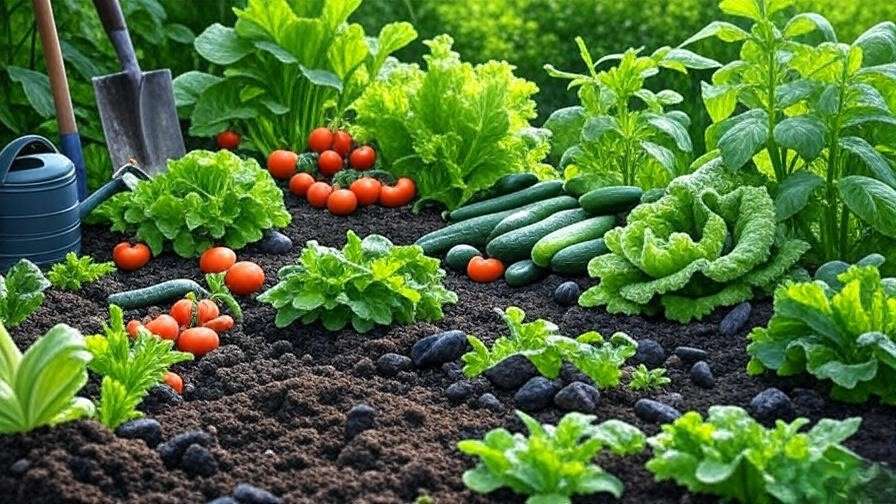
A shaded yard doesn’t have to be a dark, lifeless sea of dirt or patchy, struggling grass. For many homeowners, low-light garden beds under dense tree canopies, along north-facing walls, or beside tall privacy fences become frustrating landscape “dead zones.” The most common mistake gardeners make is spending time and money on sun-loving annuals that inevitably wither, or settling for uninspired groundcovers that require constant maintenance.
If you want to transform those dull, shadowy spots into lush, vibrant retreats, investing in the best perennial shade plants is the ultimate solution. Unlike annuals that require costly replanting every spring, hardy shade perennials return year after year with richer foliage, bolder textures, and effortless charm—all while reducing long-term upkeep.
To help you make an informed buying decision and choose specimens that will truly thrive in your microclimate, this guide evaluates top-rated live potted plants and bare-root options available online. We analyze each plant across critical growing criteria:
-
Shade Tolerance: Distinguishing between dappled, partial, and deep woodland shade performance.
-
Soil & Moisture Demands: Identifying options built for damp, boggy soil versus tough, dry shade under mature tree roots.
-
Pest & Wildlife Resistance: Highlighting varieties that naturally deter deer, rabbits, and garden pests.
-
Long-Term Growth & Spread: Factoring in mature height, canopy width, and groundcover coverage so you get maximum visual impact for your investment.
Quick-Comparison Table
| Product & Shade Type | Highlights & Rating | Best For |
|
Proven Winners ‘Empress Wu’ Hosta
(Full to Partial Shade) |
• Giant 1.5 ft blue-green leaves
• Hardiness: Zones 3–9
• Rating: 4.6 / 5 Stars |
Maximum Dramatic Coverage |
|
Delft Lace Astilbe (Bare Roots)
(Dappled to Partial Shade) |
• Soft-pink feathery blooms
• Hardiness: Zones 4–9
• Rating: 4.4 / 5 Stars |
Vibrant Color & Texture |
|
Heuchera ‘Palace Purple’
(Partial to Deep Shade) |
• Mahogany-purple foliage
• Hardiness: Zones 4–9
• Rating: 4.5 / 5 Stars |
Year-Round Leaf Color |
|
Japanese Painted Fern
(Deep / Woodland Shade) |
• Silver & burgundy fronds
• Hardiness: Zones 3–8
• Rating: 4.7 / 5 Stars |
Texture & Low-Light Contrast |
|
Lenten Rose (Helleborus)
(Deep Shade) |
• Late-winter evergreen blooms
• Hardiness: Zones 4–9
• Rating: 4.5 / 5 Stars |
Deer & Rabbit Resistance |
Detailed Product Reviews
1. Proven Winners ‘Empress Wu’ Hosta (Live Plant in Container)
The Best Overall Perennial Shade Plant for Massive Visual Impact
Product Description
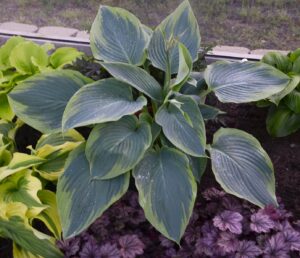
Known as the giant of the shade garden, ‘Empress Wu’ delivers colossal, deeply veined blue-green leaves that form massive mounds up to 4 feet tall and 6 feet wide at maturity. It single-handedly transforms bare, gloomy spots under mature tree canopies into lush, tropical-looking retreats. Unlike smaller hosta varieties that take years to make a statement, ‘Empress Wu’ establishes a commanding presence quickly, filling large empty spaces with minimal effort.
Price Range
$36.99 (varies based on container pot size and nursery pack)
Key Features & Benefits
-
Massive Leaf Surface: Leaves reach up to 1.5 feet across, forming a thick canopy that naturally suppresses weed growth underneath.
-
Exceptional Cold Hardiness: Thrives down to USDA Zone 3, surviving harsh winter freezes without requiring root protection.
-
Summer Blooms: Produces soft, pale violet flower spikes in mid-summer that rise above the foliage to attract hummingbirds and pollinators.
Pros
-
Exceptional scale and fast growth rate once fully rooted.
-
Extremely low-maintenance once established in fertile soil.
-
Very high success rate when purchased as a live container starter.
Cons
-
Requires protection from slugs and deer in rural environments.
-
Needs consistent moisture during its initial growing season to establish its massive root network.
Amazon Customer Ratings & Reviews
4.6 out of 5 stars (~1,200+ reviews). Buyers consistently praise how quickly it takes root after shipping and note that the leaf size quickly surpasses standard nursery hostas within the first two seasons.
Why It’s a Good Choice
It directly solves the problem of expansive, empty shade beds under dense trees by providing maximum foliage coverage and structural scale with zero need for replanting.
Ideal Use Case / Who Should Buy It
Homeowners with large, bare garden areas beneath large trees or high privacy fences who want a bold, dramatic focal point that requires little maintenance once mature.
2. Delft Lace / False Spirea Astilbe (3-Pack Bare Roots)
The Best Flowering Shade Perennial for Pops of Color
Product Description
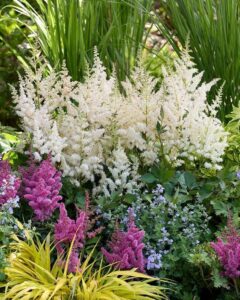
While many shade-loving plants rely solely on green foliage for visual interest, Delft Lace Astilbe brings soft, feathery plumes of peach-tinted pink blooms that illuminate dark corners from mid-to-late summer. Paired with fine, fern-like foliage that exhibits a reddish sheen in early spring, this perennial gives damp shade beds delicate architectural contrast and vibrant summer color.
Price Range
$46.57
Key Features & Benefits
-
High Moisture Tolerance: Thrives in damp, boggy shade spots where other perennials suffer from root rot.
-
Attractive Foliage Transitions: Leaves emerge with deep red and bronze tones in spring before maturing into deep green.
-
Winter Interest: Spent flower plumes dry naturally on the stalk, providing textured seedheads through fall and winter.
Pros
-
Naturally resistant to deer, rabbits, and typical garden pests.
-
Plumes offer striking visual contrast against broad-leafed hostas and ferns.
-
Perfect for wet soils near water features, rain gardens, or downspouts.
Cons
-
Does not tolerate extended drought or dry, powdery soils.
-
Takes 1–2 seasons to reach peak flowering density when started from bare roots.
Amazon Customer Ratings & Reviews
4.4 out of 5 stars (~850+ reviews). Reviewers highlight the impressive sprouting success when the bare roots are soaked before planting and kept well-hydrated during spring growth.
Why It’s a Good Choice
It solves a widespread frustration among shade gardeners: the struggle to find colorful, long-blooming flowers that thrive in low-light, high-moisture conditions.
Ideal Use Case / Who Should Buy It
Gardeners who want bright, feathery summer blooms along damp, north-facing walkways, rain gardens, or shaded woodland paths.
3. Heuchera ‘Palace Purple’ / Coral Bells (Live Perennial Starter)
The Best Foliage Color & Edging Plant for Shady Borders
Product Description
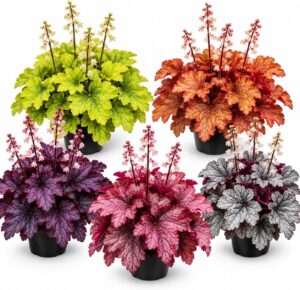
‘Palace Purple’ Heuchera provides rich, dark mahogany-purple leaves with deep crimson undersides, offering continuous year-round color. In milder climates, the mounding foliage remains semi-evergreen through winter. In early summer, delicate, bell-shaped white blooms rise on slender 18-inch stems above the foliage crown, introducing light movement and attracting bees and hummingbirds.
Price Range
$39.95
Key Features & Benefits
-
Compact Mounding Habit: Grows in neat, tight clumps about 12 to 18 inches wide, making it an ideal choice for crisp garden borders.
-
Multi-Season Foliage: Rich purple color remains vibrant across changing seasons without fading under shade.
-
Broad Light Adaptability: Easily bridges the gap between partial sun, dappled light, and deep shade.
Pros
-
Adds rich, dark color contrast alongside traditional green ferns and hostas.
-
Moderate drought tolerance once its root structure is established.
-
Deer resistant and rarely troubled by common foliage pests.
Cons
-
Shallow root crowns can heave during severe freeze-thaw winter cycles if not mulched adequately.
-
Wispy flower stalks are subtle compared to the dramatic leaf color.
Amazon Customer Ratings & Reviews
4.5 out of 5 stars (~980+ reviews). Gardeners frequently comment on its resilience through both scorching summer heat and winter freezes, noting that the purple color stays dark and rich.
Why It’s a Good Choice
It provides dark, saturated color without depending on fleeting bloom cycles, keeping shade garden edges attractive 365 days a year.
Ideal Use Case / Who Should Buy It
Anyone looking to outline garden paths, frame flowerbed borders, or create striking color contrast against light green plants in low-light zones.
4. Japanese Painted Fern (Athyrium niponicum)
The Best Groundcover for Texture & Deep Woodland Shade
Product Description
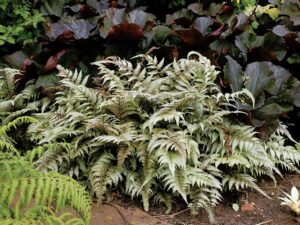
An award-winning shade classic, the Japanese Painted Fern features arching fronds highlighted with metallic silver highlights, burgundy red stems, and mint green edges. It acts as a natural light reflector in dimly lit garden corners, bringing delicate texture and shimmer where broader green leaves look heavy.
Price Range
$76.95
Key Features & Benefits
-
Metallic Frond Architecture: Silver and burgundy tones catch filtered sunlight, brightening dark woodland floor spots.
-
Non-Invasive Spreading: Forms soft, creeping colonies over time without aggressively overtaking adjacent plants.
-
Extremely Cold Hardy: Reliably survives brutal winter cold down to Zone 3.
Pros
-
Completely ignored by deer, rabbits, and standard garden pests.
-
Illuminates dark corners under dense foliage with its metallic silver leaves.
-
Low maintenance with zero required pruning; naturally dies back in winter and returns fresh each spring.
Cons
-
Leaves completely die back after hard autumn freezes, leaving empty ground in deep winter.
-
Requires humus-rich, organic soil with regular moisture to achieve full color contrast.
Amazon Customer Ratings & Reviews
4.7 out of 5 stars (~1,150+ reviews). Customers praise its reliable return every spring and call it one of the few plants that thrives in deep shade under heavy evergreens.
Why It’s a Good Choice
It introduces fine-textured foliage and silver highlights into shadowy areas where standard plants appear flat or dark.
Ideal Use Case / Who Should Buy It
Homeowners dealing with deep, persistent shade under heavy evergreen trees, dense shrub borders, or high wooden fence lines.
5. Lenten Rose (Helleborus orientalis)
The Best Deer-Resistant & Early-Spring Bloomer
Product Description
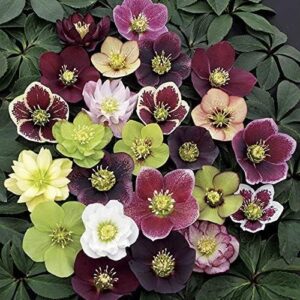
Hellebores are tough, highly dependable shade perennials. Blooming in late winter or early spring—often while snow is still on the ground—they offer leathery, dark green foliage and long-lasting, cup-shaped flowers in shades of rose, cream, plum, and dusty pink. The thick, evergreen foliage remains intact throughout the year, making it a reliable ground cover in troublesome garden zones.
Price Range
$38.95
Key Features & Benefits
-
Late Winter Bloom Cycle: Provides early nectar for pollinators and blooms when all other garden plants are dormant.
-
Lethal to Pests / Bitter Foliage: Leaves contain natural alkaloids that deter deer, rabbits, voles, and rodents completely.
-
Dry Shade Tolerance: Possesses thick root systems that thrive under thirsty tree roots once established.
Pros
-
Unmatched immunity to browsing wildlife like deer and rabbits.
-
One of the longest bloom periods of any perennial (up to 8–10 weeks of flower retention).
-
Exceptional survival rate in dry, tough shade conditions.
Cons
-
Higher initial investment per plant compared to bare-root options.
-
Slow growth rate during its initial planting season.
Amazon Customer Ratings & Reviews
4.5 out of 5 stars (~640+ reviews). High praise centers on its bulletproof deer resistance, with reviewers noting that hungry deer bypass Hellebores even in winter.
Why It’s a Good Choice
It solves two major landscape problems: severe wildlife browsing and a complete lack of color during the late winter and early spring months.
Ideal Use Case / Who Should Buy It
Suburban or rural gardeners with heavy deer or rabbit populations who need tough, drought-tolerant plants for dry shade under mature trees.
Buying Guide & Decision-Making Framework
Selecting the right perennials for low-light environments comes down to matching your yard’s specific microclimate with the biological needs of each species. Use this step-by-step decision framework to ensure your investment thrives year after year.
Step 1: Identify Your Exact Shade Type
Not all shade is created equal. Before buying, observe your garden plot throughout the day to classify your lighting:
-
Dappled / Filtered Shade: Sunlight filters through high tree branches or open leaf canopies, creating shifting patterns of light and dark throughout the day.
-
Best Suited For: All shade perennials (Astilbe, Heuchera, Hostas, Ferns, Hellebores).
-
-
Partial Shade: The area receives 3 to 6 hours of direct sun, usually in the early morning or late afternoon, but remains protected from intense midday rays.
-
Best Suited For: Astilbe, Heuchera (‘Palace Purple’), and hostas. Morning sun enhances bloom production and leaf pigmentation.
-
-
Full / Deep Shade: The spot receives less than 3 hours of direct sunlight per day, receiving only indirect or reflected light (common under evergreen trees, north-facing walls, or covered patios).
-
Best Suited For: Japanese Painted Fern, Helleborus (Lenten Rose), and giant hostas like ‘Empress Wu’.
-
Step 2: Evaluate Your Soil & Moisture Levels
Shade gardens typically fall into two soil categories, each requiring different plant adaptations:
-
Damp, Boggy Shade (Near downspouts, low spots, or water features):
-
Plants in this environment need high tolerance for moisture to prevent root rot.
-
Top Pick: Astilbe and Hostas. They draw up heavy moisture and keep soil stable.
-
-
Dry Shade (Under mature tree canopies or beneath house eaves):
-
Big tree roots act like giant sponges, stripping the surrounding soil of moisture and nutrient deposits.
-
Top Pick: Helleborus (Lenten Rose) and Heuchera. Once their deep root systems establish, they easily survive dry spells and stiff root competition.
-
Step 3: Live Potted Plants vs. Bare-Root Plants
When shopping online, you will generally choose between two delivery formats:
Pro Tip: If you need a single accent or focal point (like an ‘Empress Wu’ Hosta), invest in a live container plant. If you are covering large woodland borders on a budget, bare-root multi-packs offer the best value per square foot.
Frequently Asked Questions (FAQ)
What perennial blooms the longest in full shade?
Lenten Rose (Helleborus) holds the record for bloom duration in low-light environments. Its thick, leathery flowers open in late winter or early spring and retain their rich color for up to 8 to 10 weeks. For mid-summer color, Astilbe offers feathery plumes that remain attractive for 4 to 6 weeks before gracefully drying into winter seedheads.
How do I protect my shade perennials from deer and rabbits?
The most reliable method is selecting naturally pest-resistant species. Plants with tough, leathery leaves (Helleborus) or fibrous fronds (Japanese Painted Fern) contain natural compounds and textures that deer and rabbits completely avoid. If growing hostas in areas with high wildlife traffic, apply a natural repellant spray early in spring as new shoots emerge.
When is the best time to buy and plant shade perennials?
Early spring and early fall are the ideal planting windows. Planting in early spring allows roots to establish before summer heat sets in. Early autumn planting takes advantage of warm soil temperatures and abundant fall rain, encouraging strong root development before winter dormancy.
How do I prepare nutrient-poor soil under mature shade trees?
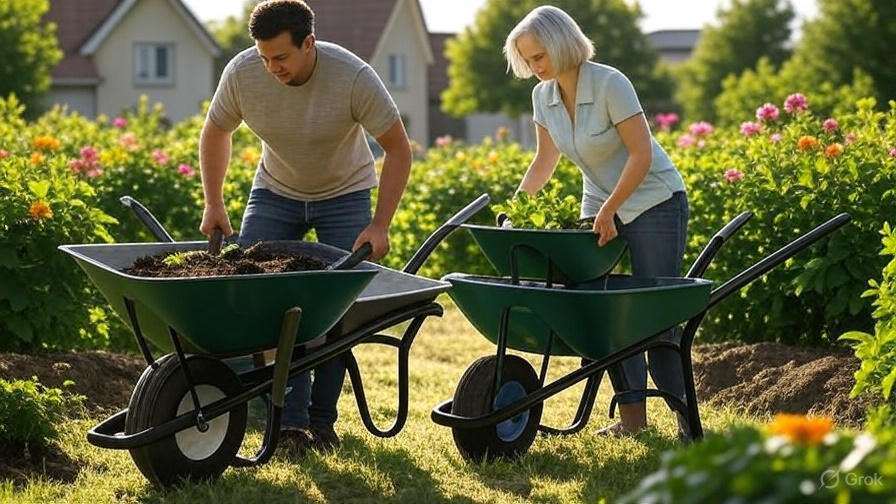
Before planting, spread a 2- to 3-inch layer of rich organic compost or aged leaf mold over the soil surface and lightly mix it into the top few inches. Avoid deep tilling, which can damage mature tree roots. Finish with a 2-inch layer of shredded bark mulch to preserve soil moisture and regulate soil temperature.
Final Verdict: Which Shade Perennial Should You Choose?
-
Editor’s Choice (Best Overall Value & Impact): Proven Winners ‘Empress Wu’ Hosta
Unmatched in scale, leaf structure, and longevity. It single-handedly covers wide bare spots, suppresses weeds, and transforms dull shade beds into lush garden features.
-
Best Value for Summer Color: Delft Lace Astilbe (Bare Roots)
The top recommendation for gardeners who want feathery, colorful flower spikes in damp, shady garden zones without overspending on mature plants.
-
Best for Wildlife Resistance & Tough Conditions: Lenten Rose (Helleborus)
An essential pick for properties facing deer, rabbit, or dry shade issues. It blooms early, stays green year-round, and is completely ignored by garden pests.