Imagine walking into your vegetable garden after weeks of careful tending, only to find your prized tomatoes riddled with holes from hornworms, your squash vines wilting under squash bug attacks, or your cabbage leaves shredded by hungry caterpillars. For many home gardeners and small-scale growers, this frustration is all too common. Chemical sprays offer quick fixes but come with hidden costs—harm to beneficial insects, potential residues on food, and growing resistance in pest populations. Companion Planting That Actually Helps with Pests
What if there was a more natural, sustainable way to reduce pest pressure without reaching for the spray bottle? Companion planting that actually helps with pests provides exactly that: strategic plant pairings backed by university research and field trials that can confuse, repel, trap, or distract unwanted insects while supporting your main crops.
In this comprehensive guide, we’ll explore the science behind effective companion planting for natural pest control, debunk common myths, and detail 12 proven plant pairs drawn from studies by Iowa State University, University of Florida IFAS, UCANR, and other extension services. You’ll learn practical layouts, timing tips, and how to integrate these strategies into your garden for healthier plants and higher yields—whether you’re working with a small backyard plot, raised beds, or even containers.
By the end, you’ll have actionable tools to build a more resilient, biodiverse garden that relies less on synthetic inputs. This approach not only addresses the real need for chemical-free pest management but also boosts overall garden health through increased biodiversity and beneficial insect activity.
How Companion Planting Helps Control Pests: The Science Behind It
Companion planting is the intentional placement of different plants near one another to achieve mutual benefits, including pest suppression. While folklore has long promoted countless pairings, modern research focuses on what actually works through observable mechanisms rather than unproven claims.
Many traditional recommendations fall short because they rely on anecdotal evidence without controlled trials. For instance, some older studies found limited or no benefit from certain pairings in monoculture-heavy setups. However, recent university extension research shows that diverse plantings (especially with 3+ species) can meaningfully reduce pest damage by disrupting insect behavior and supporting natural enemies.
Proven Mechanisms That Actually Work
Effective companion planting for pest control operates through several well-documented pathways:
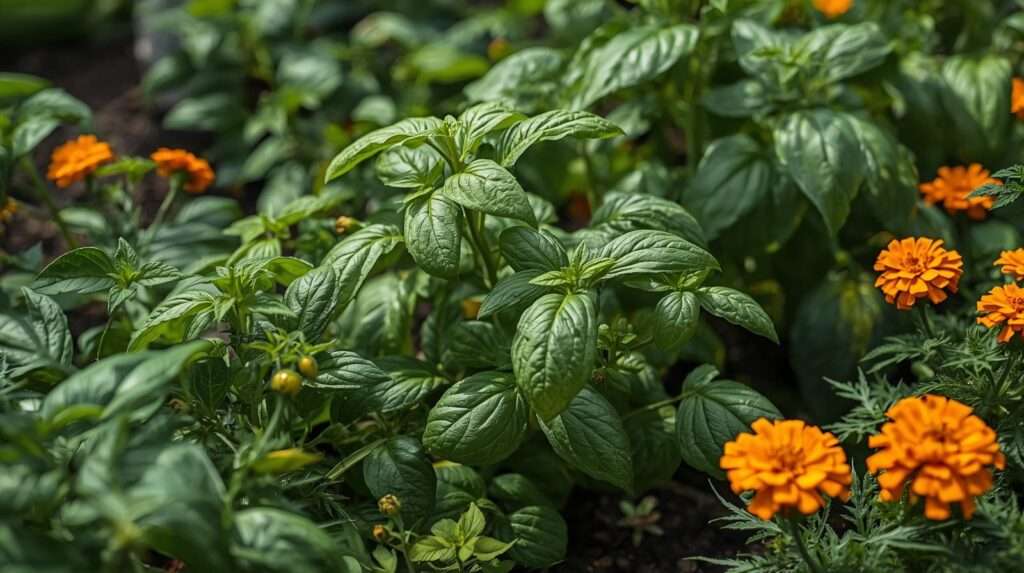
- Scent Masking and Confusion: Aromatic plants release volatile organic compounds (VOCs) that mask the scent of host crops, making it harder for pests to locate them. Basil near tomatoes, for example, has shown reductions in thrips populations in both field and greenhouse studies by interfering with the pests’ ability to find their target.
- Trap Cropping: Certain plants act as “sacrificial” lures, drawing pests away from valuable crops. Nasturtiums, for instance, can attract aphids or squash bugs, concentrating them where you can manage them more easily. Research indicates that surrounding host plants with companions can dramatically lower egg-laying rates—sometimes from 36% on bare soil to just 7% in mixed plantings.
- Attracting Beneficial Insects: Flowering companions provide nectar and pollen that draw predators and parasitoids like ladybugs, lacewings, syrphid flies, and parasitic wasps. These natural enemies then prey on or parasitize garden pests. Dill, sweet alyssum, and cosmos are particularly effective at boosting populations of aphid-eating beneficials.
- Physical Barriers and Habitat Disruption: Low-growing or dense companions can physically impede pest movement or egg-laying. Diverse plantings also disrupt the “landing” cues that specialized pests rely on in large monocultures.
- Biochemical Effects: Some plants exude compounds from roots or foliage that suppress pests. French marigolds (Tagetes patula) release thiophenes and other compounds that can deter nematodes and certain insects, though the strongest root effects often come from growing them as a cover crop and incorporating the residue.
Importantly, results are not guaranteed to eliminate pests entirely. Companion planting works best as part of an Integrated Pest Management (IPM) approach—combining cultural practices, monitoring, and mechanical controls. Outcomes vary by climate, soil health, pest pressure, planting density, and timing. Diverse intercropping generally outperforms single-companion setups, according to multiple extension reviews.
Quick Tip: Always observe your own garden. What works well in one region or season may need adjustment in another (e.g., humid tropical conditions vs. temperate zones). Start small, keep records, and refine your system over time.
12 Proven Plant Pairs for Natural Pest Control
Here are 12 research-supported pairings selected for their evidence from university trials. Each includes the target crop, companion, primary pests addressed, mechanism, planting guidance, and realistic expectations. These draw heavily from Iowa State University intercropping studies, UF/IFAS observations, and related extension work.
For easy reference, consider creating a quick table in your garden journal:
| Crop | Companion | Target Pests | Key Mechanism | Evidence Source |
|---|---|---|---|---|
| Tomatoes | Basil | Thrips, some flies/hornworms | Scent masking | Field/greenhouse trials |
| Tomatoes | French Marigolds | Whiteflies, aphids, beetles | Repellent compounds | Multiple extensions |
| … (and so on) | … | … | … | … |
- Tomatoes + Basil Basil’s strong aromatic oils help mask tomato scents, reducing thrips damage in several studies. It may also deter tomato hornworms and some armyworms. Plant basil transplants or seeds around tomato bases (6–12 inches away) after the last frost. Space multiple plants per tomato for better coverage. Expect reduced thrips pressure and potentially improved tomato flavor as a bonus. Limitation: Best results in combination with good air circulation to avoid fungal issues in humid climates.
- Tomatoes + French Marigolds French marigolds deter whiteflies and general insect feeding through volatile compounds. Plant them in a border or interplanted ring around tomatoes. They also add bright color and can suppress certain nematodes when roots are incorporated later. Iowa and other trials support reduced pest activity when marigolds are used consistently.
- Zucchini/Squash + Marigolds In Iowa State trials, marigolds significantly reduced damage from squash bugs and striped cucumber beetles on zucchini and other cucurbits. Interplant or border squash hills with French marigolds. The repellent effect comes from both foliage and roots. Combine with good spacing to avoid overcrowding.
- Zucchini/Squash + Nasturtiums Nasturtiums serve as an effective trap crop and deterrent for squash bugs and aphids. Their trailing habit allows them to sprawl under or around squash vines without competing heavily. Studies showed notable reductions in squash bug populations. Plant nasturtiums a bit earlier so they establish before squash vines spread.
- Cabbage/Broccoli/Brassicas + Thyme Thyme emerged as a top performer in Iowa State research for reducing cabbage loopers, imported cabbageworms, and weevils on broccoli, cabbage, and related crops. Its aromatic compounds disrupt pest feeding and egg-laying. Plant thyme as a border or intersperse among brassicas. Nasturtium and onion also showed supportive results in the same trials.
- Cabbage/Brassicas + Nasturtiums or Onions Nasturtiums act as a trap for cabbage worms, while onions/garlic/chives mask scents and deter root flies or loopers. These combinations support the “diversity reduces damage” principle seen across extension studies.
- Lettuce/Greens + Sweet Alyssum or Dill These flowering companions attract syrphid flies and other aphid predators. Low-growing sweet alyssum creates a living mulch effect while providing nectar. Plant in borders or between rows for continuous beneficial insect support.
- Peppers + Basil Similar to tomatoes, basil helps reduce thrips and aphid pressure on peppers through scent interference. Easy to interplant in beds or containers.
- Carrots + Onions/Garlic/Chives The allium family’s pungent compounds confuse carrot rust flies, a common pest. Plant in alternating rows or blocks. This classic pairing has broad anecdotal and some research support for reduced larval damage.
- Beans or Eggplant + Radishes Radishes can serve as a trap crop for flea beetles, which prefer the fast-growing radish foliage. Harvest radishes quickly before they bolt, protecting the main crop.
- Cole Crops + Collards Collards act as a trap crop for diamondback moths and other brassica pests, drawing them away from cabbage or broccoli. This is a well-documented trap-cropping strategy in IPM guides.
- Garden Border or General Crops + Flowering Companions (Cosmos, Borage, or Cornflower) These attract a wide range of predatory and parasitic insects for broad-spectrum pest reduction. Plant in borders or scattered patches to create “insectary strips.” UCANR and other sources highlight their role in supporting biological control.
Implementation Tip for All Pairs: Aim for polyculture rather than strict one-to-one pairings. Mix 2–4 companions per bed for better results. Avoid overcrowding—maintain proper spacing for airflow and root health.
Step-by-Step Guide: Implementing Companion Planting in Your Garden
Successful natural pest control through companions requires thoughtful planning.
Planning Your Garden Layout
- Sketch your beds on paper first. Group crops by family and pair with appropriate companions.
- Use borders for strong-scented or flowering plants (marigolds, thyme, alyssum).
- In raised beds or small spaces, interplant vertically (tall tomatoes with low basil/marigolds) or use trailing companions like nasturtiums.
Timing and Spacing Best Practices
- Start companions slightly earlier or at the same time as main crops so they establish quickly.
- Follow recommended spacing: For example, 6–12 inches between tomatoes and basil; marigolds every 8–10 inches around squash.
- In hot or tropical climates (common in regions like Bangladesh), ensure adequate watering and mulch to prevent stress that can attract pests. Companion Planting That Actually Helps with Pests
Combining Multiple Pairs (Polyculture Tips)
Layer mechanisms: Use scent maskers + trap crops + insectary plants in the same bed. Example: Tomatoes with basil and marigolds, bordered by alyssum.
Integrating with Other Organic Methods
Companion planting shines when combined with crop rotation, healthy soil building (compost, mulch), proper irrigation, and row covers for heavy pressure periods. Avoid broad-spectrum pesticides that kill beneficial insects.
Common Mistakes to Avoid:
- Overcrowding leading to disease.
- Expecting complete pest elimination.
- Ignoring soil pH or nutrient needs of companions.
- Planting tender companions too early in cool climates.
Start with 2–3 pairs in one season and expand as you gain confidence.
Additional Benefits Beyond Pest Control
Beyond reducing pest damage, these strategies enhance pollination (more flowers = more bees), improve soil structure and microbial activity, increase biodiversity, and often lead to better flavor or yields in some crops. Environmentally, they lower chemical runoff and support healthier ecosystems. For small growers, this translates to cost savings and safer produce.
Limitations and Realistic Expectations
Companion planting that actually helps with pests is a powerful tool, but it is not a silver bullet. It typically reduces rather than eliminates pressure. Results depend on local conditions, consistent implementation, and integration with IPM. Some popular folklore pairings lack strong field evidence—transparency about this builds better outcomes. Monitor weekly with sticky traps or visual inspections, and intervene mechanically (hand-picking) when needed. In high-pressure years or new gardens, you may still need supplemental organic controls.
Expert Tips and Common Questions Answered
Top 5 Expert Tips for Success:
- Start small and observe—note what works in your microclimate.
- Prioritize diversity over single pairings.
- Plant for continuous bloom to sustain beneficial insects.
- Maintain soil health; stressed plants attract more pests.
- Never use synthetic pesticides alongside beneficial-attracting plants.
Companion Planting FAQs:
- Does it really work better than monoculture? Yes, diverse plantings often show lower pest damage in trials, though success varies.
- Can I use it in containers or small spaces? Absolutely—choose compact varieties and vertical/interplanted layouts.
- What about bad companions to avoid? Avoid pairing heavy feeders that compete intensely or known antagonists (e.g., fennel can inhibit many crops).
- How long until I see results? Often within one season, with improvements building over years as beneficial populations establish.
- Is it suitable for humid/tropical areas? Yes, with attention to airflow, disease-resistant varieties, and moisture management. Adapt pairs to local favorites (e.g., more basil or marigolds in warm zones).
Final Word
Companion planting that actually helps with pests offers a practical, research-supported path to healthier gardens with fewer chemicals. By focusing on the 12 proven pairs above—rooted in university studies on scent masking, trap cropping, and beneficial insect attraction—you can create a more balanced, resilient growing space.